Written by: Nuno Leiria, Founder & CEO @ Nilo | Last updated: July 9, 2026
Key Takeaways for New Game Makers
- Beginner game engines in 2026 fall into three groups: no-code 3D, code-light, and full-code. Your best fit depends on how you feel about coding, whether you want 2D or 3D, and what hardware and budget you have.
- Nilo stands out in the comparison table as the only browser-based, AI-native engine that runs full 3D, needs no install or coding, and exports to major tools like Roblox, Unity, Unreal, Blender, and VRChat.
- Unity and Unreal Engine still power many professional games, but they need large installs, scripting skills, and strong hardware, which creates real friction when you are just starting.
- No-code tools like GDevelop and Construct 3 work well for 2D browser games. Godot gives you a lightweight, free, code-based path if you feel ready to learn scripting.
- Ready to start building 3D games instantly without code or downloads? Open Nilo in your browser and start creating.
2026 Beginner Game Engine Comparison
The table below covers eight engines across seven criteria. Nilo appears first. All other engines are listed without ranking.
| Engine | Install Needed | Coding Required | Native 3D Support | Browser Access | AI Assistance | Cost | Export Destinations |
|---|---|---|---|---|---|---|---|
| Nilo | No | No (natural language prompts, you just talk, text, or send images to the AI) | Yes | Yes (WebAssembly + WebGPU) | Yes (model-agnostic, multi-provider) | Free (1,000 Nilo Bits/month) | FBX, OBJ, STL, glTF → Roblox, Unity, Unreal, Blender, VRChat |
| Unity | Yes (multi-GB) | Yes (C#) | Yes | Partial (browser editor in beta) | Yes (Unity AI Assistant) | Free for users or organizations with under $200,000 USD in revenue or funding in the most recent twelve (12) month period, Pro at $2,310/seat/year after Jan 2026 increase | PC, Mac, mobile, console, web |
| Unreal Engine 5 | Yes (large) | Yes (C++ or Blueprint visual scripting) | Yes | No | Yes (AI assistant) | Free, 5% royalty over $1M revenue | PC, Mac, mobile, console |
| Roblox Studio | Yes (desktop) | Yes (Lua scripting for interactivity) | Yes | No | Limited | Free | Roblox platform only |
| Godot | Yes (lightweight) | Yes (GDScript, C#, C++) | Yes | No (web export available) | Via third-party plugins | Free (MIT license, no royalties) | PC, Mac, Linux, mobile, web |
| GDevelop | Optional (browser version available) | No (event-based, no-code) | Yes (added in v5.3, real-time 3D editor in v5.6) | Yes | Limited | Free tier, paid plans available | Web, PC, mobile, Android |
| Construct 3 | No (fully browser-based) | No (visual event sheets) | Minimal | Yes | Limited | Free tier, paid subscription for full access | Web, PC, mobile, Android, iOS |
| PlayCanvas | No (cloud-based editor) | Yes (JavaScript) | Yes | Yes | Limited | Free tier, paid plans for private projects | Web, mobile |
Finding the Most Beginner-Friendly Game Engine
The biggest friction points for you as a beginner are installs, scripting walls, and the gap between “I have an idea” and “I have something playable.” Each engine below handles those differently. Use these self-tests to feel which one fits you.
- Nilo: Open play.nilo.io in your browser. If you can describe what you want to build in a sentence, you can start right away with no download, no account setup friction, and no code.
- Unity: Download the Hub installer and create a new 3D project. If you reach a working scene in under 30 minutes, Unity’s learning resources may fit you.
- Unreal Engine 5: Install the Epic Games Launcher and open a starter template. If the Blueprint visual scripting interface still feels manageable after one tutorial session, UE5 is worth exploring.
- Roblox Studio: Install and open Studio, then try adding a part and making it move without scripting. If you hit a wall right away, you are seeing the scripting barrier.
- Godot: Download the editor and complete the official “Your First 2D Game” tutorial. If GDScript, which feels similar to Python, clicks within a day, Godot becomes a strong free option.
- GDevelop: Open the browser version and build a simple scene using event sheets, which are visual rules that say “when X happens, do Y.” If this logic feels natural, GDevelop works well for 2D and basic 3D.
- Construct 3: Open a free project in the browser and add one event. Construct 3 is widely considered a very robust no-code workflow for browser-based and hyper-casual titles, but 3D support is still minimal.
- PlayCanvas: Create a free account and open the cloud editor. If JavaScript feels fine to you, PlayCanvas gives you mature WebGPU support with features like compute shaders and HDR.
Ready to test Nilo’s approach yourself? Open play.nilo.io in your browser and start building in seconds.
Best No-Code 3D Engine Choice in 2026
If you want to build 3D worlds without writing a single line of code, Nilo stands out as the only AI-native, browser-based option built specifically for that goal.
The workflow feels simple. You open your browser, then type or sketch what you want, like a character, a weapon, or a floating island, and Nilo generates a 3D model in seconds. You can also send an image or speak your idea out loud. After that, you rig the model with one click so it can move, describe animations in plain language, and adjust the level of detail so your model runs smoothly on any device. When you are ready, you export your work, and Nilo handles the technical conversion to FBX or glTF automatically so your assets load cleanly in any destination engine.
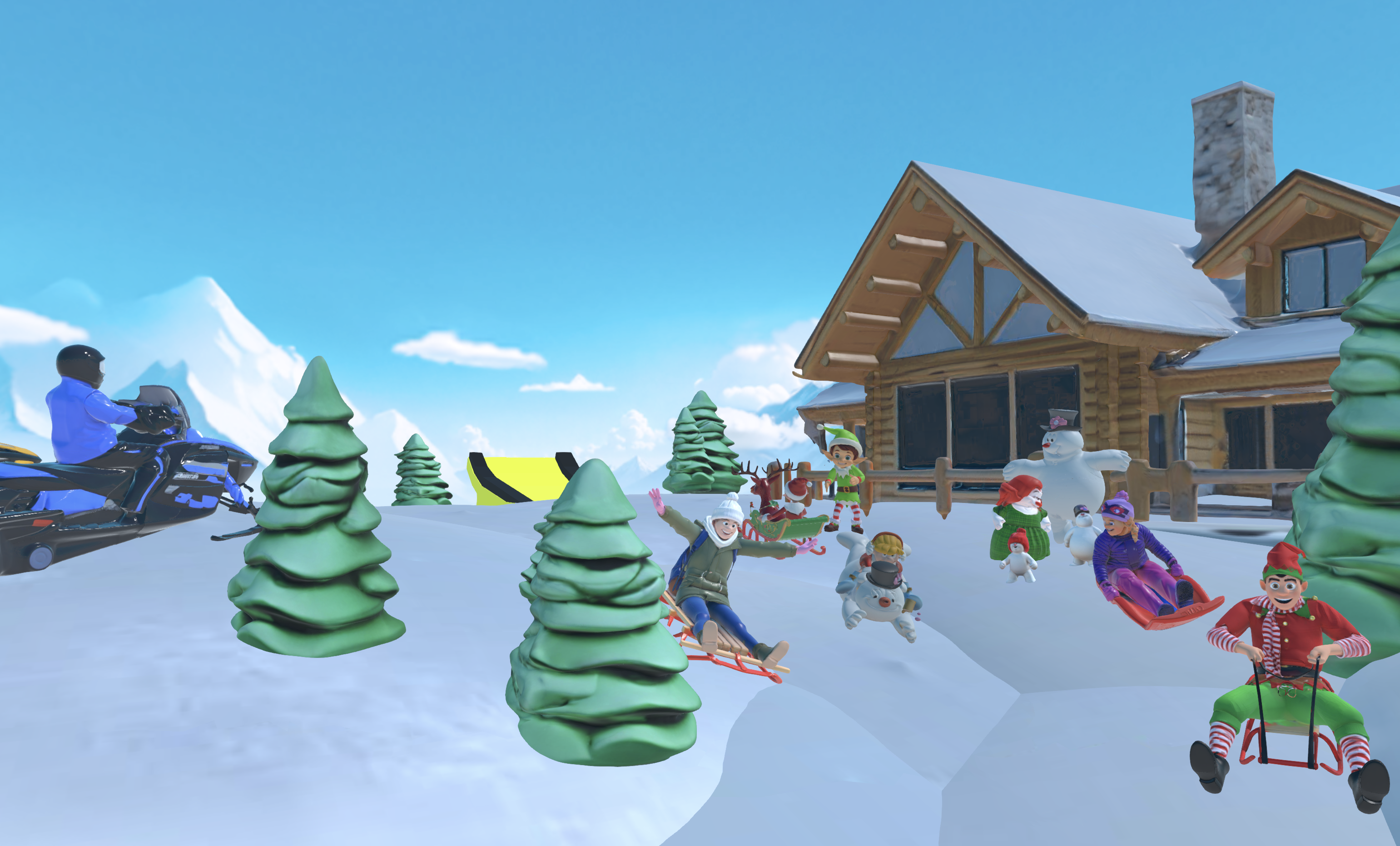
Nilo’s AI layer is model-agnostic, meaning it pulls from multiple providers such as Meshy, Tripo, Cartwheel, Nano Banana, and Uthana behind one interface. Because Nilo is not locked to a single AI model, you benefit from improvements across all providers automatically without changing your workflow or learning new tools.
In Nilo’s February 2026 Survey, 93% of builders said they would recommend Nilo to a friend and 82% rated their experience as “Awesome” or “Good.” One builder said, “There are no limits on what you can create, just type, draw or add in an image and you can generate, rig, customise and place a fully 3D model within minutes.” Another said, “I do not have to spend hours on 3D modeling the simplest things. Now I can use Nilo and do it in 15 seconds.”
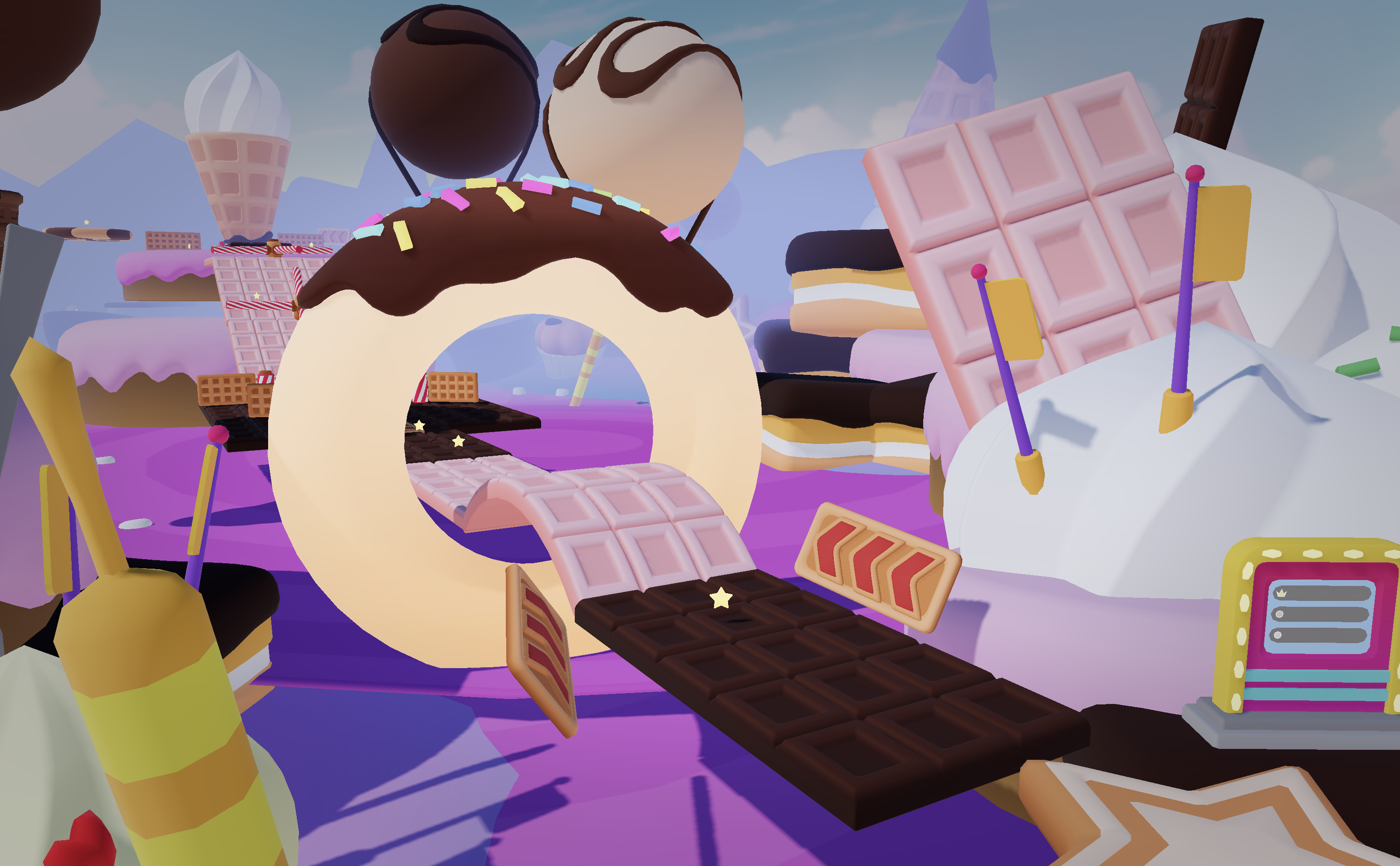
Nilo is currently in open beta and free to use with 1,000 Nilo Bits per month.
Godot vs Unity for Beginners in 2026
Godot and Unity both support 2D and 3D, yet they create very different first experiences when you are new.
Godot 4.6, released in January 2026, includes a modern editor theme and delta patching. The editor is lightweight and launches in seconds. GDScript, which is Godot’s scripting language, has a learning curve measured in days if you already know some Python. Godot is completely free under the MIT license with no revenue thresholds or runtime fees.
Unity 6 includes an improved render pipeline, better DirectX 12 support, and more mature lighting tools for complex 3D scenes. Its Asset Store offers thousands of production-ready plugins and art packs, which can speed you up once you pass the first learning curve. That curve is steep. Unity’s multi-gigabyte editor takes longer to set up, and Unity’s own research identifies four friction points where beginners quit: interface overwhelm, the first error message without debugging skills, the gap between tutorials and personal ideas, and the scripting wall. If you clear those hurdles, Unity Personal is free for users or organizations with under $200,000 USD in revenue or funding in the most recent twelve (12) month period, and after the January 2026 price increase, Unity Pro costs $2,310 per seat per year.
Self-test: Install both editors. Build a simple moving object in each. The one that lets you reach a playable result faster, without hitting a wall, matches where you are right now.
Choosing Between UE5 and Unity as a Beginner
Unreal Engine 5 and Unity are both professional-grade tools. Neither was designed around aspiring builders like you, yet each serves different goals.
UE5 gives you Blueprint visual scripting, which is a node-based system where you connect blocks of logic instead of typing code, and C++ for deep customization. Its Nanite and Lumen technologies can produce photorealistic graphics. UE5 is free with a 5% royalty on revenue over $1M. The trade-off is a steep learning curve and no browser access, so you need a capable desktop machine.
Unity’s interface often feels more approachable for newcomers, with many tutorials and a huge community. Its AI Assistant can analyze your specific project, interpret error messages, and generate functional code, which reduces the need to debug manually from day one. Unity still requires a desktop install and C# scripting for anything interactive, and it carries the same professional-grade complexity.
Self-test: Open a starter template in each engine and make a cube move when you press a key. Time how long it takes. If either one takes more than an hour, ask whether that learning investment matches your current goals.
Easiest Game Engines with No Coding
Three engines truly remove the coding requirement for you: Nilo, GDevelop, and Construct 3. Each one works in a different way.
Nilo uses natural language prompts. You describe what you want in plain English or any other language, and the AI builds it. This applies to 3D models, animations, and game logic, so you avoid event sheets, node graphs, and syntax.

GDevelop added native 3D support in version 5.3 and a real-time 3D editor in version 5.6, along with Jolt Physics, which makes it a real no-code option for basic 3D games. Its event-based system, where you set rules like “when the player touches a coin, add 10 points,” is visual and learnable in an afternoon.
Construct 3 offers a very robust no-code workflow for browser-based and hyper-casual titles in 2026, but 3D support is still minimal. It becomes the strongest choice if your goal is 2D games that run in a browser.
Self-test: In each tool, create one interactive object that moves or responds when you click it, without writing any code. The tool that gets you there fastest, with the least confusion, is your match.
If natural language 3D creation sounds like your path, try Nilo’s open beta. It is free to use and requires no download.
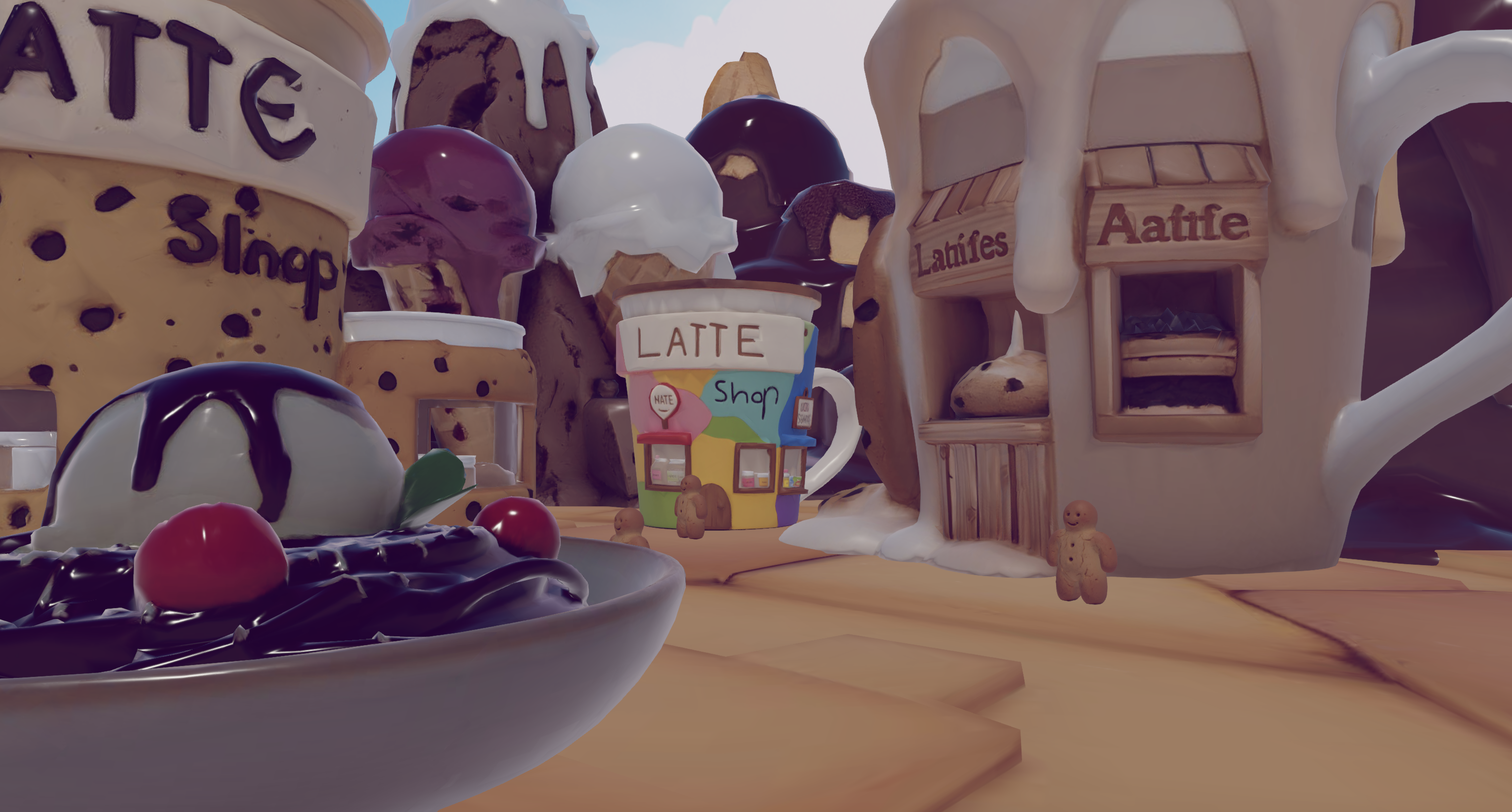
Visual Decision Flowchart for Picking an Engine
If you have tried the no-code options and still feel unsure, this three-question flow will narrow things down.
- Do you want to build in 3D right away? If not, GDevelop or Construct 3 are strong no-code 2D starting points. If yes, continue.
- Do you want to avoid installs and code entirely? If not, Godot, which is free and lightweight, or Unity, which has a larger ecosystem, are worth exploring. If yes, continue.
- Do you want to export to Roblox or other platforms? If yes, Nilo stands out as the only browser-based, AI-native 3D engine with direct FBX and glTF export to Roblox Studio, Unity, Unreal, Blender, and VRChat, with automatic LOD optimization to meet Roblox’s 10K–20K polygon caps.
If you answered yes to all three, open play.nilo.io in any browser, describe what you want to build, and you will have a rigged, animated 3D asset ready to export in minutes with no download, no account setup friction, and no code required.
2026 Engine and Browser Updates That Affect You
Three developments in 2026 are worth knowing before you commit to an engine.
- Unity’s browser editor: Unity has introduced a browser-based editor that positions itself as accessible without coding or complex workflows. It remains in early stages and carries decades of professional-grade architecture underneath, so it is not purpose-built for aspiring builders like you.
- Unreal Engine’s learning curve: UE5 still sets the bar for AAA-quality graphics, but its learning curve has not meaningfully shortened for beginners. Blueprint visual scripting helps, yet the overall system still assumes significant prior knowledge.
- Roblox Studio’s scripting requirement: Roblox Studio still requires Lua scripting for any interactive game logic. If you want to create playable experiences instead of static environments, you need to learn scripting or find a coding partner.
- WebGPU is now universal: Safari 26 debuted WebGPU support in June 2025 and enabled it by default across macOS, iPadOS, iOS, and visionOS, which makes high-performance 3D in the browser available across all major platforms for the first time. This same shift powers Nilo’s browser engine.
How to Evaluate These Tools Yourself
Before you commit to any engine, run through this five-point checklist.
- Test install time. Measure how long it takes from clicking “download” to seeing something on screen. Engines that take more than 30 minutes to set up create a barrier before you build anything.
- Attempt a basic export. Create a simple object and export it to a format another tool can read. If this needs many steps, plugins, or manual cleanup, keep that in mind.
- Check mobile browser performance. Open the tool on a phone or tablet. If it does not work, you are locked to a desktop, which limits when and where you can build.
- Compare free-tier limits. Look closely at what the free tier includes and where paywalls appear. Some engines are free to download but charge for export targets, asset stores, or collaboration.
- Time your first playable scene. Start a timer when you open the tool for the first time. Stop it when you have something interactive that moves or responds. The engine that gets you there fastest, with the least frustration, matches your current skill level.
Common Beginner Obstacles in 2026
The engines in the comparison table handle common beginner obstacles very differently. Knowing where each one creates friction helps you avoid picking a tool that slows you down.
Hardware barriers. Unity and Unreal Engine need capable desktop machines. If you are working on a school Chromebook or a mid-range laptop, those engines may run slowly or not at all. WebAssembly now enables heavy-duty 3D tools to run inside browser tabs with desktop-class performance, which is why browser-based engines matter so much if you do not have high-end hardware.
Scripting anxiety. Unity identifies the “I’m not a programmer” wall as one of the four main reasons beginners quit game engines. Scripting asks you to learn software logic and code syntax at the same time. This is the most common reason builders abandon projects after investing serious time. Engines that offer natural language coding or visual event systems remove this barrier for you.
Tool fragmentation. A 2025 Google Cloud survey found that 90% of game developers already use AI in their workflows, yet most of those workflows still juggle separate tools, such as a modeling tool, a code editor, a game engine, and a publishing platform. The creative momentum you lose while switching between tools is a real obstacle. If you want to stay in flow, look for engines that handle the full pipeline in one place.
Frequently Asked Questions
What does “no-code” actually mean in a game engine?
No-code means you can build interactive games without writing any programming syntax. Instead of typing lines of code, you use visual event sheets like in GDevelop or Construct 3, connect logic blocks like in Unreal’s Blueprint system, or describe what you want in plain language like Nilo’s natural language prompts. The engine turns your instructions into working game logic automatically. You still make all the creative decisions, you just do not write code to execute them.
Can I export what I make in a browser-based engine to Roblox?
It depends on the engine. As mentioned earlier, Nilo exports directly to Roblox Studio through FBX and glTF and handles the polygon optimization that Roblox requires. GDevelop and Construct 3 export to web and mobile formats but are not designed for Roblox asset pipelines. PlayCanvas exports to web. If Roblox is your destination, check that the engine supports FBX or glTF export before you commit.
Do I need a powerful computer to use these engines?
Hardware needs vary a lot. Unity and Unreal Engine require capable desktop hardware with multi-gigabyte installs and GPU-intensive rendering. Godot has a small download size but still needs a desktop install. Browser-based engines like Nilo, GDevelop, and Construct 3 run on any device with a modern browser, including mid-range laptops, Chromebooks, and many mobile devices. If hardware is a constraint, browser-based engines remove that barrier for you.
What’s the difference between Nilo and prompt-to-game tools like Rosebud AI?
Prompt-to-game tools generate a game from a text prompt, and the experience often ends there. When you want to change something, you usually re-prompt and wait for a new build. Nilo works as a game engine first. You are inside a live 3D environment where you build, tweak, playtest, and collaborate in real time. AI acts as a co-pilot that helps you generate assets, animate characters, and write game logic, while you stay in control of the creative choices. The result feels like building inside a game instead of waiting for one to appear.
Is it possible to learn real game development concepts while using a no-code engine?
Yes, you can still learn real concepts. Nilo’s interface introduces ideas like rigging, polygons, mesh topology, physics simulation, and level of detail through the building process itself, so you pick up vocabulary and understanding as you create. GDevelop’s event system teaches conditional logic, such as “if this happens, then do that,” without syntax errors. Construct 3 introduces game design thinking through its event sheets. Nilo’s built-in code editor also lets you see and tweak actual code variables, like changing “speed = 2” to “speed = 20,” so you can learn programming concepts at your own pace while still building.
Conclusion: Match the Engine to Your Goals
The right engine in 2026 comes down to four questions. How comfortable do you feel with code, do you want 2D or 3D, what hardware do you have, and what is your budget? If you want 3D without installs, scripting, or manual optimization, Nilo stands out as the only AI-native, browser-based option built for that mix. If you want to learn scripting in a free, lightweight environment, Godot is a strong choice. For 2D no-code games in the browser, GDevelop and Construct 3 both deliver. For professional-grade pipelines with large ecosystems, Unity and Unreal remain industry standards, along with the learning investment they demand.
If you feel ready to build something today without downloading anything, without writing code, and without spending a bunch of money, the fastest path is to open a browser and start. Start building your first 3D game today in Nilo’s free open beta.