Written by: Nuno Leiria, Founder & CEO @ Nilo
Key Takeaways for Aspiring Roblox Creators
- Prompt-only AI code generators like Bitmagic give you a fast first game, then slow you down when you try to iterate or debug.
- Non-deterministic outputs and runtime-blindness make your results unpredictable, so you often lose momentum while refining your game.
- Browser-based AI-assisted environments mix generation with real-time hands-on editing, so you can tweak ideas instantly inside a live 3D world.
- These tools run in your browser, skip heavy installs and long tutorials, and still let you export to Roblox, Unity, and other engines.
- Nilo offers a free way to try this workflow, so you can join the open beta and start building today.
The Core Issue: Prompt-to-Game Tools Hide the Real Building
Prompt-to-game tools like Bitmagic, Rosebud AI, Spawn, and Arcade AI follow the same pattern. You describe what you want, the AI generates something, and you get a result. For simple 2D browser games and quick prototypes, this approach works well. Those first ten minutes can feel amazing.
The ceiling appears fast for deeper projects. Prompt-based tools in 2026 mostly assemble pre-made assets into static scenes instead of building fully playable 3D games with working cameras, controllers, collision, and connected systems. Features like inventory, save and load, and progression curves usually sit outside what a single prompt can deliver.
Output consistency also creates problems. Regenerating the same prompt often produces a different game because these systems are stochastic by nature, so the output is random each time, not predictable. This randomness clashes with production workflows, which need determinism, meaning you get the same reliable result from the same input. Without that predictability, prompt-only tools struggle to support real iterative development.
Research into agentic game code generation highlights the same gap. The strongest evaluated system reaches 85.52% average Intent Alignment on ToolACE, so part of the mechanical requirements stay partially or fully unsatisfied. Three failure modes show up again and again: logical incoherence across the game loop, engine-specific knowledge gaps, and cross-file inconsistencies such as mismatched asset keys or broken scene wiring.
Another problem is runtime-blindness. The AI can generate code that compiles but cannot watch runtime errors, screenshots, or physics failures to fix itself. AI agents can ship games where tests pass but key mechanics behave incorrectly. The code looks fine. The game feels broken.
Why This Friction Kills Your Momentum and Learning
These technical limitations translate directly into creative frustration. Builders burn out. That pattern shows up everywhere in game creation. You start with a clear idea, hit a wall you did not expect, and your excitement disappears. Prompt-only tools speed up the start but do not remove the wall. They just move it a little further away.
AI game generators in 2026 answer “show me something playable now” really well, but they rarely answer “help me finish my game.” The first 10 minutes feel like magic. The last 90 percent of the work still lands on you.
For aspiring builders like you who move from playing Roblox to creating on it, this hits even harder. You probably do not have years of professional experience to lean on when things break. You need tools that keep creation feeling like play instead of endless debugging.
The 2026 GDC Trends report found that game developers want AI tools that support the development process instead of replacing it. Builders who finish projects stay in control of what they are making. Prompt-only tools hand that control to the AI. Hybrid environments give it back to you.
Experience that control yourself in Nilo’s free open beta.
Browser-Based AI 3D Tools: Building Inside the World
AI-assisted browser-based 3D creation tools form a separate category from both traditional desktop engines and pure prompt generators. They run entirely in your browser, so you skip downloads, installations, and high-end hardware, and they mix AI generation with real-time hands-on editing inside a live 3D scene.
The main difference from prompt-only tools is simple. You stay inside the world while you build it. You generate an asset, see it right away, adjust it, move it, playtest it, and iterate, all inside one browser tab.
The main difference from desktop engines like Roblox Studio, Unity, or Blender is the learning curve. You do not need months of training before you can ship something that works. The AI handles the technical translation. You focus on creative choices.
When you compare tools in this category, look at these areas:
- Accessibility: Does it run in a browser with no setup, and can you share a link so a friend joins instantly?
- Creation flow: Can you generate, edit, and playtest in one place without jumping between tools?
- Collaboration: Does it support real-time multiplayer building, or do you always work alone?
- Performance: Does the engine handle physics, collisions, and polygon limits for you?
- Portability: Can you export to Roblox, Unity, Blender, or other platforms using standard formats?
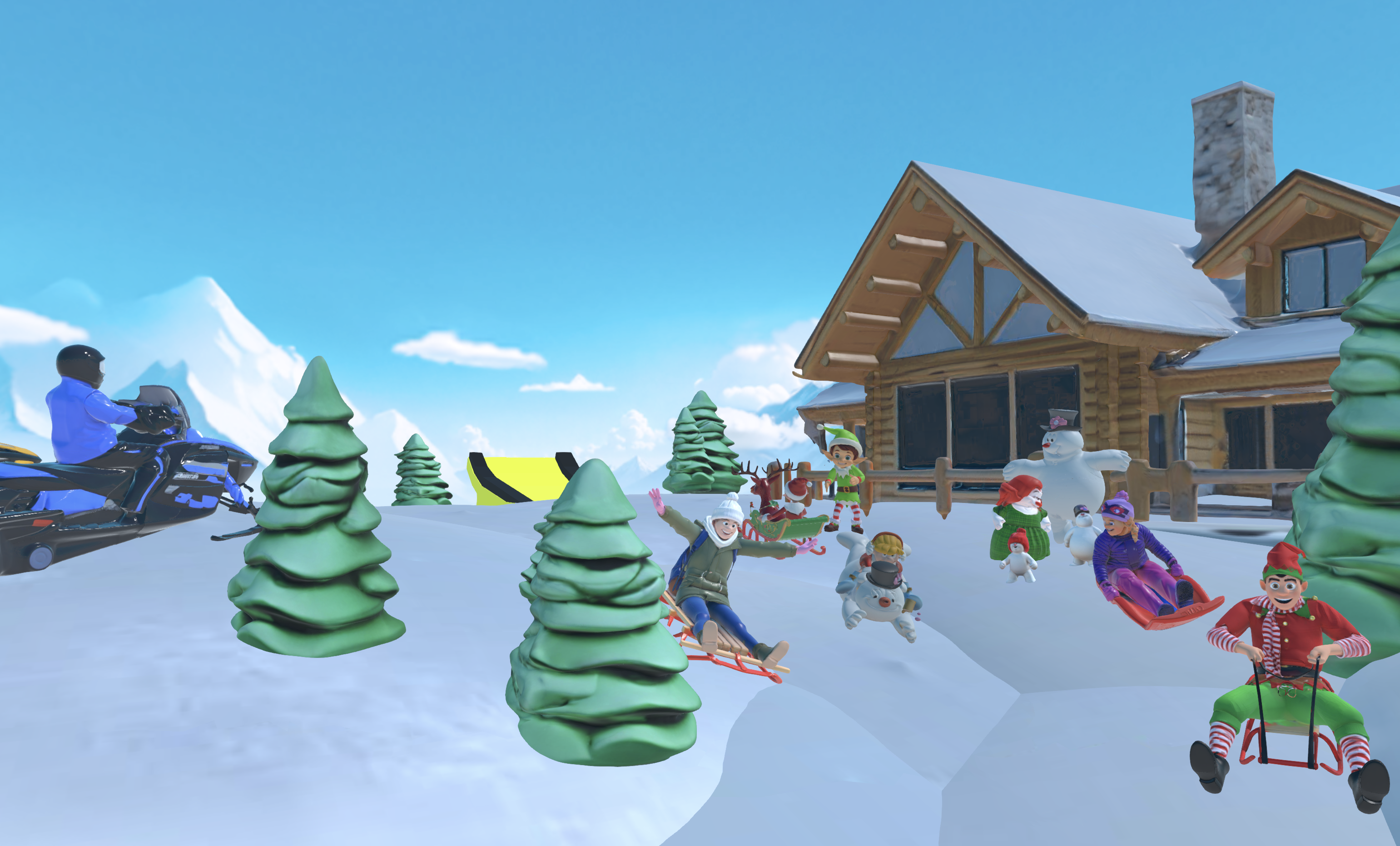
Nilo stands out in this category as a browser-based AI platform focused on Roblox creators. It combines 3D asset generation, one-click rigging, AI animation, vibe coding, and real-time multiplayer collaboration in one place. According to Nilo’s February 2026 Survey, 93 percent of builders said they would recommend Nilo to a friend, and 82 percent rated their experience as “Awesome” or “Good.”
See why so many builders recommend Nilo and start creating for free.
What These Tools Actually Let You Do
3D Asset Generation and Quick Refinement
Prompt-only tools can generate assets from text, but the results often feel uneven. You might see geometric defects, asymmetry, strange textures, or meshes that break Roblox’s polygon limits. You then regenerate the same prompt again and again, hoping for a better roll. Builders in Nilo’s February 2026 Survey called this pattern “the AI lottery.”
AI-assisted browser environments handle this in a more practical way. Nilo, for example, connects multiple AI model providers, including Meshy, Tripo, and Cartwheel, behind one interface. You can generate from a text prompt, a sketch, or a reference image, then refine the result directly in the 3D scene. Strong tools should be judged by whether the exported asset imports cleanly with correct materials, scale, and rig. Nilo’s LOD system automatically adjusts polygon counts to match Roblox’s triangle limits, so you skip manual cleanup.

One survey response summed it up clearly: “I do not have to spend hours on 3D modeling the simplest things. Now I can use Nilo and do it in 15 seconds.”
Scripting Alternatives with Vibe Coding
Scripting blocks more aspiring builders than any other skill. Prompt-only tools generate code, but AI-generated game code often misses engine-specific patterns, edge cases, and performance details. You also cannot see the result of the code as you write. You generate, copy, paste, test, and repeat.
Vibe coding in browser-based environments takes another route. You describe what you want a mechanic to do, in plain language and in any language, and the AI generates working code while you watch the change inside your 3D world. You can open the code and tweak variables directly, such as changing “speed = 2” to “speed = 20,” and you learn by seeing the effect. It feels like using “View Source” on a webpage, but for your game.
World Building, Physics, and Scene Layout
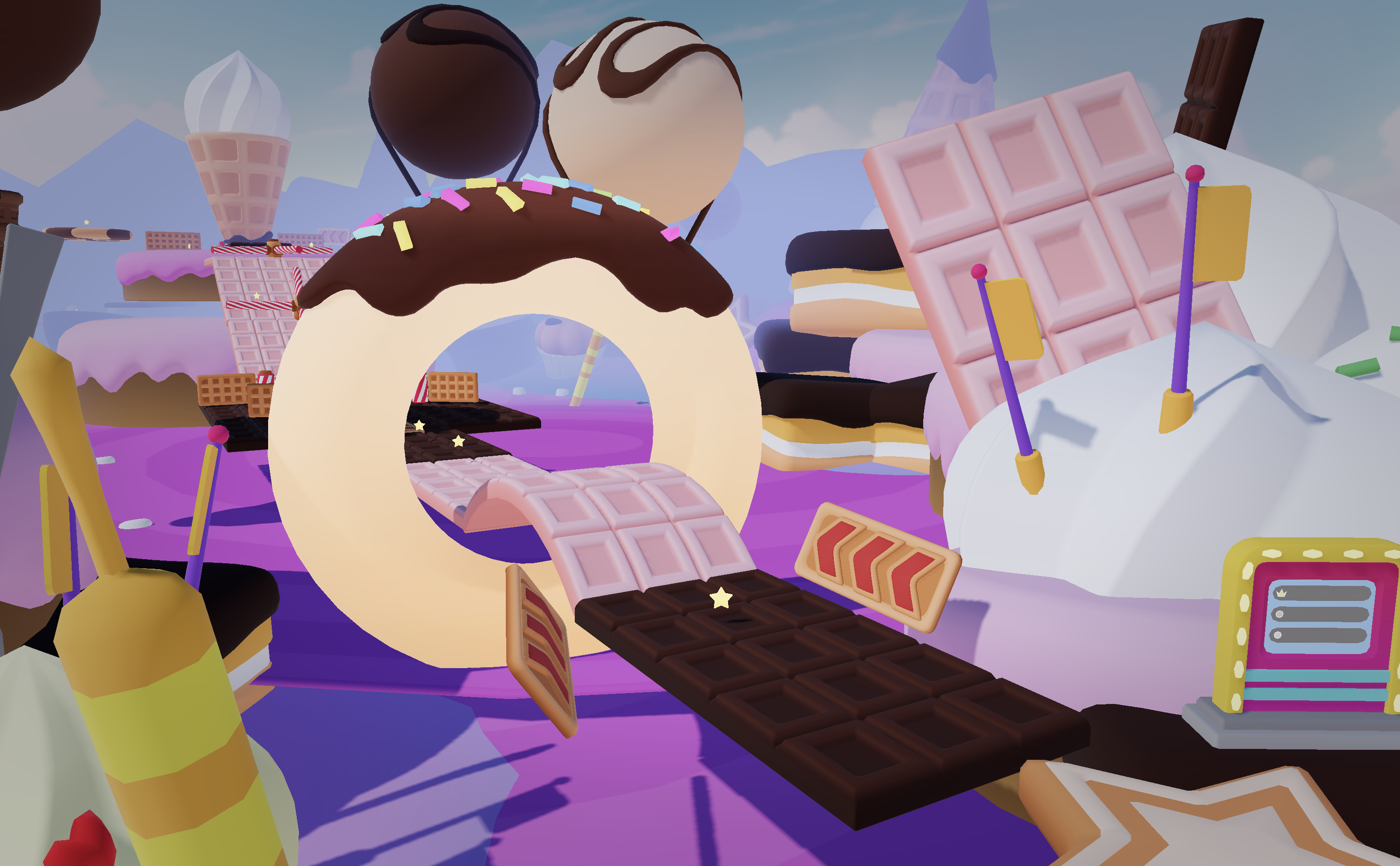
Pure prompt tools can spit out scenes from descriptions, but you cannot walk around inside them during the build. Browser-based 3D environments let you build spatially. You place objects, adjust layouts, and test physics in real time.
Nilo’s radial menu gives you quick object creation, and an inspector panel lets you tune properties in detail. Physics simulation runs by default, so everything in your world moves, bumps, and reacts without extra setup.
Performance and Polygon Budgets
AI-generated 3D models often ship with too much geometry. Developers then need to cut poly count, clean edge flow, and add LODs and collisions to hit performance budgets. For Roblox, this becomes a constant headache when you rely on tools like Meshy or raw AI generators.
Nilo’s real-time LOD system, mentioned earlier, handles this work automatically through on-the-fly adjustments. The platform runs on a custom game engine that uses C++ physics compiled to WebAssembly, with WebGPU graphics acceleration, so you get serious performance inside a browser tab.
Building Together and Sharing Worlds
Most prompt-only tools feel like single-player editors. You generate, you iterate alone, and you only share a link when you finish. Browser-based creation environments can support real-time multiplayer building instead. You share a URL, and a friend joins your world and builds with you instantly on desktop or mobile.
Exporting to Roblox and Other Engines
Export freedom separates flexible AI tools from closed ones. Some platforms keep your work locked behind hosted links. Others give you full project ownership with standard format exports.
Nilo exports to FBX, OBJ, STL, and glTF, which work with Roblox, Unity, Unreal Engine, Blender, and VRChat. Nilo also tunes polycount so models drop into Roblox Studio and other platforms without extra steps.
How You Can Compare Prompt-Only and Browser-Based Tools
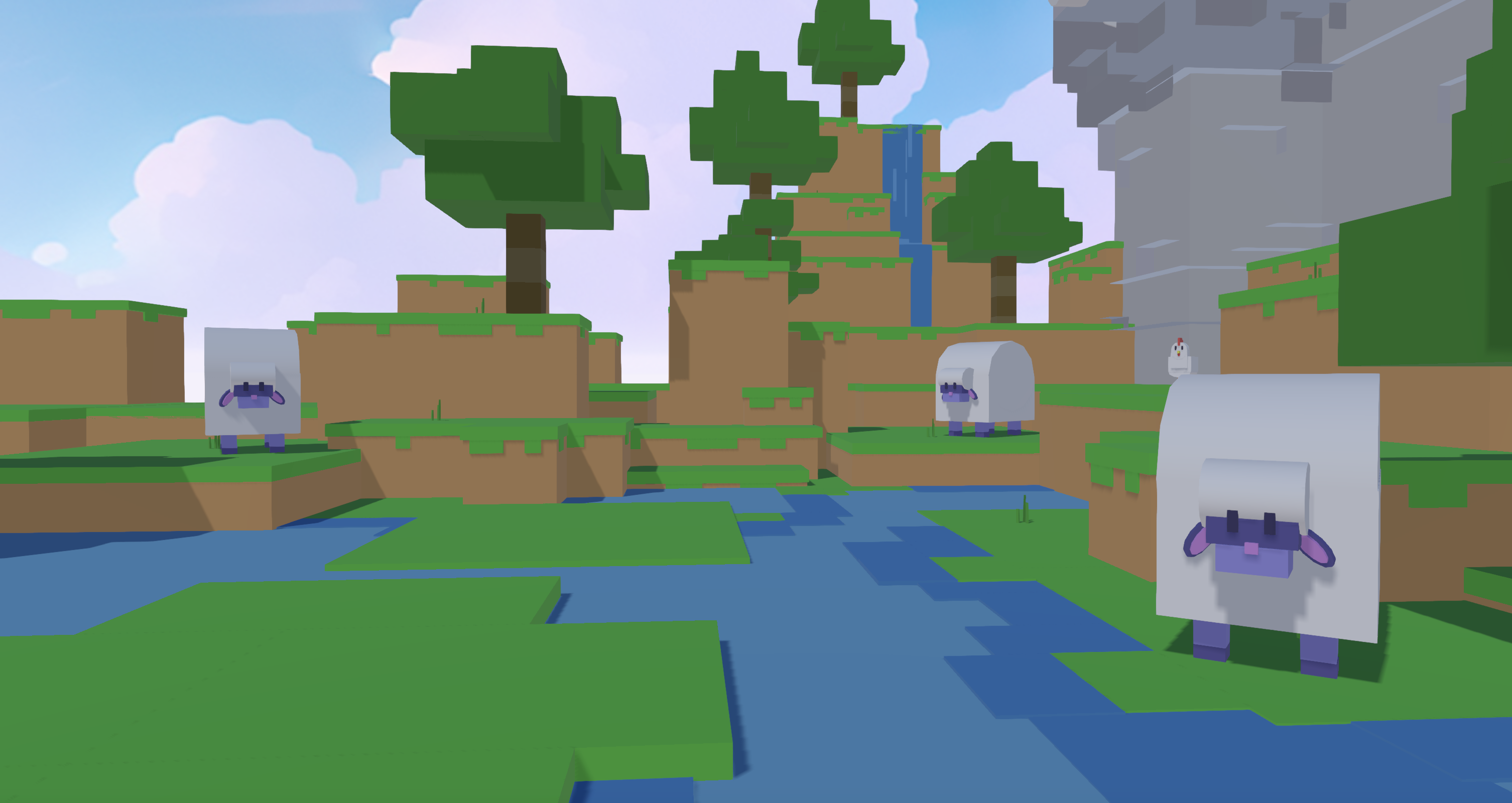
Your choice between a prompt-only tool like Bitmagic and an AI-assisted browser environment like Nilo depends on what you want to build and how far you plan to take it.
Use these criteria when you compare options:
- Ease of onboarding: Can you start creating in under five minutes without a long tutorial, and does it run in the browser with in-world guidance?
- Output quality: Do the AI assets work in your target platform without cleanup, and for Roblox, are polygon counts handled automatically?
- Export compatibility: Can you move your work into Roblox Studio, Unity, or Blender, or does the tool trap your creations?
- Iteration control: Can you edit what the AI generates directly, or do you keep re-prompting and hoping for better luck?
- Collaboration needs: Do you want to build with friends, and does the tool support real-time multiplayer creation?
- Learning value: Does the interface teach you real concepts like rigging, mesh topology, and LOD, or does it hide everything behind a black box?
Here is a simple way to think about it. If you want to prototype a quick idea in an afternoon and do not care about export, a prompt-only tool might be enough. If you want to build a Roblox world you can actually ship, with custom assets, working mechanics, and friends helping you build, an AI-assisted browser environment with Roblox-ready exports will usually take you further with less friction.
One builder in the survey put it this way: “I like how it feels like a good game engine rather than a vibe coding tool, with easy building and a good focus on being able to export and import content.”
Frequently Asked Questions
What is a prompt-only AI code generator for games?
A prompt-only AI code generator takes a text description, such as “make a platformer with a sword,” and produces a playable game or code without any hands-on building from you. Tools like Bitmagic, Rosebud AI, and Arcade AI work this way. They move fast for prototypes but give you limited control over the result. When something breaks or looks wrong, you mostly re-prompt and hope the next output improves.
What is vibe coding, and how is it different from prompt-only generation?
Vibe coding means you create game logic by talking, texting, or sending images to an AI while you see the result immediately in your 3D world. The key difference from prompt-only generation is that you stay inside the environment during the change. You see what updated, tweak variables directly in the code, and keep building without waiting for a full regeneration. It feels more like working with an AI co-pilot than handing over the wheel.
Do I need to know how to code or use Blender to build in Nilo?
No. Nilo lets you describe your vision with a text prompt, a sketch, or a reference image, and the platform generates, rigs, and animates it for you. The LOD system handles polygon optimization automatically, so you do not need Blender for cleanup. If you want to learn how the code works, you can open the editor and play with variables, but that step stays optional.
Can I export what I make to Roblox?
Yes. Nilo exports to FBX, OBJ, STL, and glTF formats, all compatible with Roblox Studio. The platform’s LOD system automatically keeps meshes within Roblox’s triangle limits before export. You can also export rigged and animated characters, not just static props. Nilo does not act as a walled garden, so anything you create can move to Roblox, Unity, Unreal Engine, Blender, or VRChat.
What makes browser-based 3D creation different from desktop engines like Roblox Studio?
Desktop engines like Roblox Studio need installation, specific hardware, and a lot of learning time before you can build something interactive. Browser-based environments run in a normal browser tab, with no downloads or setup. You share a link and start building together. Earlier browser tools had performance limits, but modern tech like WebAssembly and WebGPU has closed much of that gap. Nilo’s custom engine uses both, so you get game-engine-level performance in the browser without installing anything.
Conclusion: Picking the Right AI Helper for Your Roblox World
Prompt-only AI code generators like Bitmagic solve a real problem by shrinking the distance between an idea and a first playable result. That speed helps a lot for quick prototypes and testing concepts.
Friction appears when you try to go beyond that first version. Output randomness, runtime-blindness, export issues with Roblox’s performance limits, and the lack of hands-on editing control combine to stall many projects. For builders who want to actually ship a Roblox world, a custom asset pack, or a game your friends can play, prompt-only tools often leave too many gaps.
AI-assisted browser-based 3D creation tools keep the AI help but restore your direct control. The right choice for you depends on your goals, your comfort with technical details, and how far you want to push your world. If you are building for Roblox and want to stay in creative flow from first idea to final export, this category deserves your attention.
Nilo stands out in this space as a platform shaped for Roblox creators, combining AI generation, real-time editing, vibe coding, automatic LOD handling, and direct Roblox export in a single browser-based environment. The platform is in open beta and free to try.