Written by: Nuno Leiria, Founder & CEO @ Nilo
Key Takeaways for Roblox Builders
- ForgeGUI is an AI-powered design platform that shines at 2D assets like thumbnails, icons, and GUI elements for Roblox creators.
- The tool falls short for 3D asset creation, because its outputs need manual retopology, LOD work, and cleanup before they meet Roblox performance standards.
- Builders like you often feel frustrated when expecting a full 3D pipeline, since ForgeGUI lacks automatic polygon reduction and single-click Roblox export.
- ForgeGUI offers helpful scripting assistance and 2D marketing tools, but it is not built to replace the end-to-end 3D asset workflow most Roblox developers need.
- For a complete 3D asset solution with automatic cleanup and direct Roblox export, you can try Nilo’s open beta and start building for free.
The Real Gap Roblox Builders Run Into With ForgeGUI
Many builders search “what is ForgeGUI” expecting a complete 3D asset solution that takes a prompt and returns a clean, Roblox-ready model with no extra work. You instead get a tool that genuinely excels at 2D interfaces, thumbnails, and code generation, while leaving a big gap for production-quality 3D assets.
That gap affects your actual game performance. A serious game-asset pipeline includes retopology (rebuilding a mesh with cleaner geometry so it deforms and renders correctly), polygon reduction, UV unwrapping, texturing, rigging, export, and engine import. Most AI tools do not handle all of these steps for you in one flow. When you build for Roblox, you also need a budget-appropriate polycount, like roughly 3,000 triangles for a hand-held prop, plus verified LODs (levels of detail that keep performance smooth at a distance).
ForgeGUI’s 3D Creator tool can produce basic props, but it was not designed to solve this full pipeline. If you need clean topology, automatic LOD control, and one-click Roblox export, you are looking at a different category of tool.
Real User Complaints From Builders Like You
Forum discussions around ForgeGUI and similar AI tools keep surfacing the same frustrations. Builders talk about “messy results”, “extra steps”, and ask “is ForgeGUI legit?” or “is this a scam?” not because the tool is fake, but because it does not match what they expected on the 3D side.
The legitimacy question has a straightforward answer. ForgeGUI is a real, functioning platform with commercial rights for generated assets. The frustration comes from a mismatch between what you hope it will do and what it actually does. Builders who need Roblox-ready 3D models discover that raw AI-generated meshes commonly arrive with 42,000+ triangles and dense, messy topology that requires significant cleanup time in Blender before they can be imported into a game engine at a reasonable poly budget. That extra cleanup step slows your whole project down.
Understanding what ForgeGUI actually delivers, and what it does not, helps explain why these frustrations keep showing up.
ForgeGUI Features and Where It Stops Helping
ForgeGUI offers a wide range of tools for generating GUI elements like inventory panels and HUDs, thumbnails, icons, textures, characters, animations, effects, music, Luau scripting assistance, and basic 3D props.
Here is where ForgeGUI has clear limitations for Roblox 3D work:
- No automatic LOD generation, so you manage polygon counts manually or in Blender.
- No guaranteed clean topology on 3D outputs, so meshes may need retopology before Roblox import.
- No single-click Roblox export with built-in support for Roblox’s 10K–20K triangle caps.
- No end-to-end 3D pipeline, because it is mainly a design and scripting tool, not a full asset creation workflow.
How ForgeGUI Handles 3D Models
ForgeGUI includes a 3D Creator tool that can generate basic props. Most AI generators output high-detail meshes that satisfy none of the game-ready requirements out of the box. ForgeGUI’s 3D outputs follow the same pattern as other AI tools, with triangle counts that exceed Roblox’s 10K–20K cap unless you clean them up.
Manual retopology of a medium-complexity prop takes 30–60 minutes, and character models can require 2–4 hours. That is time you could spend designing levels, tuning combat, or playtesting with friends.
ForgeGUI Pricing for Roblox Creators
ForgeGUI offers a free tier for testing and paid plans for higher volume. Costs can add up quickly if you keep iterating on 3D assets or generating many thumbnail variations. The free tier works well for trying the platform, but it feels tight for long-term production use.
ForgeGUI Scripting Help for Luau
ForgeGUI includes an AI scripting tool for generating and debugging Luau scripts for Roblox games, and it can translate dialogue into multiple languages. The Luau code generation is a real, useful feature if you want help with scripting or debugging.
Scripting assistance solves a different problem than 3D asset quality. Clean code cannot fix a mesh with 80,000 triangles and broken UV maps, so you still need a solid asset pipeline.
Where ForgeGUI Shines: Roblox Thumbnails and Icons
This is the area where ForgeGUI really stands out. ForgeGUI supports generating thumbnails and icons for Roblox, which helps you create 2D marketing assets quickly.
For 2D marketing assets, ForgeGUI is a strong choice. For production 3D assets, it is not designed for that job, and you will feel that gap once you start importing models into Roblox Studio.
ForgeGUI vs Nilo for Roblox 3D Assets
For 2D work, ForgeGUI covers a lot of ground. For 3D work, the difference becomes clearer when you compare ForgeGUI directly against a tool built around the 3D asset pipeline.
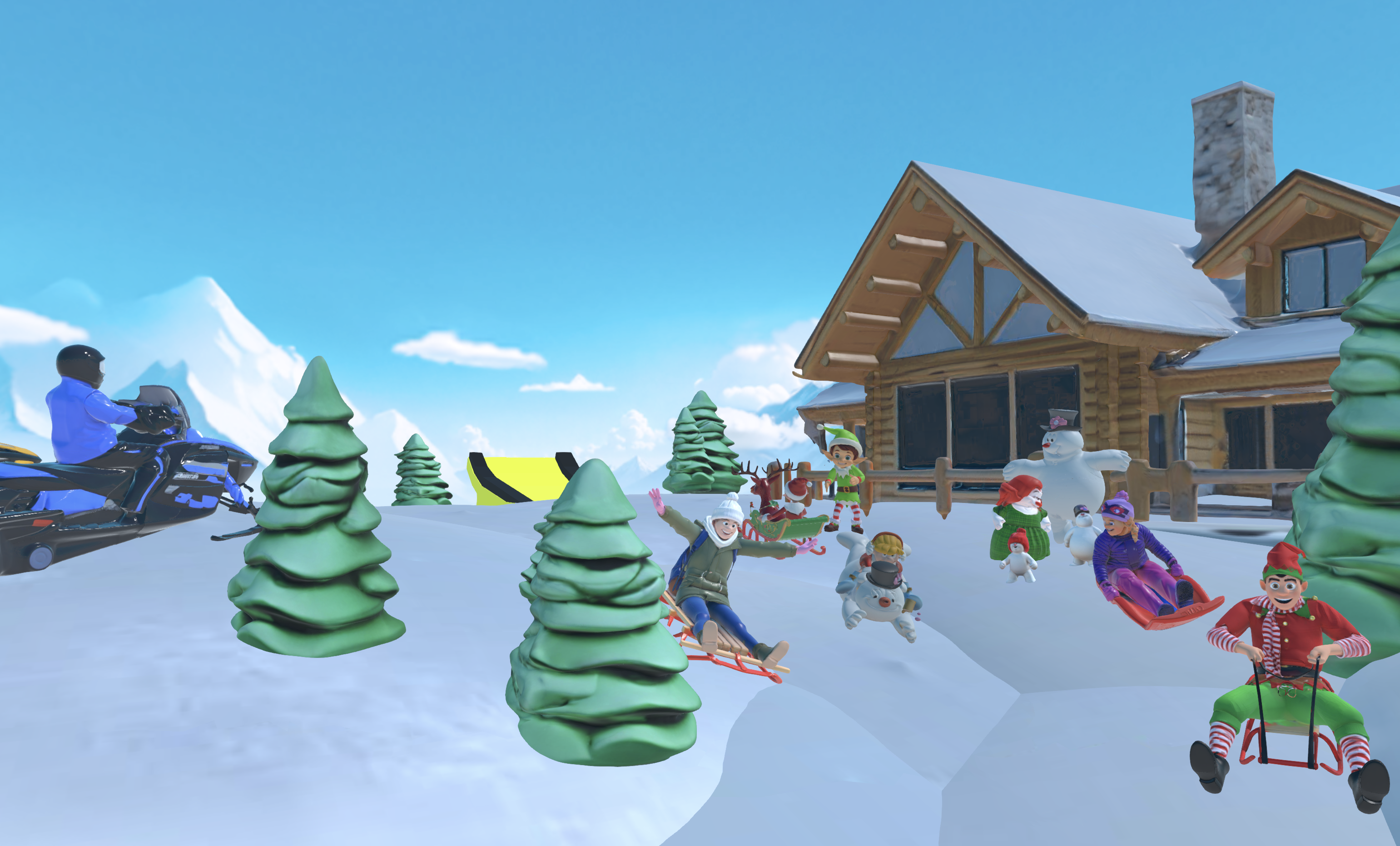
When you evaluate tools for your Roblox workflow, focus on whether each tool solves the full 3D asset problem or only part of it. Here is how ForgeGUI and Nilo compare on key points for Roblox builders like you:
| Capability | ForgeGUI | Nilo |
|---|---|---|
| Primary focus | GUI design, thumbnails, icons, scripting | End-to-end 3D asset creation and Roblox export |
| Automatic LOD optimization | Not included | Real-time LOD slider that adjusts polygon counts to meet Roblox’s 10K–20K triangle caps |
| Clean topology guarantee | Manual retopology typically required | Roblox-optimized topology without extra cleanup steps |
| Roblox export workflow | Export then manually optimize in Blender | Single-click export in FBX, OBJ, STL, or glTF, directly compatible with Roblox Studio |
| Browser-based, no install | Web-based platform | Fully browser-based, with no downloads and no high-performance hardware required |
| Rigging and animation | Animation Studio available | Rig and animate with one click from text prompts |
Nilo stands out for builders who want the full pipeline in one place so you can generate, clean up, rig, animate, and export without opening Blender. As one builder said in Nilo’s February 2026 survey, “I do not have to spend hours on 3D modeling the simplest things. Now I can use Nilo and do it in 15 seconds.” Nilo’s February 2026 survey also found that 93% of builders would recommend Nilo to a friend, and 82% rated their experience as “Awesome” or “Good”. ForgeGUI does not publicly report comparable satisfaction metrics.
Join Nilo’s open beta and try building and playing for free.
How To Evaluate Roblox Tools as a Builder
When you decide between a UI and scripting tool like ForgeGUI and a full 3D asset pipeline like Nilo, walk through these checks before you commit.
- Find your real bottleneck. If you mainly need better thumbnails and icons, ForgeGUI is a solid choice. If you need clean 3D models that work in Roblox without Blender cleanup, look for a tool with built-in retopology and LOD generation.
- Check Roblox polygon limits. Strong AI 3D tools for games should offer a controllable target polycount during retopology, LOD generation with stable silhouettes, and verified export targets including Roblox import that preserves scale, material slots, and skeleton without warnings.
- Count how many tools you touch. AI mesh generation tools typically output base meshes with 50K–500K triangles that require reduction to 2K–15K triangles for game-ready assets. If your chosen tool does not handle that reduction, you are adding Blender to your workflow.
- Confirm rigging and animation support. A model that cannot be rigged is a static prop. If you need characters or animated assets, check whether rigging and animation are built in or require a separate tool.
- Protect your creative flow. Every switch from generator to Blender to Roblox Studio breaks your momentum. Fewer handoffs usually mean faster shipping and more time actually building.
Conclusion: Where ForgeGUI Fits in Your Roblox Stack
ForgeGUI is a legitimate AI design platform, not a scam. For Roblox thumbnails, icons, GUI layouts, and Luau scripting assistance, it delivers real value. The honest limitation is that it was not built to solve the 3D asset pipeline problem, which is the problem many Roblox builders like you actually face.
Traditional 3D character creation requires 20–40 hours of manual work per asset, and most AI tools still need significant cleanup before assets meet Roblox’s performance requirements. Nilo addresses this directly. You generate from a text prompt, sketch, or image, adjust polygon counts with the LOD slider, rig with one click, and export directly to Roblox Studio, all in the browser without touching Blender.
If you are tired of the Meshy → Blender → Roblox Studio daisy-chain and want to spend your time designing objects instead of fighting polycounts, Nilo is worth evaluating as your main asset creation workflow.
Join Nilo’s open beta and try building and playing for free.
Frequently Asked Questions
Is ForgeGUI legit or a scam?
ForgeGUI is a legitimate platform. It generates real assets such as thumbnails, icons, GUI layouts, and basic 3D props, and users retain full commercial rights to everything they create. The “scam” question usually comes from builders who expected a full 3D asset pipeline and instead found a UI and scripting tool. That is a mismatch of expectations, not fraud. If you need Roblox-ready 3D models with clean topology and automatic optimization, ForgeGUI was not designed for that use case.
Can ForgeGUI generate 3D models for Roblox?
ForgeGUI includes a 3D Creator tool that can produce basic props. The outputs are not automatically optimized for Roblox’s performance limits, which usually sit between 10,000 and 20,000 triangles per mesh. Raw AI-generated meshes from most tools, including ForgeGUI’s 3D Creator, tend to arrive with much higher polygon counts and inconsistent topology, so you will probably need to clean them up in Blender before they work correctly in Roblox Studio. If you want to skip that step, look for a tool with a built-in LOD system and retopology pipeline.
What is the difference between a UI tool and a 3D asset pipeline?
A UI tool like ForgeGUI helps you design the visual interface of your game, including menus, health bars, inventory screens, icons, and thumbnails. These are 2D elements that sit on top of your game’s screen. A 3D asset pipeline handles the creation, cleanup, rigging, and export of the actual 3D objects inside your game world, such as characters, props, environments, and weapons. Both matter for a complete Roblox game, but they solve different problems, and confusing them leads to frustration when a UI tool cannot produce a clean, game-ready 3D mesh.
What does retopology mean, and why does it matter for Roblox?
Retopology is the process of rebuilding a 3D mesh with cleaner, more efficient geometry. AI-generated models often have irregular, dense triangle patterns that cause performance problems and do not deform correctly when animated. Roblox enforces strict polygon limits, generally 10,000 to 20,000 triangles per asset, so a raw AI mesh with 200,000+ triangles will not work without significant reduction. Retopology is how you move from the raw output to something Roblox will actually accept. Tools that automate this step can save you 30 minutes to several hours per asset.
How is Nilo different from ForgeGUI for Roblox builders?
ForgeGUI and Nilo solve different problems for aspiring builders or already builders like you. ForgeGUI focuses on 2D design assets such as thumbnails, icons, GUI layouts, and scripting assistance. Nilo focuses on the full 3D asset workflow. You generate a model from a text prompt, sketch, or image, optimize the polygon count automatically with the LOD slider, rig it with one click, generate animations from a text description, and export directly to Roblox Studio in FBX, OBJ, STL, or glTF format. The entire process happens in your browser with no Blender required. In Nilo’s February 2026 survey, 93% of builders said they would recommend Nilo to a friend, and 82% rated their experience as “Awesome” or “Good”.