Written by: Nuno Leiria, Founder & CEO @ Nilo | Last updated: August 6, 2026
Key Takeaways for Your Collision Fix
- AI-generated collision code usually uses simple discrete checks that miss fast-moving objects, so they tunnel through walls and floors.
- Collision bugs wreck game feel and trust. AI-written code creates about 1.7× more issues than human code, especially in physics logic.
- You fix this by using a browser-based 3D platform with a real-time physics engine, not just a prompt-to-code tool that leaves you debugging.
- Nilo runs a custom C++ physics engine in WebAssembly, so collisions, gravity, and interactions work automatically without generated code.
- Jump into Nilo’s open beta and start building and playing in your browser for free.
Why Collision Bugs Kill Your Game Feel
Collision bugs do more than look bad. They break game feel entirely. A character that falls through a floor once makes the whole world feel unreliable. A weapon that clips through geometry destroys combat. You stop trusting the physics, and you stop trusting your tools.
An analysis of 470 real-world GitHub pull requests found that AI-generated code produces approximately 1.7× more issues than human-written code, with logic and correctness errors 75% more common, and physics-heavy areas like collision detection ranking among the highest-failure categories. When you vibe code Roblox prototypes, that failure rate shows up fast.
Frustration stacks quickly. You fix one collision bug, another appears. You search for answers, find generic tutorials written for Unity professionals, and hit a wall. Projects get abandoned. The creative momentum you had at the start disappears.
The fix is not to stop using AI. You need a tool where the physics engine handles these problems for you, so you stay in creative flow instead of debugging code you did not write.
Try building a physics-enabled world in Nilo today and feel the difference in minutes.
What Kind of Tool Actually Solves This?
You solve tunneling and broken collisions with an AI-assisted, browser-based 3D creation platform that runs a real physics engine, not a prompt-to-game wrapper that just spits out code.
There is a big gap between tools that generate game code from prompts and tools that run a real physics simulation. Rosebud AI and Upit let you describe a game and get output, but they do not run a custom physics engine underneath. When the generated collision code fails, you are on your own to debug it. General-purpose AI coding tools from OpenAI or Anthropic can write collision logic, but they cannot test it against a live physics simulation inside the browser.
Nilo stands out here because it behaves like a game engine first. It runs on a custom C++ physics engine compiled to run in browsers using WebAssembly. You get real-time physics simulation, so collisions, gravity, and object interactions work by default without any generated code. You build inside a live 3D world, not a code editor.
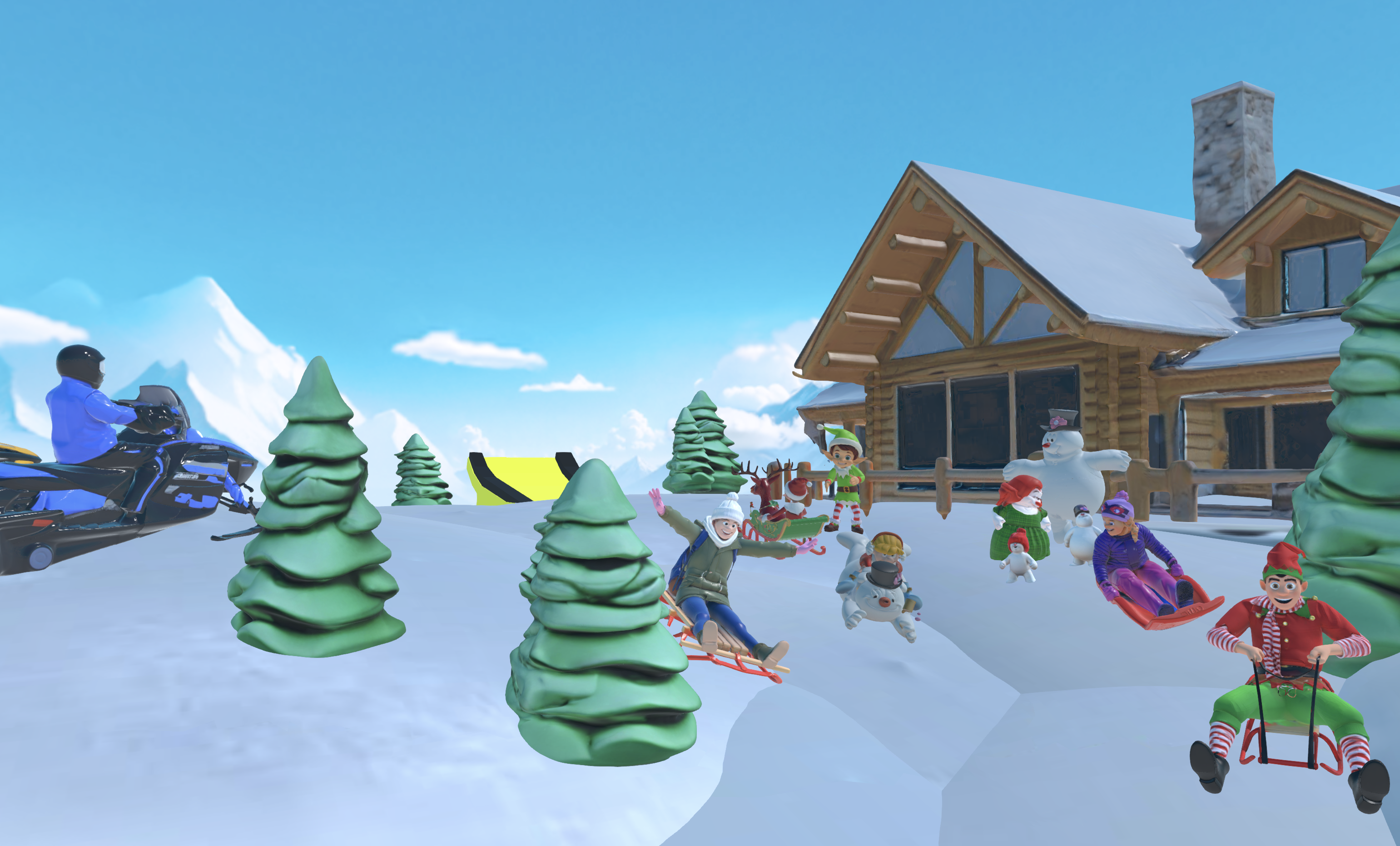
Open Nilo in your browser and start building in a live physics sandbox right away.
When you compare tools in this category, use these checks:
- Check whether the tool runs a real physics engine or only generates physics code that you must debug.
- Check whether you can see collisions working in real time in the browser, without exporting first.
- Check whether it exports Roblox-ready assets with collision data preserved.
- Check whether you can tweak collision behavior with natural language and see instant visual feedback.
Core Features That Protect Your Collisions
Clean 3D Assets That Collide Correctly
Collision problems often start before any code exists. AI-generated 3D meshes from tools like Meshy often contain overlapping geometry, non-manifold edges, or polygon counts that exceed Roblox’s 10K–20K triangle cap. These defects make collision shapes behave unpredictably even when the physics logic is correct.
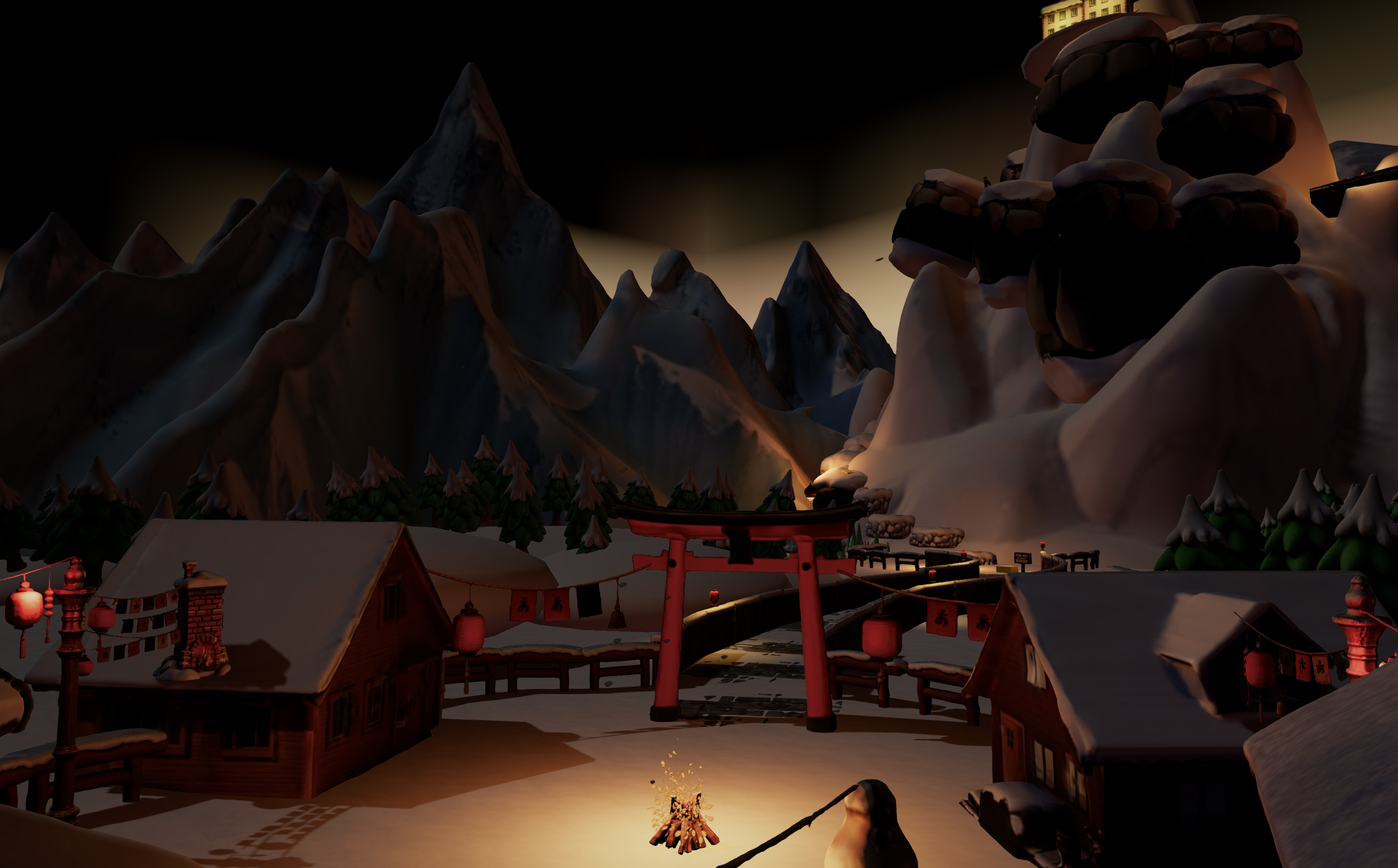
Nilo generates 3D assets from text prompts, sketches, or reference images and runs real-time retopology. The system cleans mesh topology so collision shapes stay clean and predictable. A level of detail system adjusts polygon counts on the fly, keeping assets within Roblox’s performance limits without manual cleanup. As one Nilo Creator said in Nilo’s February 2026 survey: “I do not have to spend hours on 3D modeling the simplest things, now I can use Nilo and do it in 15 seconds.”
Prompt Templates for Collision Logic
Some situations still need custom collision behavior. You might want a pressure plate that triggers a door, a damage zone, or a bouncy surface. The prompt you write matters a lot. Effective prompts for 3D collision code should specify exact collision types using standard vocabulary, name the engine and version, reference existing code, and include exact numerical parameters.
Use these copy-paste prompt templates for common collision scenarios:
AABB for a static obstacle:
Add AABB collision to the crate object. When the player's AABB overlaps the crate's AABB, stop the player's movement on the axis of overlap. Use the player's velocity from the previous frame to determine which face was hit first.
Sphere collision for a pickup item:
Add sphere collision with radius 1.5 to the coin object. When the player's sphere collider overlaps the coin's sphere, play the collect sound, add 1 to the score, and remove the coin from the world.
Continuous collision detection for a projectile:
Add continuous collision detection to the arrow projectile. Each frame, cast a ray from the arrow's previous position to its current position. If the ray hits any surface, move the arrow to the hit point, apply damage to the hit object, and destroy the arrow. Do not use a discrete position check.
Edge-case fix for corner and thin-wall tunneling:
The player is tunneling through thin walls at high speed. Replace the current discrete position check with a swept capsule test between the player's previous and current position each physics step. If the sweep hits a wall, stop the player at the contact point and zero out velocity on the wall's normal axis.
Nilo’s built-in code editor accepts these prompts directly in natural language. You see changes instantly in the live 3D world, with no export, no compile step, and no waiting.
World Building With Physics Always On
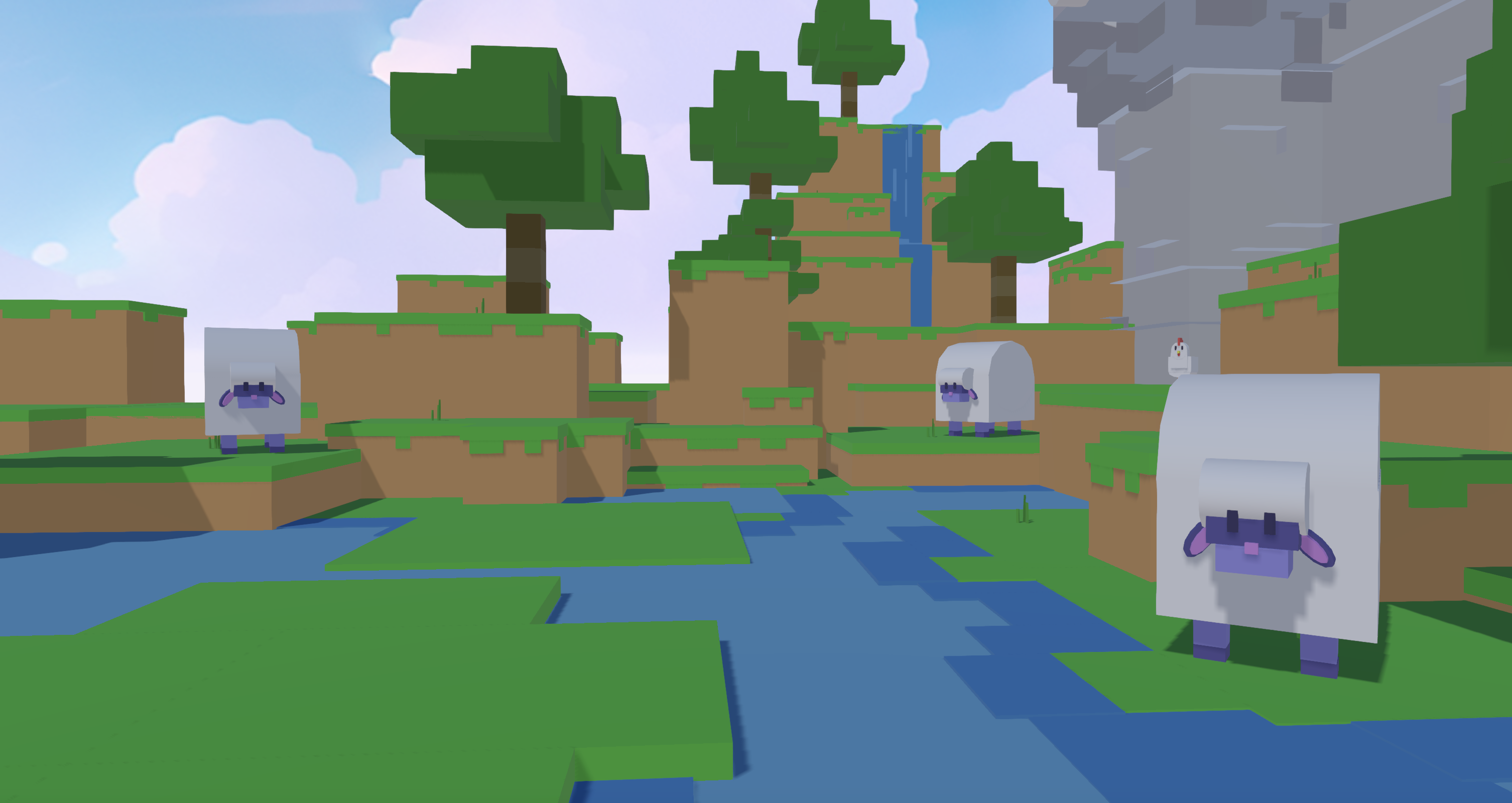
Nilo keeps physics on by default. Every object you place has collision and responds to gravity right away. You do not wire up collisions manually or generate physics code from scratch. This removes a whole class of bugs that come from AI-generated discrete checks missing fast objects.
Discrete collision detection samples object positions only at fixed simulation intervals, which lets fast-moving objects tunnel through colliders when their per-step travel distance exceeds the collider thickness. Nilo’s WebAssembly-based physics engine handles this at the engine level, so you do not need to prompt around it.
You can playtest collisions directly in the browser. Run around your world, throw objects, and test pressure plates before exporting anything to Roblox Studio.
Smart Performance for CCD and Large Worlds
Continuous collision detection costs 3–10× more than discrete, so you should enable it only for fast-moving objects such as bullets and projectiles. Nilo’s engine applies this automatically. CCD runs on objects that need it, while static geometry uses efficient broad-phase filtering that skips object pairs that cannot collide before running expensive tests.
For browser-based implementations, spatial hashing works well for 50–1,000 uniformly sized objects, while BVH suits static geometry. Nilo handles this infrastructure so you focus on building your world instead of tuning data structures.
Building Together and Exporting to Roblox
You can share a link and a friend can join your world in real time on desktop or mobile, with no download. When your world feels ready, you export to FBX, OBJ, STL, or glTF. Nilo’s Roblox exporter applies the LOD system automatically, keeping polygon counts within the triangle limits mentioned earlier.
As one Nilo Creator put it in Nilo’s February 2026 survey: “I like how it feels like a good game engine rather than a vibe coding tool, with easy building and a good focus on being able to export and import content.”
How To Judge Collision-Friendly Tools
When you decide which tool to use for vibe coding collision detection, use this checklist:
- Onboarding speed: You should get a physics-enabled world running in under five minutes in a browser without installing anything.
- Output quality: The generated collision logic should handle fast objects instead of defaulting to simple discrete checks that tunnel.
- Export compatibility: The tool should export Roblox-ready files with collision data intact and meshes within Roblox’s polygon limits.
- Performance limits: The tool should warn you when your scene exceeds platform caps instead of letting you discover it after export.
- Collaboration: You should be able to build and test collisions with a friend in real time without setting up a separate server.
- Learning value: The tool should show you the actual code it generates, so you can see AABB, sphere, and CCD in real examples.
Nilo’s code editor shows you the generated code and lets you tweak variables directly. You change speed = 2 to speed = 20 and instantly see what happens. It feels like right-clicking “View Source” on a webpage, but for game physics.
Open Nilo, view the physics code behind your world, and start learning by doing.
Real Scenarios You Might Recognize
First-time creator: You have never written a line of code. You describe a platformer to Nilo’s AI, and a world appears with working floors, walls, and gravity. You run around immediately. No collision code to write and no tunneling bugs to chase. When you want a moving platform, you type “add a platform that moves left and right and stops when the player stands on it” and it just works.
Roblox-focused builder: You are building a sword-fighting game and your weapons keep clipping through walls. In Nilo, you use the CCD prompt template above to add swept collision to your weapon hitbox. You test it in the browser, confirm the hit registration feels right, then export the asset to Roblox Studio with one click. The LOD system keeps your sword under Roblox’s polygon cap automatically.
Collaborative team: You and a friend are building a parkour map. You share a Nilo link and build together in real time. One of you places platforms, the other tests jump distances and collision feel. You avoid version conflicts and export delays. When a ledge feels wrong, you adjust it live and retest on the spot.
Rapid prototyper: You want to test five different collision feels for a bouncy ball mechanic before choosing one. In Nilo, you duplicate the object five times and prompt each copy with a different restitution value. This lets you compare all five behaviors side by side in the same session. The workflow that would take hours in Blender and Roblox Studio, with export and import loops, now takes minutes because you test live in the browser.
FAQ
What is collision detection in programming?
Collision detection is the part of a game engine that figures out when two objects touch or overlap. It runs every frame and tells the game what to do when a player hits a wall, a bullet hits an enemy, or a character lands on a floor. Without it, objects pass through each other as if they are not there.
Why does vibe coding produce tunneling?
When you describe collision behavior to an AI in natural language, the AI usually generates the simplest code that fits your words. That code almost always uses a discrete check. It tests whether two objects overlap at the current moment in time. If an object moves fast enough to skip past another object between two checks, the engine never sees the overlap and the object tunnels through. AI tools rarely add swept-volume logic on their own because that logic is more complex and most prompts do not ask for it directly.
What is the difference between AABB, sphere, and continuous collision detection?
AABB wraps an object in a box aligned to the world axes. It is fast to compute and works well for blocky objects, but it does not rotate with the object. Sphere collision wraps an object in a sphere. It is even faster and great for pickups and projectiles, but it feels imprecise for non-round shapes. Continuous collision detection sweeps the object’s full path between frames instead of checking only its current position. It catches fast-moving objects that would tunnel through thin geometry, but it costs more processing power. Use AABB and sphere for most objects, and CCD only for bullets, fast projectiles, and the player character.
How do I fix a character falling through the floor in a vibe-coded game?
The most common cause is a discrete collision check that misses the floor when the character moves too fast, such as during a fall. You fix this by replacing the position check with a downward ray cast or a swept capsule test that checks the full path the character traveled since the last frame. In Nilo, the physics engine handles floor collision automatically, so this bug does not appear by default. If you are working in another engine, use the CCD prompt template in the Key Capabilities section above and state clearly that you want a swept test, not a position check.
Can I export collision-ready assets from Nilo to Roblox Studio?
Yes. Nilo exports to FBX, OBJ, STL, and glTF formats that import directly into Roblox Studio. The LOD system automatically adjusts polygon counts to stay within Roblox’s 10K–20K triangle limits. You can also playtest collision behavior in Nilo’s browser environment before exporting, so you know the physics feel is right before it reaches Roblox Studio.
Bring Your Ideas to Life Without Fighting Physics
Vibe coding collision detection fails for a predictable reason. AI generates discrete checks, discrete checks miss fast objects, and fast objects tunnel through geometry. You fix this with a tool where the physics engine handles the hard parts by default and where you can see and test collisions in real time before they become bugs in your Roblox game.
Nilo’s WebAssembly-based physics engine runs real collision simulation from the moment you place an object. The Roblox-optimized export pipeline preserves collision data and keeps polygon counts within platform limits automatically. In Nilo’s February 2026 survey, 93% of Nilo Creators said they would recommend Nilo to a friend, and 82% rated their experience as “Awesome” or “Good.”
You do not need to understand broadphase BVH trees or swept-volume CCD to build a game that works. You need a tool that handles those problems while you focus on building the world in your head.
Start building your next Roblox-ready world in Nilo’s open beta and feel your collisions just work.