Written by: Nuno Leiria, Founder & CEO @ Nilo | Last updated: August 11, 2026
Key Takeaways
- Vibe-coded FPS games let you build browser-playable shooters by describing what you want in plain language instead of writing engine code.
- Modern browser tech like WebGPU and WebAssembly now supports real physics and 60fps rendering, so you can share FPS prototypes from any browser.
- The seven-step workflow takes about 30 minutes from a blank world to a live, shareable FPS link, covering arena, movement, weapons, enemies, and performance.
- Nilo stands out as a game-engine-first platform that mixes real-time 3D editing, AI-assisted code generation, and automatic LOD control without scripting or downloads.
- Join Nilo’s open beta to start building and playing your own vibe-coded FPS for free.
Core FPS and Vibe Coding Concepts You’ll Use
You only need a few ideas to follow this guide, and none of them require a computer science class.
- Raycasting – The game fires an invisible ray from your crosshair into the 3D world to detect what you hit. When the ray hits an enemy, the game registers a shot. Almost every FPS weapon system works this way under the hood.
- Physics simulation – The engine calculates how objects move, fall, collide, and react in real time. Engines like Rapier, a Rust physics engine compiled to WebAssembly, deliver near-native speed in browsers, so grenades bounce and players do not clip through floors.
- LOD (Level of Detail) – The system automatically reduces polygon counts on objects far from the camera. Your game stays fast without looking worse up close. This is critical for hitting Roblox’s 10K–20K polygon caps on export.
- Vibe coding – You type, talk, or send images to an AI, and it generates working game code and 3D assets. You still control the game, but you do not write scripts from scratch.
- Browser-based workflow – You build and play entirely in a web browser. No downloads, no installs, no high-end PC. You share a link and your friends can jump in.
If you are an 11–18-year-old Roblox builder who has hit the wall with Lua or spent hours wrestling with Blender, this workflow is for you. The following seven steps take roughly 30 minutes from a blank world to a shareable browser FPS, and you can try every step for free in Nilo’s open beta.
Seven Steps to Vibe Code Your FPS
Each step explains what you are doing, what you type or click, and a quick timing checkpoint.
Step 1: Open Nilo and Start a New World (0–2 min)
Go to play.nilo.io, create a free account, and open a new world. There is no download and no install. Nilo runs on a custom game engine built with C++ physics compiled to WebAssembly and accelerated with WebGPU, so real physics and rendering are already running in your browser before you place a single object.
Step 2: Generate Your FPS Arena with Prompts or Sketches (2–8 min)
Use Nilo’s radial menu to start placing your arena. Type a prompt like “industrial warehouse with cover walls and catwalks,” or sketch a rough top-down layout and let the AI generate the geometry. You can also drop in a reference image.
Nilo’s AI layer connects to multiple 3D generation providers, including Meshy and Tripo, behind one interface. You get clean, optimized geometry without manual retopology. Then customize sky, ground color, and lighting from the inspector panel. Checkpoint: you should have a playable arena space by minute 8.
Step 3: Add First-Person Movement and Camera Controls (8–14 min)
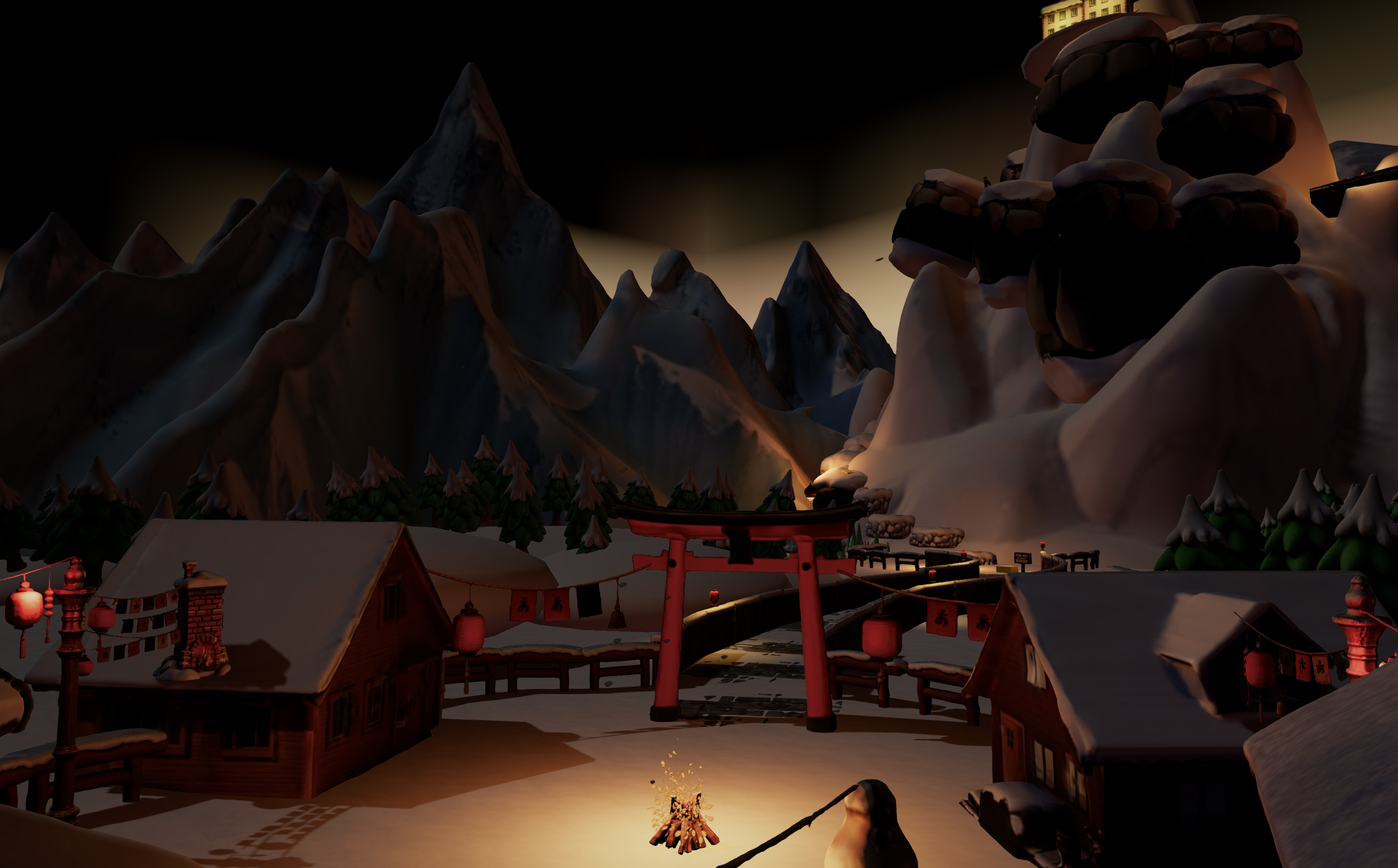
Now you turn that arena into a place you can actually walk around. Open Nilo’s built-in code editor and type what you want: “Add first-person movement with WASD controls and mouse look.” The AI generates working code and you see the result instantly in your 3D world. There is no waiting and no compiling.
Pointer-lock controls, where your mouse cursor locks to the screen and controls your camera, are a standard FPS mechanic. Physics engines like Rapier provide dedicated character controller APIs that simplify first-person movement while respecting collisions, and Nilo’s engine handles this layer for you. Checkpoint: walk around your arena in first-person by minute 14.
Want to feel what a Nilo FPS prototype is like at this stage? Try the same workflow yourself in Nilo’s open beta.
Step 4: Add Raycasting Weapons and Hit Detection (14–19 min)
Next you give your player something to fire. In the code editor, type: “Add a weapon that fires a raycast on left click and shows a hit effect when it hits an object.” Nilo’s AI generates the raycasting logic and connects it to your player controller.
You can generate a weapon prop, like a rifle, pistol, or sci-fi blaster, using a text prompt or sketch. Nilo places it in your hand view. Adjust fire rate, damage, and ammo count by editing the variables directly in the code editor. You only change numbers, not syntax. Checkpoint: you are shooting and registering hits by minute 19.
Step 5: Drop In Enemies with Simple AI (19–24 min)
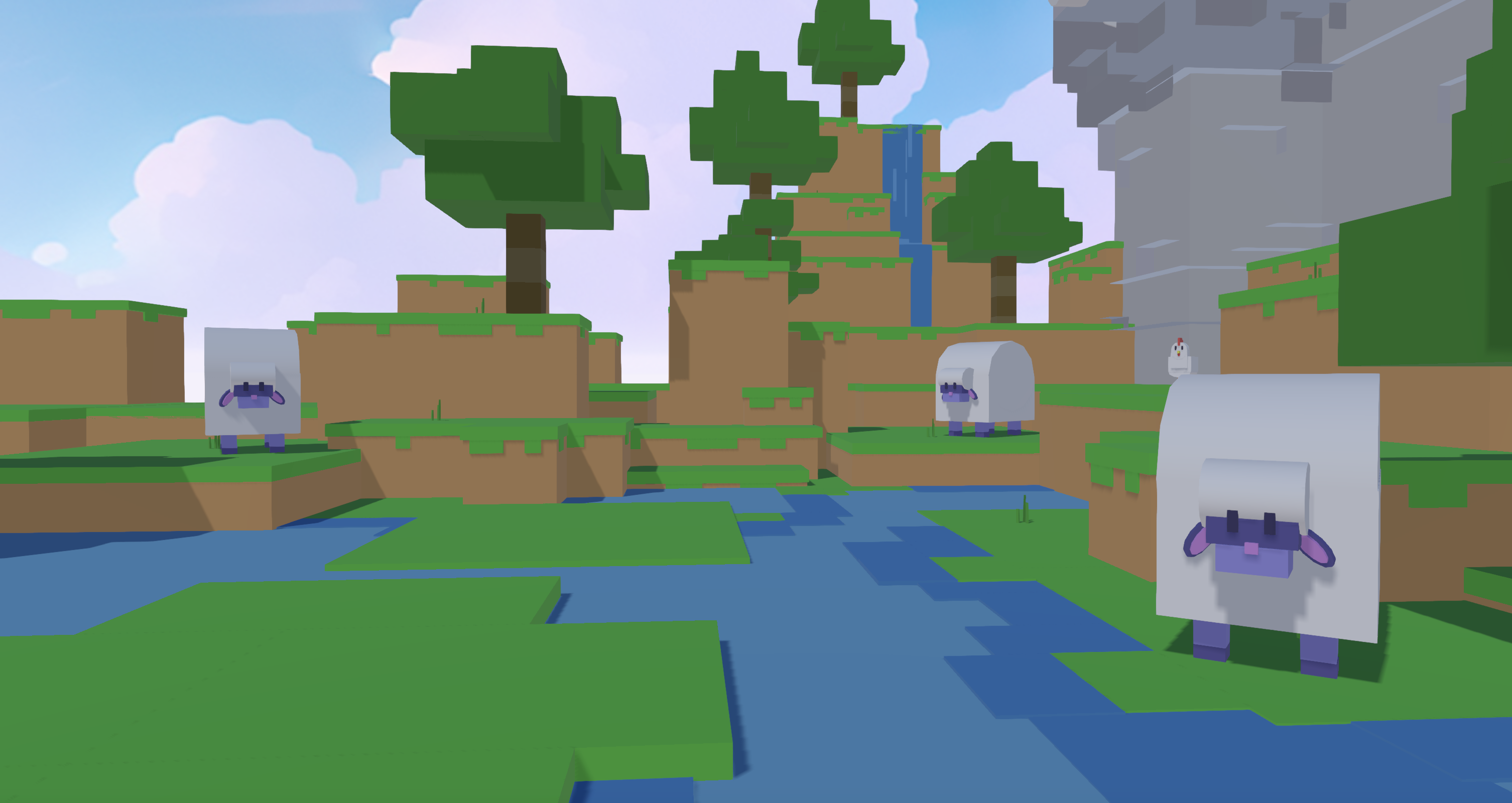
Now you add something to shoot at. Prompt the AI: “Add enemy characters that patrol the arena and chase the player when nearby.” Generate enemy models using text prompts, such as soldiers, robots, or aliens, and Nilo rigs them automatically for bipedal movement.
The AI writes the patrol and chase logic for you. You tune aggression range and speed by tweaking variables in the code editor. Checkpoint: enemies are moving and reacting to your player by minute 24.
Step 6: Tune Physics, LOD, and Performance (24–28 min)
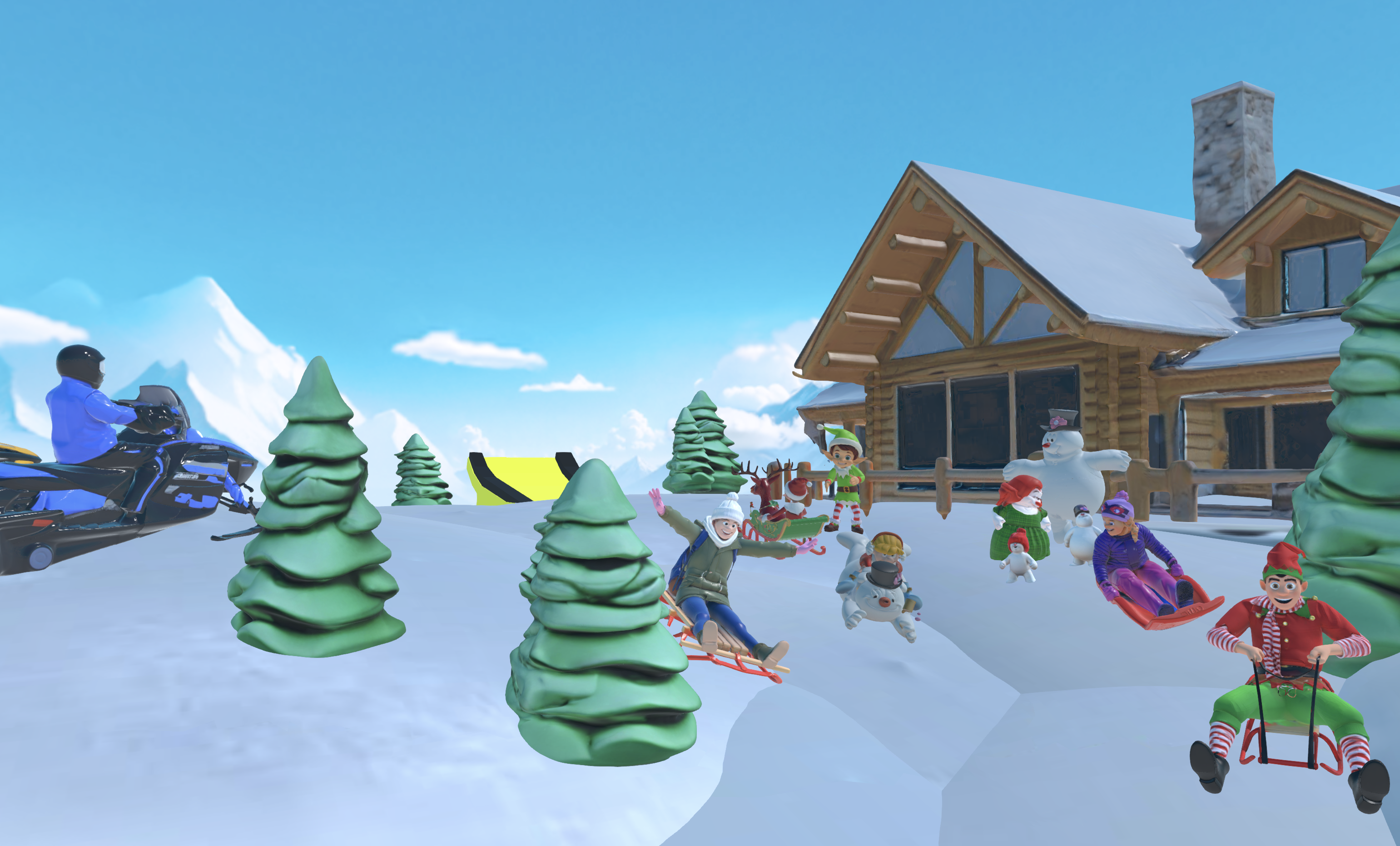
This step keeps your FPS smooth on different devices. Open the LOD slider in Nilo’s inspector panel. This controls level of detail, which automatically reduces polygon counts on distant objects to keep your game fast.
Browser games using WebGPU need strict asset size discipline to avoid performance drops, and the LOD slider gives you that discipline without manual cleanup. Once you set your LOD level, check your frame rate in the editor to confirm stable performance. If you plan to export to Roblox, this same LOD setting keeps your assets within the polygon caps mentioned earlier. Checkpoint: stable performance across your arena by minute 28.
Step 7: Publish or Export Your FPS (28–30 min)
With performance stable, you are ready to share your game. Hit publish and Nilo generates a shareable link. Anyone can click it and play your FPS in their browser instantly.
If you want to bring your assets into Roblox, export in FBX or glTF format with one click. Nilo’s LOD optimization means your models are already Roblox-ready. You can also export to Unity, Unreal Engine, Blender, or VRChat. Checkpoint: your FPS is live and shareable by minute 30.
As one builder put it in Nilo’s February 2026 survey: “I like how it feels like a good game engine rather than a vibe coding tool, with easy building and a good focus on being able to export and import content.”
How to Compare Nilo with Other FPS Vibe Coding Tools
Now that you have seen the workflow in action, you might want to compare Nilo with other tools you have heard about. You can use a simple checklist to judge any platform for this kind of FPS workflow.
Nilo stands out as a game engine first platform. You are inside a 3D environment building, tweaking, and playtesting in real time, with AI as your co-pilot instead of the main driver. This feels like the “Iron Man suit” approach, where you get superpowers while still staying in control. The underlying engine runs C++ physics via WebAssembly and WebGPU rendering, so the physics in your FPS are real rigid-body simulation, not loose approximations.
This game-engine-first approach matters once you start iterating. Pure prompt-to-game tools like Rosebud AI or Arcade AI generate a game from a text prompt but offer limited hands-on control after that first pass. Research on AI game generation benchmarks shows that single-pass prompting can have limited success rates on shooter tasks, which means a broken FPS from the first prompt can be hard to fix. A game engine first workflow, where you see and adjust every mechanic in real time, closes that gap.
Other tools focus on pieces of the pipeline. Meshy and Sloyd generate 3D assets quickly, but those assets often need retopology and UV cleanup in Blender before they are ready for a game engine. Nilo’s real-time retopology and LOD system remove that cleanup step. Blender stays a powerful choice for deep mesh editing, but it takes months to learn and does not run your game. Roblox Studio is a professional-grade desktop app that needs installation and Lua scripting knowledge before anything feels interactive.
When you evaluate any tool for this workflow, look for:
- Real-time physics you can see working before you export
- Exports to standard formats like FBX, glTF, and OBJ that work in Roblox, Unity, and Unreal
- Shareable playable links that run in a browser
- Automatic LOD and polygon optimization
Where Vibe Coding FPS Games Still Has Limits
The 30-minute workflow above is real and achievable, but vibe coding still has limits you should know about.
AI-assisted coding tools often struggle with edge cases and complex game logic. Precise multiplayer sync, advanced recoil systems, and anti-cheat mechanics still benefit from human review. Context window limits mean AI tools can lose track of earlier architectural decisions, which can cause inconsistencies as your FPS grows.
For a 30-minute prototype, these issues rarely block you. For a full commercial release, you should plan to review and refactor the generated code. AI can speed up tasks and help you create simple prototypes, but commercially viable games still need human direction across design, engineering, and testing. Nilo is clear about this. The platform today shines for asset creation, rapid prototyping, and shareable browser worlds. Full game publishing is the direction Nilo is moving toward, not the current state.
Builders in Nilo’s February 2026 survey reflected this balance. In that survey, 93% said they would recommend Nilo to a friend, and 82% rated their experience as “Awesome” or “Good.” One builder said, “You made me enjoy vibe-coding. The code assistance works almost flawlessly, other experiences have just been frustrating at best.” Another focused on control: “A good spread of features. Feeling like a proper engine unlike others banking on AI where creator freedom just doesn’t exist.”
The honest summary is simple. Vibe coding an FPS prototype in 30 minutes is real and reachable. Shipping a polished, production-ready FPS with advanced multiplayer still takes more time, review, and craft.
30-Minute FPS Builder Checklist
Use this checklist to confirm your vibe-coded FPS prototype is ready to share:
- Arena is generated and visually distinct with cover and sightlines
- First-person movement and pointer-lock camera controls are working
- Raycasting weapon fires and registers hits on objects and enemies
- At least one enemy type patrols and reacts to the player
- Frame rate is stable, ideally around 60fps, when you check in the editor
- LOD slider has been applied and polygon counts stay within Roblox’s cap if you plan to export
- Shareable browser link is live and loads without errors on another device
- Export file, FBX or glTF, downloads cleanly if you need Roblox export
Frequently Asked Questions
How long does it actually take to build a playable FPS in Nilo?
A basic playable prototype with an arena, first-person movement, a weapon, and enemies can often be created in Nilo by following the seven steps above. That timing includes generating 3D assets, writing game logic through the AI code editor, and publishing a shareable link. More complex features like multiple weapon types, wave-based enemy spawning, or score systems add time, but each starts from a single prompt and a few minutes of tweaking.
Do I need any scripting or coding experience?
You do not need scripting experience. Nilo’s built-in code editor accepts natural language, so you type what you want the game to do in plain English or another language, and the AI generates working code with real-time feedback in your 3D world. You can also tinker with variables directly in the code editor, such as changing “speed = 2” to “speed = 20,” which helps you learn real programming concepts without writing code from scratch. It feels similar to viewing source on a webpage, but for games.
Can I export my Nilo FPS to Roblox?
Yes. Nilo exports to FBX, OBJ, STL, and glTF formats, which work with Roblox Studio. Nilo’s LOD system automatically optimizes polygon counts to meet Roblox’s requirements, so your assets are Roblox-ready without manual cleanup. You can also export to Unity, Unreal Engine, Blender, and VRChat. Nilo is not a walled garden, so you can start in Nilo and continue anywhere.
What makes Nilo different from prompt-to-game tools like Rosebud AI?
Rosebud AI and similar tools generate a game from a text prompt, but hands-on control after generation is limited. Nilo is a game engine first, so you are inside a 3D environment, building and playtesting in real time, with AI as your co-pilot rather than the only author. Because Nilo uses the engine architecture described earlier, the physics in your FPS are real rigid-body simulation, not approximations. You can adjust every mechanic, tweak every variable, and collaborate with friends in real time by sharing a link, which prompt-only tools do not support at the same depth.
Does Nilo work on my device without a powerful computer?
Nilo runs entirely in your browser, so you do not need to install anything or buy high-performance hardware. It works on desktop and mobile browsers. The platform uses WebGPU for modern browsers with a WebGL fallback for older ones, so it adapts to your device automatically. You just open the link and start building.
Start building in Nilo’s open beta today, right from your browser.
Conclusion: Your First Vibe-Coded FPS Is 30 Minutes Away
The wall between “I have an FPS idea” and “my friends are playing it right now” is much lower now. Browser technologies like WebGPU and WebAssembly make real physics and 60fps rendering possible in a tab. AI code editors make scripting optional. A game-engine-first platform like Nilo pulls all of this into one place, so you stay in creative flow instead of juggling Blender, a code editor, and Roblox Studio.
You do not need a scripter. You do not need Blender. You do not need to install anything. You need an idea, a browser, and about 30 minutes.
As one builder said in Nilo’s February 2026 survey: “The sky’s the limit. Whatever you can think you can make. You don’t have to put in tons of effort.”
Your first vibe-coded FPS is waiting. Join Nilo’s open beta and start building today.