Written by: Nuno Leiria, Founder & CEO @ Nilo | Last updated: August 11, 2026
Key Takeaways for Your Weekend Build
- Vibe code game collaboration lets your small team build one shared 3D game world in real time using natural language prompts inside a single browser tab.
- Without a shared environment, solo prompts create style clashes, duplicated objects, and contradictory game logic that can multiply editing time by 8x.
- Setting up a shared Nilo world takes under five minutes: create, share the link, and your teammates join instantly with no installs or accounts required.
- Clear role division as World Builder, Asset Creator, and Logic Lead lets three people work in parallel without overwriting each other’s contributions.
- Ready to ship your weekend game? Try Nilo today and start building with your friends.
Why Most Team Prompts Fall Apart
Solo prompting feels simple, while team prompting without a system quickly turns into chaos.
When three friends each open a different AI tool and start generating assets or code for the same game, the outputs collide. One person generates a sci-fi spaceship. Another generates a fantasy castle. A third writes game logic that assumes a top-down view while everyone else is building first-person. Nobody is wrong. There is just no shared source of truth.
Research on production prompt failures found that conflicting instructions increase editing overhead roughly 8x. That difference often decides whether you ship a game on Saturday or keep debugging on Sunday night.
By 2026, the gap between solo vibe coding and team vibe coding is enormous. A group of builders each using separate AI tools tends to create a world with inconsistent styles, duplicated objects, and contradictory game logic. The fix is not better prompts. You need a shared environment where everyone’s prompts feed into the same world.
That shared environment is exactly what Nilo stands out for, giving your team one place to build together in real time.
How to Set Up a Shared Nilo World in Under Five Minutes
Nilo runs entirely in your browser, with no downloads, installs, or account setup friction. Here is the flow:
- Open play.nilo.io and create a new world.
- Click the share button to copy your world’s link.
- Send that link to your two teammates on Discord or wherever you already hang out.
- Everyone clicks the link and lands inside the same 3D world at the same time.
- Agree on your roles (see the next section), then start building.
That is the whole setup. You avoid file exports, version conflicts, and waiting for someone to send the latest file. One link becomes your single source of truth for the entire session.
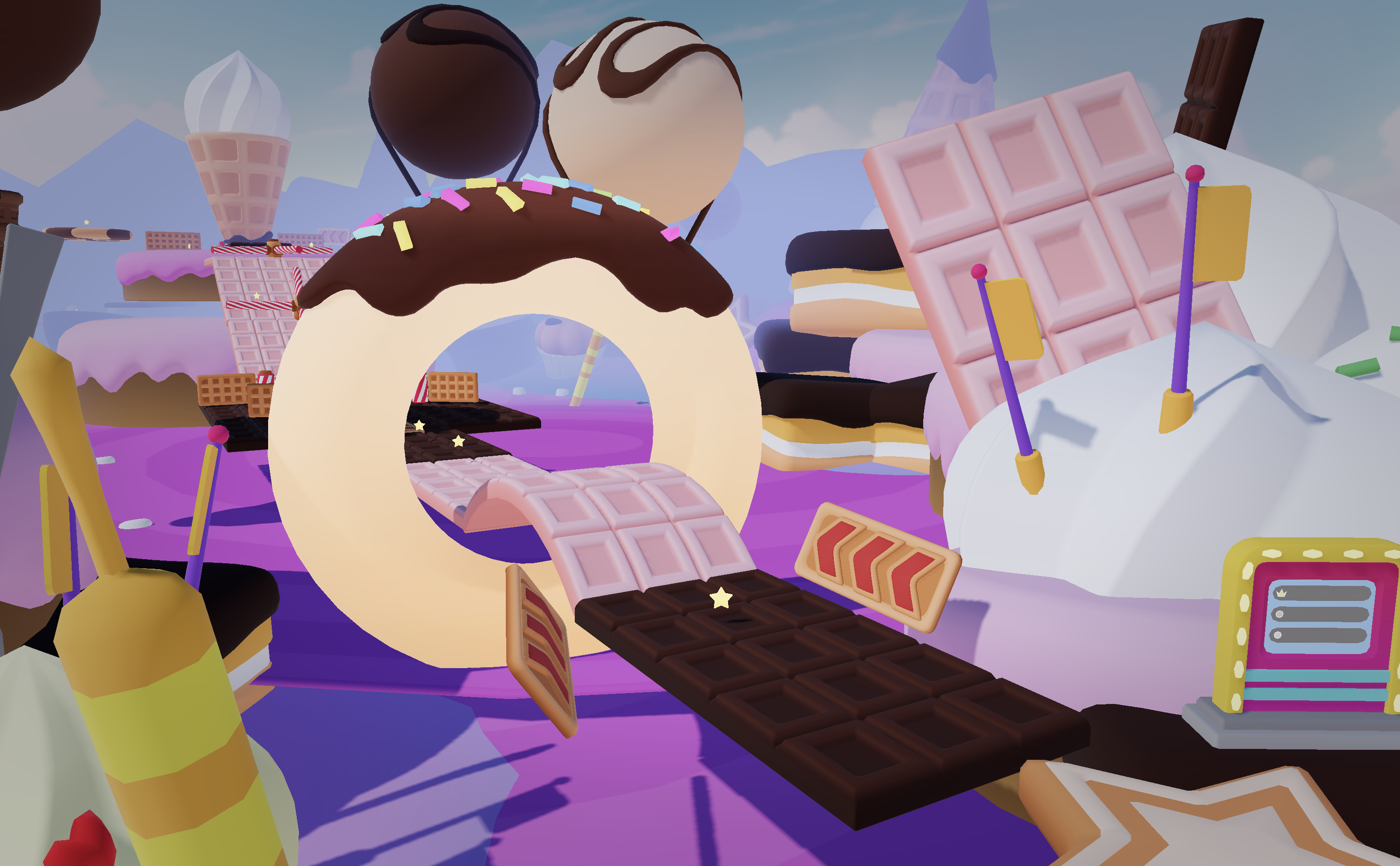
Create your shared world now and invite your teammates with one link.
Three Roles That Keep Your Team in Sync
Clear roles prevent prompt collisions and confusion. Before anyone types a single prompt, agree on who owns which part of the world.
- World Builder: Owns the environment such as terrain, sky, lighting, and layout. Uses Nilo’s radial menu to place primitives and AI-generated props. Prompts stay focused on what the world looks like.
- Asset Creator: Owns characters, props, and objects. Uses Nilo’s text-to-3D generation and sketch-to-3D pipeline to generate models, then rigs and animates them with one click. Prompts stay focused on which objects exist in the world.
- Logic Lead: Owns game behavior using Nilo’s natural language code editor. You describe what you want to happen, such as “make the player jump when they hit the red platform,” and working code appears instantly in the 3D world. Prompts stay focused on how the world behaves.
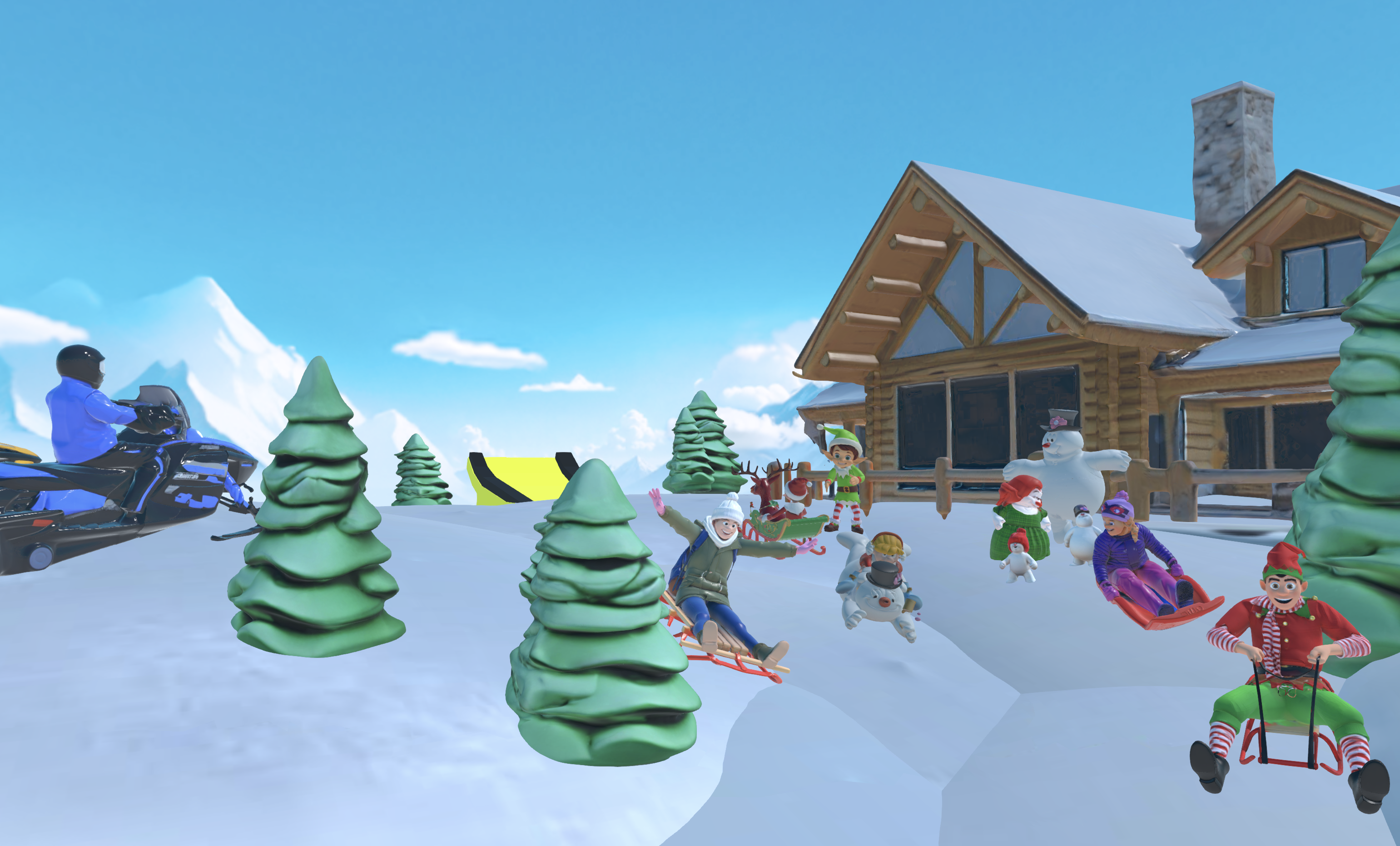
With these lanes defined, three people can build in parallel without stepping on each other’s work. This role division creates what developers call a tree-like architecture, with independent modules that different people can work on at the same time. That structure multiplies team throughput without adding headcount, which is exactly what happens when your World Builder, Asset Creator, and Logic Lead each own their own domain in the shared world.
Collaborative Vibe Coding Best Practices
Use these steps at the start of every team session so your prompts stay in sync and your world feels coherent.
- Agree on a style before you prompt anything. Spend five minutes deciding low poly or high poly, fantasy or sci-fi, cartoon or realistic. Once you lock that in, every prompt your team writes should reference the same style. Even one mismatched asset, like a realistic sword in a cartoon world, breaks the visual language and makes the whole game feel off.
- Name objects consistently. If the World Builder calls something “RedPlatform,” the Logic Lead should reference “RedPlatform” in code prompts, not “the red thing” or “platform1.” Consistent naming acts as simple version control for your whole team.
- Let one person prompt at a time in shared areas. If two people prompt changes to the same object at the same time, outputs blend unpredictably. Remember the 8x editing overhead from conflicting instructions. That is exactly what happens when two people prompt the same object simultaneously, so take turns on shared objects.
- Keep prompts short and specific. “Generate a wooden crate, low poly, brown, 1m cube” beats “make some boxes for the level.” Short, specific prompts give more consistent results across all three builders.
- Playtest after every major addition. Nilo’s physics and collisions run in real time. Hit play after each new mechanic or batch of objects so you catch problems early instead of stacking bugs.
- Use voice chat while building. Call each other on Discord while you work. Talking through what you are about to prompt prevents duplicated effort and catches style drift before it shows up in the world.
[Video placeholder: “Live Nilo Team Session” showing three builders setting up roles, prompting in parallel, and playtesting a shared world in under 20 minutes. Transcript available below the video.]
Even with these practices in place, certain mistakes can still derail a session. The next section walks through the most common disasters and how you can avoid them.
Avoid These Team Vibe Coding Disasters
These patterns regularly break collaborative sessions, but you can dodge them once you know what to watch for.
- Everyone prompts the same object. If all three builders try to change the main character at once, you get three conflicting versions. Assign the Asset Creator as the only person who prompts character changes.
- No agreed style creates visual chaos. A sci-fi robot next to a medieval castle next to a cartoon tree feels like a mood board, not a game. Lock the style in the first five minutes.
- Logic prompts assume objects that do not exist yet. The Logic Lead should check with the Asset Creator before writing behavior for an object. Prompting “make the dragon fly” before the dragon model exists creates broken references.
- Skipping playtests until the end. Small physics or collision bugs compound fast when nobody checks them. Test early and test often.
- Using separate tools for different parts. If one builder generates assets in a different tool and then imports them, you lose the single-source-of-truth advantage. Stay in Nilo for the whole session whenever you can.
Exporting Your World and Playtesting Beyond Your Team
When your team feels ready to share the world beyond your session, Nilo gives you two clear paths.
Share via link: Anyone with your world’s link can click and play instantly in their browser, with no account required. This path works well when you want quick feedback from friends who were not in the build session.
Export to other platforms: Nilo exports to standard 3D formats such as FBX, OBJ, STL, and glTF, which keeps your assets compatible with Roblox, Unity, Unreal Engine, Blender, and VRChat. Nilo’s LOD (level of detail) system automatically adjusts polygon counts on the fly. That matters especially for Roblox, which caps assets at 10K–20K polygons. Your team can build freely without stressing about triangle counts, while Nilo handles the technical side.
For Roblox builders specifically, you can export your optimized assets, import them into Roblox Studio, and turn your Nilo-built world into a Roblox-ready game.
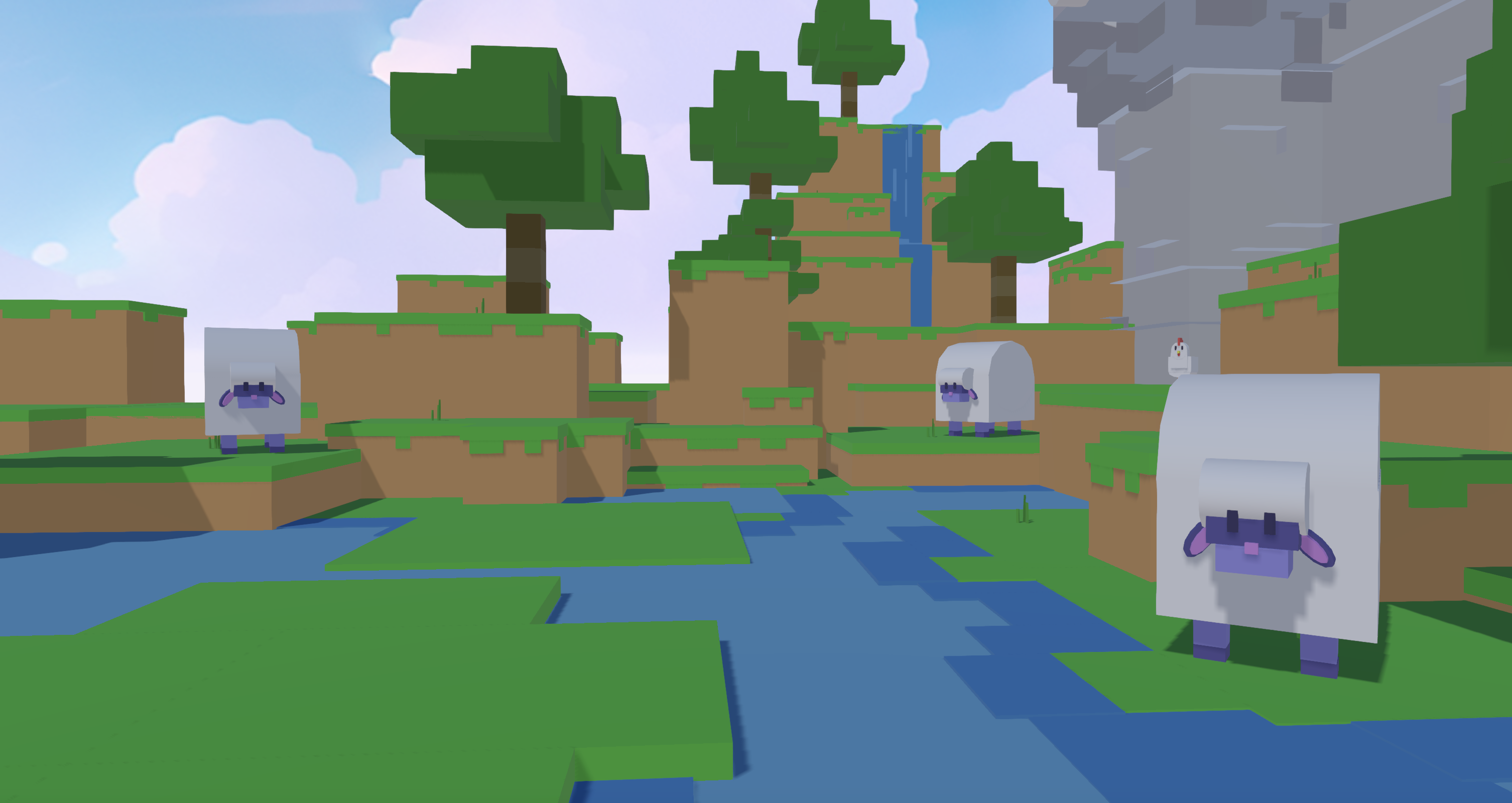
Export your first collaborative build and share it with your friends or the Nilo community.
How to Evaluate Other Collaborative Tools
When you compare tools for collaborative vibe coding, focus on five things. Check whether it runs in the browser without installation, whether multiple people can edit the same world in real time, whether it has a natural language code editor so you can describe game behavior instead of writing code manually, whether it handles LOD automatically, and which formats it exports to. Here is how the main options compare:
| Tool | Browser Access (No Install) | Real-Time Multiplayer Editing | Natural Language Code Editor | Automatic LOD | Export Formats |
|---|---|---|---|---|---|
| Nilo | Yes, runs fully in browser via WebAssembly and WebGPU | Yes, share a link and build together instantly | Yes, type, talk, or send images to generate working game code | Yes, real-time polygon adjustment built into the engine | FBX, OBJ, STL, glTF |
| Unity | Partial, Unity has introduced a web-based editor, but the core engine requires desktop installation | Partial, multiplayer features require additional setup, and 68% of studios said they are developing multiplayer games according to the 2024 Unity Gaming Report, but real-time co-editing is not native | No, scripting requires C# knowledge and has no built-in natural language editor | No, LOD must be configured manually per asset | FBX, OBJ, glTF, and proprietary formats |
| Roblox Studio | No, requires desktop installation | Partial, team create supports collaborative editing but requires setup and a Roblox account | No, scripting requires Lua knowledge | No, polygon optimization is manual and the platform caps at 10K–20K polygons | Roblox-only with limited standard format export |
| Rosebud AI | Yes, browser-based | No, focused on solo AI prompting with no shared real-time world editing | Partial, AI code generation is available but has no 3D game engine backing it | No | Limited, with no standard 3D format export pipeline |
| PlayCanvas | Yes, fully browser-based with real-time collaborative editing similar to Google Docs | Yes, multiple team members can edit the same project simultaneously with changes reflected live | No, scripting requires JavaScript knowledge and has no natural language editor | No, LOD requires manual configuration | glTF and FBX via import and export pipeline |
When you evaluate these tools for a small team of aspiring builders or already builders like you, focus on how quickly all three of you can build together. Tools that require installation or coding knowledge add friction that slows your collaborative momentum before you even start.
FAQ
What exactly is vibe coding in a game context?
Vibe coding means using natural language, such as typing, talking, or even sending an image, to tell an AI what you want your game to do and then seeing working code appear instantly in your 3D world. Instead of writing Lua or JavaScript manually, you describe the behavior, like “make the platform move left and right” or “spawn an enemy every 10 seconds.” Nilo’s built-in code editor works this way, so you see the result in real time without knowing how to code.
You can also look at and tweak the actual variables the AI generates, such as changing “speed = 2” to “speed = 20.” That approach gives you a simple way to learn real programming concepts while you build.
Can three people really build in the same Nilo world at the same time without breaking each other’s work?
Three people can build in the same Nilo world at once when you divide roles clearly before you start. Nilo’s real-time multiplayer lets everyone see changes as they happen. The key is making sure the World Builder, Asset Creator, and Logic Lead each own their own area of the world and talk before touching shared objects.
The role division system in this guide is designed specifically to prevent the most common conflicts. You can think of it like building in Minecraft with friends, where you all work on the same world but agree who is building the house and who is building the farm.
Do I need a powerful computer or gaming PC to use Nilo with friends?
You do not need a powerful computer to use Nilo with your friends. Nilo runs entirely in your browser using WebAssembly and WebGPU, the same technologies that let Figma run complex design work in a browser tab. You do not need to download anything or own a gaming PC.
Nilo works on desktop and mobile browsers. Your teammates can join from whatever device they have, so the only barrier to getting everyone into the same world is sharing a link.
What happens to the game we build, and can we share it outside our group?
You keep control of the game you build and can share it outside your group. You can publish your world to the Nilo community with one click, which makes it playable by anyone who gets the link. You can also export your assets in standard formats such as FBX, OBJ, STL, and glTF and bring them into Roblox, Unity, Unreal Engine, Blender, or VRChat.
Nilo is not a walled garden. Anything you build belongs to you, and you can take it anywhere. If you are building for Roblox specifically, Nilo’s LOD system automatically optimizes your assets to meet Roblox’s polygon caps before you export.
Is Nilo only for experienced builders, or can someone who has never made a game before use it?
Nilo is built for builders at every stage, from someone who has only ever played Minecraft to someone who has been building in Roblox Studio for years. The interface is designed to feel like a game, not a professional tool. You do not need to know how to code, model in Blender, or understand mesh topology to start building.
The AI handles the technical parts while you focus on creative decisions such as layout, style, and behavior.
Recap and Your Next Step
Vibe code game collaboration works best when your team shares one world, one link, and one set of agreed rules. Set up your Nilo world quickly using the steps above. Divide into World Builder, Asset Creator, and Logic Lead. Lock your style before anyone prompts. Build in parallel, playtest often, and export when you feel ready.
In Nilo’s February 2026 survey, 93% of builders said they would recommend Nilo to a friend, and 72% said it makes their creative process easier by “a lot.” The platform is in open beta right now, which means you and your friends can jump in today without spending a bunch of money.
The fastest way to understand how this works is to try it with your crew this weekend.
Open a shared Nilo link with two friends and start building today.