Written by: Nuno Leiria, Founder & CEO @ Nilo | Last updated: June 27, 2026
What You Can Do on Your Phone Right Now
- Your phone’s browser can now handle full 3D asset creation, including generation, cleanup, rigging, LOD control, and export.
- The mobile workflow stops at file export, because Roblox Studio still runs only on desktop.
- Nilo gives you a single browser space where you can type or draw an idea, get a 3D model, clean it up, and rig it.
- You can match Roblox’s polygon limits using Nilo’s live LOD slider, then export clean FBX or glTF files for Studio.
- Start building Roblox assets on your phone in Nilo’s open beta.
Step 1: Know What Your Phone Can and Cannot Do
Set clear expectations before you start. Your phone’s browser can handle text-to-3D generation, real-time cleanup, rigging, and file export. It cannot run Roblox Studio, because Roblox Studio still needs a desktop install. Your mobile workflow ends at export, then you finish the import step on a computer.
Use landscape mode for more space on your screen. Chrome and Safari on iOS and Android support the WebGL and WebGPU tech that browser 3D tools use. Close background apps to free RAM, and keep your brightness high so you can judge textures accurately on a small display.
Step 2: Use Roblox Creator Dashboard on Mobile for 2D Items
If you want to upload 2D items like shirts, pants, decals, or Game Passes, the Roblox Creator Dashboard works in a mobile browser. Go to create.roblox.com, log in, then use the Create menu to upload image files. Use pinch-to-zoom to hit small buttons and menus. This path covers 2D UGC only and does not handle 3D meshes, accessories with geometry, or rigged characters.
For anything that uses a 3D mesh, such as hats, swords, armor, characters, or props, you need a different tool entirely. That is where Nilo fits into your workflow.
Step 3: Generate 3D Assets in Nilo’s Mobile Browser World
Open nilo.io in your mobile browser. Nilo runs in the browser using WebAssembly and WebGPU, similar to how Figma runs full design tools without an app. Create a free account, then start a new world.
To create a 3D asset, type a text prompt, upload a reference image, or sketch directly on your screen. Nilo’s AI layer sends your idea through several generation providers, including Meshy and Tripo, and returns a 3D mesh in seconds. As one builder put it in Nilo’s February 2026 survey: “I do not have to spend hours on 3D modeling the simplest things, now I can use Nilo and do it in 15 seconds.”

Nilo hides the complexity of switching AI models behind one simple interface. You can change models based on the style or quality you want, while staying in the same browser tab on your phone.
Try Nilo’s text-to-3D generation in your browser, no download needed.
Step 4: Clean Topology and Rig With a Single Tap
AI meshes from tools like Meshy often arrive with messy geometry, such as overlapping faces, too many polygons, and artifacts that break Roblox performance checks. Retopology fixes this by rebuilding the mesh into clean, even triangles. In Blender, you usually do this by hand and spend 30 minutes or more on a single asset. In Nilo, this cleanup runs automatically in real time while you generate.
After the mesh looks right, tap the rig button. Rigging adds a skeleton so you can animate the model. Nilo’s one-click rigging finishes this step in seconds, with no manual weight painting or bone placement. On your phone, use two fingers to rotate the model and check the rig from different angles before you move on. The same survey found that 82% of builders rated their experience as “Awesome” or “Good,” mainly because of the speed and reduced Blender time.
Step 5: Use the LOD Slider to Match Roblox Triangle Limits
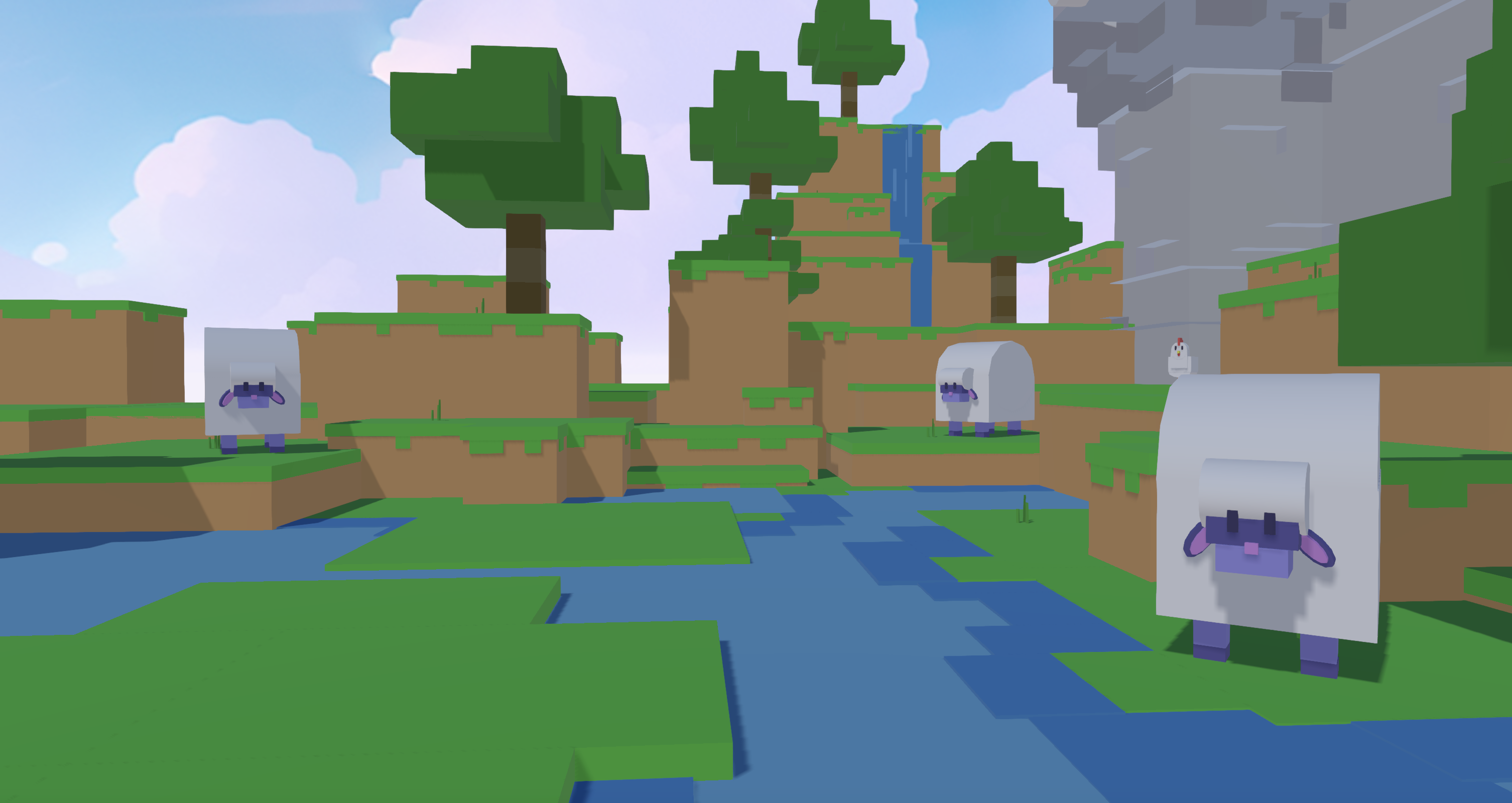
Roblox usually caps mesh assets at around 10,000 to 20,000 triangles. Triangles are the tiny pieces that form your 3D surface. If you use too many, your asset can lag or fail checks. Nilo’s Level of Detail slider lets you lower triangle count in real time while you watch the mesh update.
On mobile, drag the slider left to simplify the mesh and watch the triangle counter on screen. Aim for under 10,000 triangles for accessories and under 20,000 for larger props. The live preview shows exactly where you lose detail before you commit. You avoid guesswork and repeated exports, and you skip the most painful part of the old Meshy → Blender → Roblox Studio chain.
Step 6: Export FBX or glTF Files From Your Phone
Roblox Studio accepts FBX and glTF for mesh imports. FBX is the older, widely used standard. glTF is newer and usually more compact. Nilo exports both, and also supports OBJ and STL for other workflows.
Tap Export, choose your format, and save the file to your phone’s storage. Check the file size before you move on. Roblox has upload limits, and staying under the triangle targets from Step 5 usually keeps file sizes safe. Nilo’s browser pipeline keeps polycount under control so models drop into Roblox Studio without extra cleanup.
Step 7: Finish the Import in Roblox Studio on Desktop
This final step still needs a computer. Move your exported file from your phone to your desktop using AirDrop, Google Drive, or any cloud storage you like. Open Roblox Studio, go to the Model tab, then choose Import 3D to bring in your FBX or glTF file. Check that the rig came through correctly, confirm that textures loaded, and make sure the pivot point sits in the right place for items like hats.
If animations bend the mesh in strange ways, the bone hierarchy probably exported incorrectly. Regenerate the rig in Nilo and export again before you try to fix things by hand in Blender. Nilo’s one-click rigging follows Roblox’s rig structure, which cuts down on these issues compared to manual rigs.
Ready to test your workflow? Join Nilo’s open beta and export your first asset.
How to Judge Any Mobile 3D Asset Tool
Use a simple checklist when you compare tools for mobile 3D asset creation. This helps you pick a workflow that actually fits how you build.
Browser compatibility: Check if the tool runs fully in a mobile browser without an app download. If it needs installation, it will not work well for a phone-first setup.
Real-time optimization: See whether retopology and LOD changes update live, or if you must export and re-import to preview them. Real-time feedback matters on a small screen where precise clicks are harder.
Rigging speed and accuracy: Manual rigging in Blender takes time and skill. Look for tools that automate rigging and match Roblox’s bone layout so you avoid constant fixes.
Export reliability: Test whether the tool exports clean FBX or glTF files that Roblox Studio accepts without errors. Watch for missing textures, wrong pivot points, and broken collision data.
Nilo stands out here because it covers all four points in one browser session. You can generate, clean topology, rig, adjust LOD, and export without jumping between tools. Sloyd focuses on generating models and stops before rigging or deeper optimization. Lemonade.gg connects inside Roblox Studio, which still keeps you tied to a desktop. For aspiring builders or already builders like you who want to stay on a phone as long as possible, Nilo’s end-to-end flow makes that realistic.
Fixing Common Problems on Mobile
Textures look compressed or blurry: Roblox caps textures at 1024×1024 pixels. If your texture looks rough after import, check that Nilo exported at the right resolution. On your phone, zoom into the texture preview before you export so you can catch issues early.
Touch feels too imprecise for small details: Fine mesh edits are tough on a phone screen. Use pinch-to-zoom often, and lean on Nilo’s automatic retopology instead of trying to move single vertices on a tiny display.
Export file is too large: If your FBX hits Roblox’s upload limit, go back to Step 5 and lower the LOD slider more. Fewer triangles shrink the file size without ruining how the asset looks at normal game distance.
Rig does not apply in Roblox Studio: This usually means the bone hierarchy broke on export. Regenerate the rig in Nilo, export again, and test in Studio before you spend time on manual fixes.
Frequently Asked Questions
How long does this full workflow take on a phone?
Asset generation usually takes from a few seconds to a couple of minutes, based on complexity. Retopology and rigging in Nilo run almost instantly. LOD tweaks and export add another minute or two. From first prompt to downloaded file on your phone, you can normally finish a standard prop or accessory in under 10 minutes. Import and checks in Roblox Studio on desktop add only a few more minutes.
Do I need any prior 3D modeling experience?
You can follow this workflow with zero 3D background. Nilo handles retopology, rigging, and polygon cleanup for you. If you can describe what you want in text or sketch it on your screen, you can create a usable asset. Builders in Nilo’s February 2026 survey highlighted how the automated technical steps remove the usual barriers to starting with 3D.
What file formats does Nilo export, and which should I use for Roblox?
Nilo exports FBX, OBJ, STL, and glTF. For Roblox Studio, FBX is the safest choice for rigged characters and accessories, because it is the most heavily tested. glTF works well for static props. OBJ and STL help if you want to refine the mesh in Blender before you move it into Roblox.
Can I monetize assets I create with Nilo on the Roblox Marketplace?
Yes. Assets you build in Nilo belong to you. You can upload them as UGC items on the Roblox Marketplace, sell them, and keep what you earn. Roblox pays creators over $1 billion each year, with more than 30% growth year over year. Nilo’s export flow aims to match Roblox’s UGC submission rules so your assets pass checks more smoothly.
Does Nilo work on both iOS and Android?
Nilo runs in modern mobile browsers on both platforms. Because it lives in the browser and does not need installation, you do not deal with app store approvals or device-specific versions. Open your browser, go to nilo.io, and start building.
Start Building Roblox Assets on Your Phone Today
The old chain of Meshy for generation, Blender for cleanup, and Roblox Studio for import locked you to a desktop and hours of technical work between each step. The browser-based workflow in this guide replaces that chain with a single session on your phone. You can prompt or sketch, get clean topology, rig with one tap, tune your polygon count with the LOD slider, and export a Roblox-ready FBX or glTF file straight to your device.
The only desktop step left is the final Roblox Studio import, and that comes from Roblox’s current limits, not from your creation tools. Every step before that now fits in your pocket.
Start creating Roblox-ready assets on your phone with Nilo’s free beta.