Written by: Nuno Leiria, Founder & CEO @ Nilo | Last updated: August 9, 2026
Key Takeaways for Moving Your Rec Room Worlds
- The June 1, 2026 Rec Room shutdown lets you export only raw GLB geometry, not playable worlds, so you need a clear migration plan.
- Nilo’s browser-based engine lets you drag in Rec Room GLB files, then rebuild assets in seconds using AI text, sketch, or image prompts without installing Blender or other tools.
- Built-in LOD controls keep meshes inside Roblox’s 10k–20k triangle limit, and one-click rigging plus text-to-motion animation replace days of manual work.
- You can export FBX or glTF files ready for Roblox Studio or Unity, and use real-time multiplayer collaboration so your whole crew rebuilds together in the browser.
- Start migrating your Rec Room worlds in Nilo’s open beta and keep your rooms alive.
The June 1, 2026 Shutdown and What Happens to Your Rooms
On March 30, 2026, Rec Room announced its shutdown and set a hard deadline of June 1, 2026. Token earnings stopped on May 18, with a short window to spend what you had left.
You cannot download playable worlds. You can only export raw data as room files in GLB format, so you are starting from geometry instead of a finished experience.
That raw data export becomes your new starting point. Nilo’s browser-based engine lets you drag those GLB files straight into a fresh world and rebuild from there without installing anything or opening Blender.
Join Nilo’s open beta and start building from your Rec Room exports.
Why Nilo Helps You Rebuild Faster From Rec Room Exports
You move faster when the tools stay out of your way. In a February 2026 Nilo survey with builders like you, 93% said they would recommend Nilo to a friend, 82% rated their experience as “Awesome” or “Good”, and 72% said Nilo makes their creative process easier by “a lot”. One builder put it simply: “I do not have to spend hours on 3D modeling the simplest things, now I can use Nilo and do it in 15 seconds.”
This speed comes from Nilo’s custom game engine with C++ physics compiled to WebAssembly, which gives you near-native C++ performance inside a browser tab. Paired with WebGPU, the modern graphics API now stable across Chrome, Edge, Safari 18, and Firefox 130+, Nilo delivers real-time 3D rendering with zero installation steps. You open a link and start building.
The generative AI in gaming market is projected to grow from $2.21 billion in 2026 to $5.09 billion by 2030 at a 23.2% CAGR. Tools are maturing quickly, and Nilo’s model-agnostic setup, which connects to providers like Meshy, Tripo, and Uthana through one interface, keeps improving as those AI models get better.
Now that you know why Nilo can handle this migration efficiently, you can walk through the steps to move your rooms.
Step 1: Gather and Prioritize Your Rec Room GLB Rooms
Your first move is to collect everything you exported before the May 18 token cutoff. Using the Steam PC build of Rec Room, go to your data export folder. Inside, you will see a rooms directory.
Each room has subfolders, and inside each subfolder you will find a file called scene.glb. That GLB file holds your room’s geometry.
Make a list of every room you want to migrate and rank them. Simple rooms might be faster to rebuild entirely from text prompts. Rooms with complex geometry are worth importing directly as a reference.
Step 2: Rebuild Core Geometry in Nilo With Text, Sketch, or Images
Go to play.nilo.io, create a new world, and drag your scene.glb file into the editor. As MeriesaVR (formerly from the Rec Room team) shows: “Open up your RecRoom data export folder, go into rooms and choose an unzipped room folder. Inside one of the subroom folders, look for a file called scene. It’ll be a GLB file.” You can use that layout as a guide while you generate new assets around it.
For props, characters, and environment details that need rebuilding, use Nilo’s text-to-3D tools. Type what you want and get a 3D model in seconds. You can also sketch in 2D and pull the result into 3D, or upload a reference image.
One builder in the February 2026 survey said: “There are no limits on what you can create, just type, draw or add in an image and you can generate, rig, customise and place a fully 3D model within minutes.”
Step 3: Use the Real-Time LOD Slider to Stay Under Roblox’s Triangle Cap
LOD stands for Level of Detail. It automatically simplifies a mesh’s polygon count, which is the number of triangles that form a 3D shape, so your assets run smoothly on different devices. This step often saves you the most time.
Roblox caps assets at 10K–20K polygons, or about 20k triangles, and rejects anything above that limit. Without Nilo, you would need to hit that target manually in Blender using a Decimate modifier or full retopology, which can take an experienced artist hours per asset.
Nilo’s real-time LOD slider removes that grind by adjusting polygon counts on the fly and keeping your assets within that limit while still looking good. You drag a slider and Nilo handles the math.
Step 4: Rig Your Biped Characters in a Single Click
Rigging means adding a skeleton to a 3D character so it can move and animate. In Blender, rigging a humanoid character from scratch can take days. In Nilo, you click once.
Nilo’s one-click rigging works for biped, humanoid characters in a T-pose, which is the arms-out pose that gives you clean animation quality. Clothing rigs as part of the full character model.
You end up with a fully rigged character that is ready for animation, with no manual weight painting or bone placement.
Try one-click rigging in Nilo’s open beta and see how fast you can move.
Step 5: Create Animations From Simple Text Prompts
Once your character is rigged, type what you want it to do, such as “walk forward”, “wave hello”, or “jump and spin”, and Nilo generates the animation. This is text-to-motion, where you describe movement in plain language and the AI builds it, powered by Nilo’s Uthana integration for Mixamo-compatible retargeting.
Mixamo compatibility lets you move animations between rigs and platforms without heavy manual tweaks. You stay free to send your work wherever you want instead of locking into one format.
Step 6: Export FBX or glTF for Roblox Studio or Unity
When your asset is optimized, rigged, and animated, click Export. Nilo outputs standard 3D formats: FBX, glTF (also called GLB), OBJ, and STL. FBX is the usual choice for Roblox Studio and Unity. glTF works across Unreal Engine, Godot, VRChat, and Blender.
You export with a single click. You skip extra export tools and conversion scripts. The file lands on your machine ready to import.
Step 7: Import Into Roblox Studio or Unity and Check Mobile Performance
Open Roblox Studio, import your FBX, and run the performance check. Because Nilo’s LOD system already hit the 10k–20k triangle target, you should pass Roblox’s mesh validation without rejection.
Test on a mobile device profile. Roblox’s mobile player base is huge, and hitting 60 fps on mobile tells you your asset is truly game-ready.

For Unity, import the glTF file. Unity’s Asset Transformer SDK can decimate meshes further if you need it, but assets exported from Nilo with the LOD slider set correctly usually import cleanly without extra cleanup.
Comparing Nilo With Unity, Godot, Roblox Studio, and Blender
Nilo stands out for this migration workflow because it handles generation, mesh cleanup, rigging, animation, and export in a single browser tab. It connects to Meshy, Tripo, Cartwheel, and Uthana through one interface, so you get strong results without juggling multiple apps.
Unity WebGL export works well if you already have a Unity codebase, but Unity’s tools are professional-grade and require a full install. Godot 4 ships with stable WebGPU support and produces smaller web builds than Unity, although some particle and post-processing setups still hit minor bugs.
Roblox Studio needs a desktop install and does not include AI-native asset generation, so you still have to create and optimize assets somewhere else before importing. Blender remains the standard for manual retopology, but spending 12–20 hours per character is tough when you are trying to migrate multiple rooms under a tight deadline.
Challenges and How to Fix Them During Migration
A few issues show up often during migrations like this. Watch for these early warning signs and fix them quickly:
- Polygon overruns: If Roblox Studio rejects your mesh, go back to Nilo and pull the LOD slider further toward the low-poly side to stay within the cap explained in Step 3.
- Missing collision masks: Some GLB exports lose collision data. In Nilo, check collision settings before export. In Roblox Studio, you can assign collision fidelity manually after import.
- Animation retargeting errors: If a Mixamo-retargeted animation causes strange full-body deformation in Roblox Studio, check that the rig hierarchy matches Roblox’s R15 bone naming. Nilo’s one-click rig is built for this, but imported GLB geometry from Rec Room might bring in legacy bone names that need renaming.
- Export data loss: Colors and collision masks sometimes drop on export. Run a quick visual check in Nilo’s preview before downloading the final file.
Rebuilding Together With Real-Time Multiplayer Creation
Rec Room made social creation feel fun, and you can keep that vibe. Nilo brings collaborative building back by letting you share a link to your world so anyone can join and build with you in real time on desktop or mobile, using the browser-based setup described earlier.
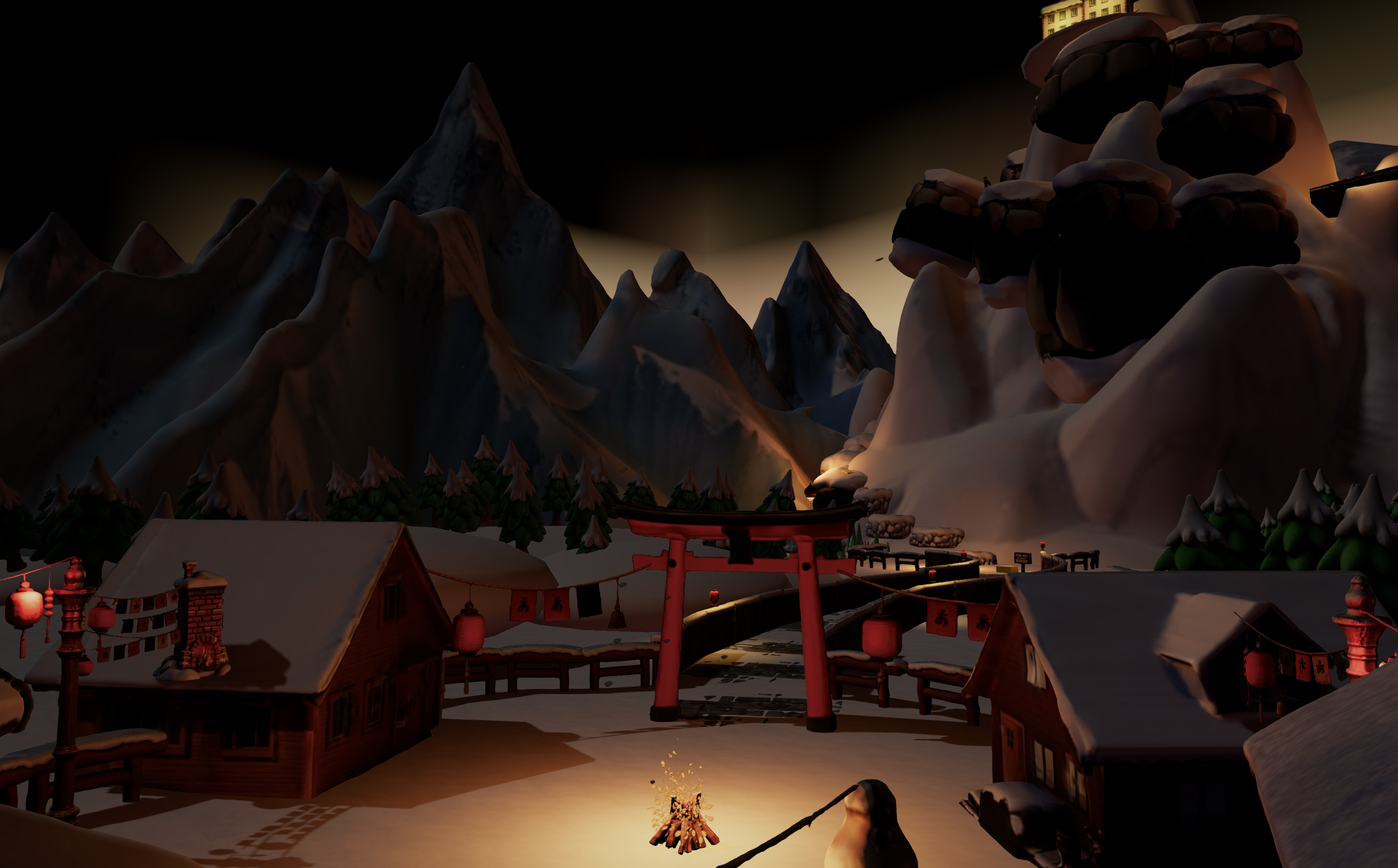
You and your friends can rebuild rooms together, clone assets across worlds, and publish finished experiences to the Nilo community feed as soon as they are ready.
This helps a lot when your Rec Room community had several creators working on the same world. Instead of one person handling the entire migration, your whole group can share the work.
Invite your team to rebuild together in Nilo and keep your favorite spaces alive.
Frequently Asked Questions
Can I still download my Rec Room data?
The data export window closed with the June 1, 2026 shutdown. If you exported your data before the deadline using the Steam PC build, you still have your room GLB files and can follow this workflow. If you did not export before shutdown, the raw data is no longer accessible.
This is why acting on the export step early mattered and why having a migration plan ready before the deadline helped so much.
What happened to my Rec Room tokens?
Token earnings stopped on May 18, 2026. You had a window between May 18 and June 1 to spend remaining tokens inside the platform. After June 1, the platform closed and any unspent tokens are no longer redeemable.
If you move your creative work to Roblox, the Roblox DevEx program lets you convert earned Robux to real money. Roblox creators have earned over $1 billion globally through DevEx.
Does Nilo work without installing anything?
Yes. Nilo runs entirely in your browser using WebAssembly and WebGPU. It works on desktop and mobile browsers. You open a link, create a new world, and start building.
This is the same kind of architectural shift that let Figma bring professional 2D design to the browser, now applied to 3D game creation.
What file formats does Nilo export, and are they compatible with Roblox?
Nilo exports FBX, glTF (GLB), OBJ, and STL. FBX is the main format for Roblox Studio imports and works well. The LOD system keeps your exported mesh inside Roblox’s triangle target automatically, so you are not fighting polygon counts after export.
Nilo does not lock you in. You can use it purely as an asset pipeline and keep working in Roblox Studio, Unity, Unreal Engine, Blender, or VRChat.
Conclusion: Give Your Rec Room Worlds a New Home
The Rec Room shutdown does not have to erase what you built. Your GLB files hold your geometry, and this seven-step workflow, which covers auditing, generation, LOD cleanup, rigging, animation, export, and performance checks, gives you a clear path from raw data to Roblox-ready assets without weeks of Blender work or heavy pro tools.
Nilo’s 9,000+ Discord community and 1M+ monthly organic social views show that builders are already migrating and creating successfully. The survey results mentioned earlier, with strong satisfaction across recommendation, experience quality, and ease of use, point to a platform that supports builders at every stage.
Your rooms deserve a new home, and you can start rebuilding them today.