Written by: Nuno Leiria, Founder & CEO @ Nilo | Last updated: July 5, 2026
Key Takeaways for Roblox Builders
- Legacy Roblox tools like F3X require desktop installs and lack real-time collaboration, which often breaks your creative flow.
- Browser-based platforms remove setup friction and give you instant access from almost any device, including Chromebooks and many phones.
- Modern tools add AI-powered generation, automatic cleanup, and real-time multiplayer that older plugins cannot match.
- Side-by-side comparisons show Nilo standing out over F3X for install-free access, AI tools, and simple link-based collaboration.
- Ready to build without installs or plugins? Start building in your browser right now, no downloads needed.
The Problem: Why Legacy Tools Slow You Down
Most Roblox building workflows were designed for professionals, not for aspiring builders or already builders like you who want to jump in and create. The friction usually hits you in three places: manual manipulation, installs, and missing real-time collaboration.
Manual manipulation means you resize, rotate, and position every part by hand. That feels slow when you try to build a full environment. Installs mean you cannot start building on a school Chromebook, a friend’s laptop, or a mobile device without going through setup first. Missing real-time collaboration means you build alone, even when your friends are online and ready to help.
In a February 2026 Nilo survey with builders, the feedback stayed consistent. The biggest barrier is time spent on technical problems instead of creative ones. One builder put it clearly: “Picture yourself, frustrated because you spent the last 5 hours 3D modeling a shipping container.”
How to Use Roblox Studio’s Built-In Build Tool
Roblox Studio includes a native Build Tool that lets you select, move, scale, and rotate parts in your game world. To access it, open Roblox Studio, load or create a place, and look for the Model tab in the top toolbar. The basic manipulation handles Move, Scale, and Rotate appear there by default.
For more advanced manipulation, many builders add plugins. The most widely used is F3X (Building Tools by F3X). It extends Studio’s native tools with surface manipulation, material painting, and multi-part selection. Installing it requires a desktop version of Roblox Studio on Windows or Mac. As confirmed on the Roblox Developer Forum, there is no browser or mobile version of Studio available in 2026.
Common pain points with this setup include desktop-only access, no AI assistance, and no native real-time collaboration with friends. Note that F3X has mobile support.
How to Get F3X for Your Roblox Projects
F3X is available through two main routes. The first is the Roblox Creator Store. Search for “Building Tools by F3X,” click Get, and it appears in your Plugins tab inside Studio. The second route is an in-game server script, where a LocalScript or Script containing the F3X tool loader sits in your game’s ServerScriptService. That route works well when you want to give build access to players inside a live game instead of only in Studio edit mode.
Both routes require Roblox Studio installed on a desktop machine. F3X also works on mobile devices. Neither route includes AI-assisted generation or real-time collaboration with friends through a shared link. You should weigh these trade-offs against browser-based alternatives.
When you want to skip installs completely, you can try a browser-based path instead. Try Nilo’s browser-based workflow today.
Browser-Based, AI-Assisted Creation for Roblox Builders
Browser-based creation environments remove the install requirement entirely. You open a link and start building. No downloads, no plugin setup, and no specific desktop hardware needed. Tools in this category run on WebAssembly and WebGPU, the same browser technologies that power high-performance 3D graphics without a native app.
More advanced tools in this space also add AI assistance. You can use text-to-3D generation to type what you want and get a 3D model. Automatic retopology cleans up mesh geometry so it meets Roblox’s polygon caps without manual work in Blender. Real-time multiplayer lets you and your friends build in the same world at the same time.
Workflow friction for desktop AI tools like Meshy includes queuing, remeshing, texturing, paid export, downloading, importing, and fixing collision or hitbox issues before an asset becomes usable in Roblox Studio. Browser-native tools that handle optimization automatically remove most of those steps.
To see how these advantages feel in real projects, you can compare a popular plugin like F3X with a browser-based tool like Nilo.
F3X vs Nilo: Side-by-Side Comparison
The comparison below shows how different architectures turn into real workflow changes across key areas like access, AI, and collaboration.
| Capability | F3X (Roblox Studio Plugin) | Nilo (Browser-Based) |
|---|---|---|
| Install required | Yes, desktop Studio on Windows or Mac | No, runs in common browsers on desktop or mobile |
| Real-time collaboration | Not natively supported | Share a link, friends join and build instantly |
| AI assistance | None | Text-to-3D, sketch-to-3D, AI animation, vibe coding (natural language code editor) |
| Mobile access | Mobile-compatible | Works in mobile browsers |
| Export workflow | Manual export from Studio | One-click export, LOD system auto-adjusts polygon counts for Roblox |
How Nilo Handles Assets, Worlds, Optimization, Collaboration, and Export
Asset Generation: Creating custom 3D assets from scratch usually means learning Blender or using an AI tool. Nilo’s text-to-3D and sketch-to-3D pipeline lets you generate characters, props, and environments in seconds. Tools like Meshy also generate assets, but you still download, import into Studio, and often fix geometry by hand.

World Building: F3X gives you precise part manipulation inside Studio. Nilo adds procedural world-building tools, a radial menu for quick object placement, and real-time physics. Everything stays interactive by default, so you can playtest while you build.

Optimization: Roblox caps mesh complexity at 10K–20K triangles. Desktop tools often create a big per-asset cost when you remesh and fix geometry manually. Nilo’s real-time LOD system, which automatically adjusts polygon counts as you work, handles this without extra steps.
Collaboration: Real-time collaboration in browser-based 3D tools shortens project timelines because tasks that used to happen one after another can now happen at the same time. F3X has no native equivalent. Nilo lets you share a URL and build together instantly.
Export: Nilo exports to FBX, OBJ, STL, and glTF. These formats work with Roblox Studio, Unity, Blender, Unreal Engine, and VRChat. F3X keeps everything inside Studio’s native format.
Why Nilo Stands Out for Real-Time Roblox Builders
Nilo’s model-agnostic AI layer connects to multiple AI providers such as Meshy, Tripo, Nano Banana, Cartwheel, and Uthana through one interface. You get strong results without switching tools as models improve over time. Real-time retopology cleans up mesh geometry the moment you generate an asset, so it arrives Roblox-ready without a Blender detour. Link-sharing multiplayer lets you build with friends the same way you play with them, by just sharing the URL.
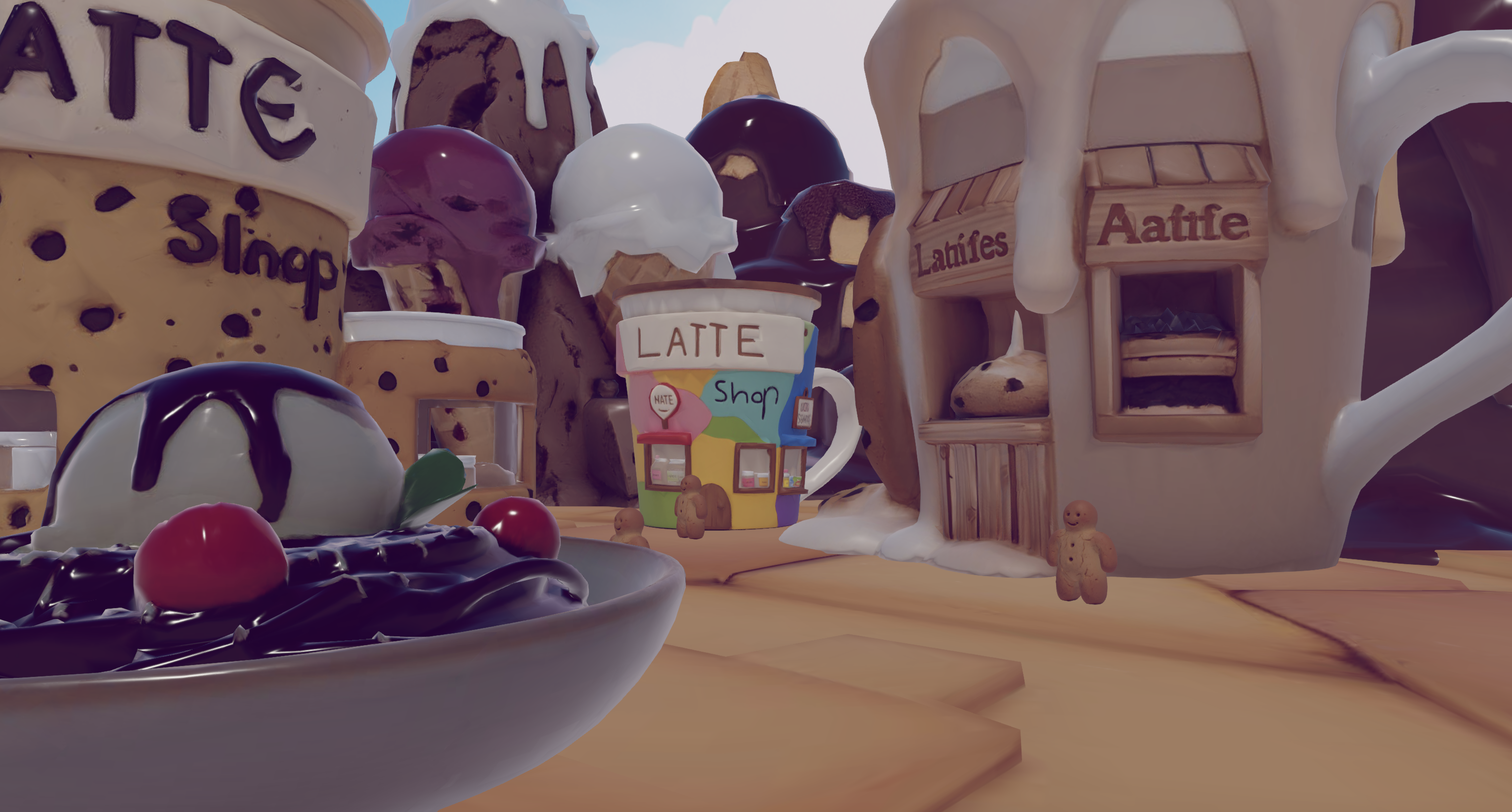
In a February 2026 Nilo survey, 93% of builders said they would recommend Nilo to a friend, and 82% rated their experience as “Awesome” or “Good.” Builders described the speed clearly: “I do not have to spend hours on 3D modeling the simplest things. Now I can use Nilo and do it in 15 seconds.”
Nilo is backed by Supercell. Their Head of Investments said: “Their approach to making game creation as enjoyable as gameplay itself really stood out. Nilo has the potential to open up game development to a whole new generation of builders.”
Here is how that speed and simplicity show up in a real workflow. Explore Nilo’s open beta and see this flow in your browser.
Nilo Browser Workflow: From Idea to Roblox Studio
The three-step workflow below shows how a browser-based tool can turn a long asset pipeline into one continuous session.

- Craft Your Model. Generate objects from a sketch, image, text prompt, or all three. Refine the details, then drag them into your world. You do not need Blender.
- Optimize, Rig, and Animate. Use the level of detail slider to hit Roblox’s polygon caps automatically. Rig your character with one click. Type what you want the character to do, and the AI creates the animation.
- Export and Upload. Click Export, download your Roblox-ready file (.fbx, .glb, or .stl), and import it into Roblox Studio. You get clean topology and correct polygon counts without manual cleanup.
How to Evaluate Real-Time Roblox Build Tools
When comparing tools, evaluate them across five dimensions that shape your daily building workflow. Start with access barriers, then look at collaboration, AI quality, export behavior, and device flexibility.
Install friction: Check whether you can open the tool on a Chromebook, a school machine, or your phone without downloading anything. Roblox Studio plugins like F3X require Studio installed on Windows or Mac and do not work on Chromebooks. Browser-based tools remove this barrier.
Collaboration speed: Measure how quickly a friend can join your build session. If you need to send files, sync projects, or match plugin versions, that friction slows you down.
AI output quality: Generate the same asset in multiple tools and compare topology, texture quality, and how much manual cleanup each result needs before it becomes Roblox-ready.
Export cleanliness: Import the exported file into Roblox Studio and check polygon count, collision behavior, and texture rendering. Desktop tool outputs can arrive with unusable geometry, bounding-box collisions, or textures that fail inside Studio.
Mobile access: Studio’s desktop-only architecture mentioned earlier limits where you can build. If you want to build on any device, check whether the tool runs in a mobile browser without installation.
Frequently Asked Questions
What is a real-time Roblox build tool?
A real-time Roblox build tool is any software that lets you create, move, and preview 3D assets or game environments with instant visual feedback. Changes appear as you make them, without waiting for a render or reload. This group includes Roblox Studio’s native tools, plugins like F3X, and browser-based platforms like Nilo that add AI generation and multiplayer collaboration on top of real-time editing.
What is the difference between building in a browser and building in Roblox Studio?
Roblox Studio is a desktop application that requires installation on Windows or Mac. It gives you deep control over scripts, physics, and publishing, but it does not run on Chromebooks, mobile devices, or locked-down school machines. Browser-based tools like Nilo run anywhere with a browser, with no install and no setup. You can generate AI-powered 3D assets, keep them within Roblox’s polygon limits automatically, and export directly to Studio. The trade-off is that browser tools focus on asset creation and world building instead of the full Roblox scripting and publishing pipeline.
Will assets I create in Nilo actually work in Roblox Studio?
Yes. Nilo exports to FBX, OBJ, STL, and glTF formats, which Roblox Studio accepts. Nilo’s built-in LOD system automatically adjusts polygon counts to stay within Roblox’s 10K–20K triangle caps. You do not need to retopologize meshes in Blender before importing. Builders in Nilo’s community already use this workflow to create rigged characters, props, and environments and export them directly to Roblox Studio.
Do I need to know how to code to use Nilo?
No. Nilo includes a built-in code editor that accepts natural language prompts. You type or speak what you want to happen in your world, and the AI generates working code with real-time feedback. Nilo calls this “vibe coding.” You can still see and adjust the actual code variables if you want to learn how things work, but coding knowledge is not required to start.
Is F3X still worth using in 2026?
F3X remains a solid plugin if you already work inside Roblox Studio on a desktop machine and want more precise part manipulation than Studio’s native tools offer. It is free, well-documented, and widely used in the Roblox builder community. The main limits are no AI assistance and no real-time collaboration. F3X does support mobile devices, as noted earlier. If those constraints match your workflow, F3X can still be a reasonable choice. If you need browser access, AI generation, or multiplayer building, a browser-based tool like Nilo covers those gaps.
Choosing the Right Tool for Your Roblox Goals
The right real-time Roblox build tool depends on what you want to create, where you build, and who you build with. F3X works as a proven desktop plugin for precise part manipulation inside Roblox Studio. It fits well if you have a Windows or Mac machine and want tight control over existing Studio workflows. Browser-based platforms like Nilo stand out when you want instant access from many devices, AI-powered asset generation, automatic Roblox-friendly optimization, and real-time collaboration with friends.
No single approach wins for every builder. Look at install friction, collaboration speed, AI output quality, export cleanliness, and mobile access against your own habits. Then choose the tool that removes the most friction from your specific workflow.
If you want to try the browser-based path right now with no setup, jump into Nilo’s open beta and start building and playing for free in your browser.