Written by: Nuno Leiria, Founder & CEO @ Nilo | Last updated: August 9, 2026
Key Takeaways
- Traditional game engines create steep barriers with complex scripting and modeling that block creative builders like you.
- AI-assisted browser-based 3D tools remove installs and let you build instantly using natural language prompts instead of code.
- Real-time retopology, LOD optimization, and Roblox-ready exports cut the manual cleanup that usually follows AI-generated assets.
- Vibe coding turns plain-language descriptions into working game logic, so you can create without prior programming knowledge.
- Ready to skip the walls and start building? Join Nilo’s open beta and try building and playing for free.
Why Hitting Scripting and Modeling Walls Hurts Your Progress
When you hit these walls, the damage goes beyond one abandoned project. Your momentum dies and your motivation drops. You might start to believe you are not technical enough, and you stop trying.
The scale of this problem is huge. There are 400M+ monthly players on Roblox, 190M+ on Minecraft, and 110M+ on Fortnite. Many of these players reach a point where they want to go from playing to creating. You already have ideas and spatial skills from years inside 3D worlds. What you usually lack are tools that meet you where you are.
Three shifts make this problem solvable right now. Generative AI can produce 3D models, animations, and working code in seconds. Browser technology, especially WebAssembly and WebGPU, now runs performance-heavy 3D experiences without downloads. A whole generation of aspiring builders is ready for tools that feel like play instead of work.
The gap between having an idea and shipping a playable world has never been smaller. Tools that close that gap belong to a new category: AI-assisted browser-based 3D creation.
The Solution Category: AI-Assisted Browser-Based 3D Creation Tools
This category represents a shift in how you build 3D worlds. Instead of installing heavy software and learning a scripting language, you work in your browser with AI that understands plain language.
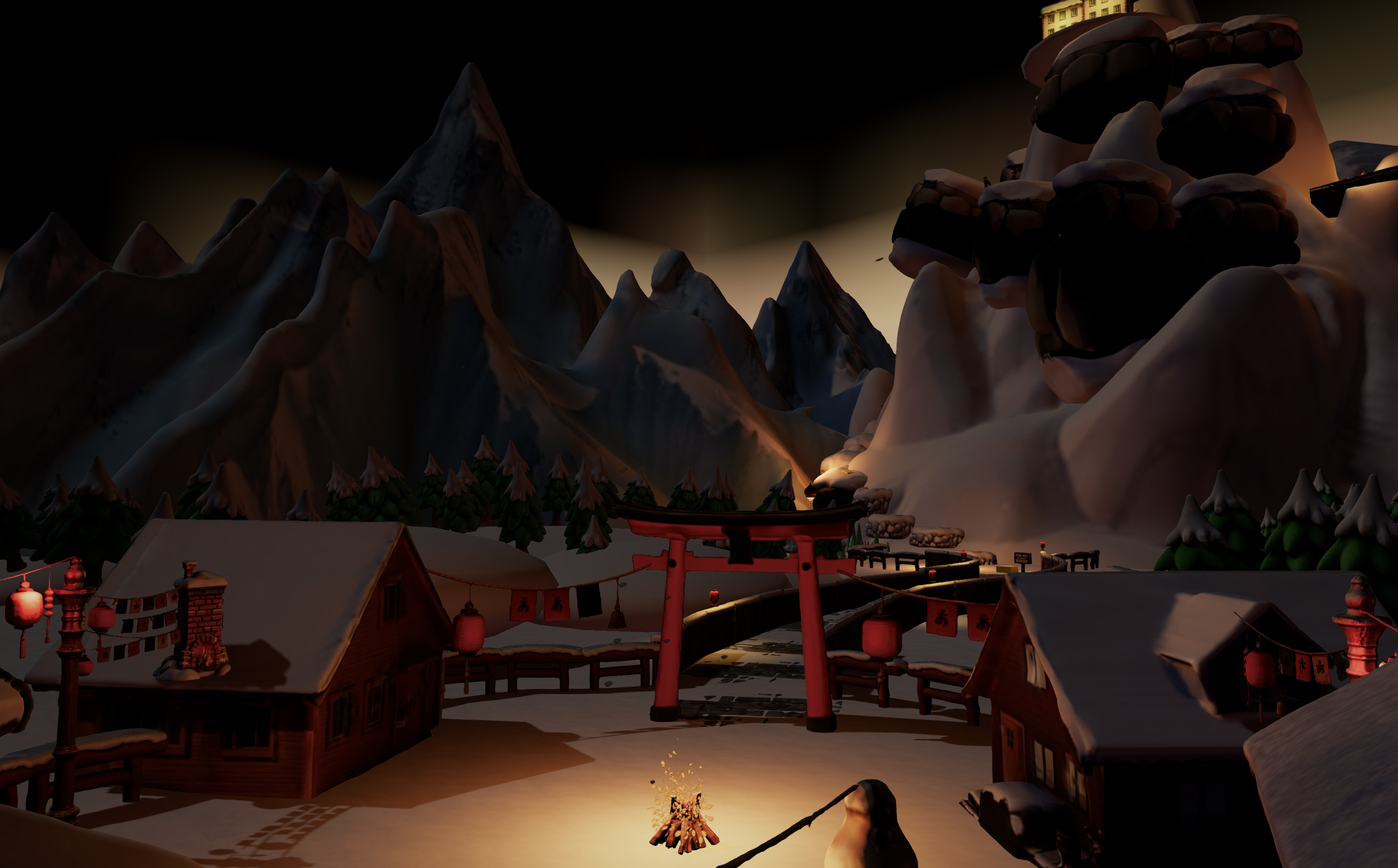
AI-assisted browser-based 3D creation tools combine natural-language prompts, where you talk, type, or send images to the AI, with real-time 3D environments that run in your browser. You avoid downloads, installs, and high-end hardware.
This approach differs from desktop engines like Roblox Studio, Unity, or Unreal Engine, and from workflows that chain Blender, a code editor, and a game engine together. You can compare the category across five key dimensions.
Instant Access on Any Device
Desktop engines require installation, setup, and often specific hardware. Browser-based tools open from a link on almost any device, including many phones and laptops. You start building in seconds instead of spending hours on setup.
One Flow Instead of Tool Hopping
Traditional workflows split your work across several apps. AI-assisted browser tools bring modeling, scripting, animation, and world building into one place. You stay in creative flow instead of constantly switching tools and losing focus.
Real-Time Collaboration That Feels Like Playing Together
Desktop engines usually expect file sharing and version control for teamwork. Browser-based tools let you share a link and build together in real time. It feels closer to joining a multiplayer game than checking out a Git branch.
Modern Browser Performance Stack
Browser-based 3D experiences rely on WebAssembly physics engines, WebGPU rendering, and WebRTC or WebSockets for multiplayer. Performance used to lag far behind native desktop engines. WebGPU and WebAssembly now narrow that gap significantly in 2026, especially for the kinds of worlds most aspiring builders create.
Easy Export to Other Engines
Worlds and assets from browser-based tools can export to standard formats such as FBX, OBJ, GLB, and STL. You can then import them into Roblox Studio, Unity, Unreal Engine, Blender, or VRChat. Your work stays portable instead of locked into one ecosystem.
3D Asset Generation and Cleanup for Playable Worlds
Turning a text prompt into a 3D asset sounds simple, but results vary a lot between tools and prompts. More complex descriptions usually expose the limits faster.
Text-to-3D tools perform best on objects with clear shapes and silhouettes, such as furniture, crates, weapons, props, and simple environment pieces. They struggle with complex characters, precise technical dimensions, and unusual geometry. Articulated geometry can look fine in a still render but fail once you try to rig or animate it.
Most tools follow a similar pipeline. Multi-view diffusion models generate consistent images from several angles. A 3D reconstruction step infers geometry and surface properties. The system then converts everything into an exportable mesh with UV maps and textures. Outputs usually arrive as dense triangulated meshes with a single baked texture, not clean quads or separated PBR channels.
This is where trade-offs matter for Roblox builders. Roblox limits how heavy your assets can be, while most AI meshes arrive far above those limits. That mismatch means you often need retopology, which is the process of rebuilding a mesh with cleaner, lower-count geometry, before your asset loads smoothly in Roblox Studio. Game-ready assets also need PBR texturing, material slots, rigging, LODs, and clean exports after the first mesh.
Tools like Meshy and Tripo handle generation well but leave retopology and optimization to you. Nilo stands out by baking real-time retopology and a live LOD slider into the creation flow. You adjust polygon counts on the fly without leaving your browser or opening Blender. One builder in the February 2026 Nilo survey said, “I do not have to spend hours on 3D modeling the simplest things. Now I can use Nilo and do it in 15 seconds.”

Natural-Language Logic Instead of Traditional Scripting
Scripting blocks more game ideas than any other step. You might have your world built and your props placed, but nothing moves without code. Traditional tools expect Lua for Roblox or C# for Unity, which can take months to learn.
Vibe coding, a term coined by Andrej Karpathy in early 2025, flips that experience. You describe what you want in plain language and iterate through conversation instead of a text editor. The AI turns those descriptions into working game logic.
Tools in this space sit on a spectrum. Pure prompt-to-game tools like Rosebud AI create quick playable prototypes from descriptions. Integrated editors like Nilo’s accept text, voice, or image inputs and show real-time changes in your 3D world. Pure generation feels fast but gives you limited control. Integrated editors expose real code variables, such as changing “speed = 2” to “speed = 20”, so you learn real programming ideas while you build.
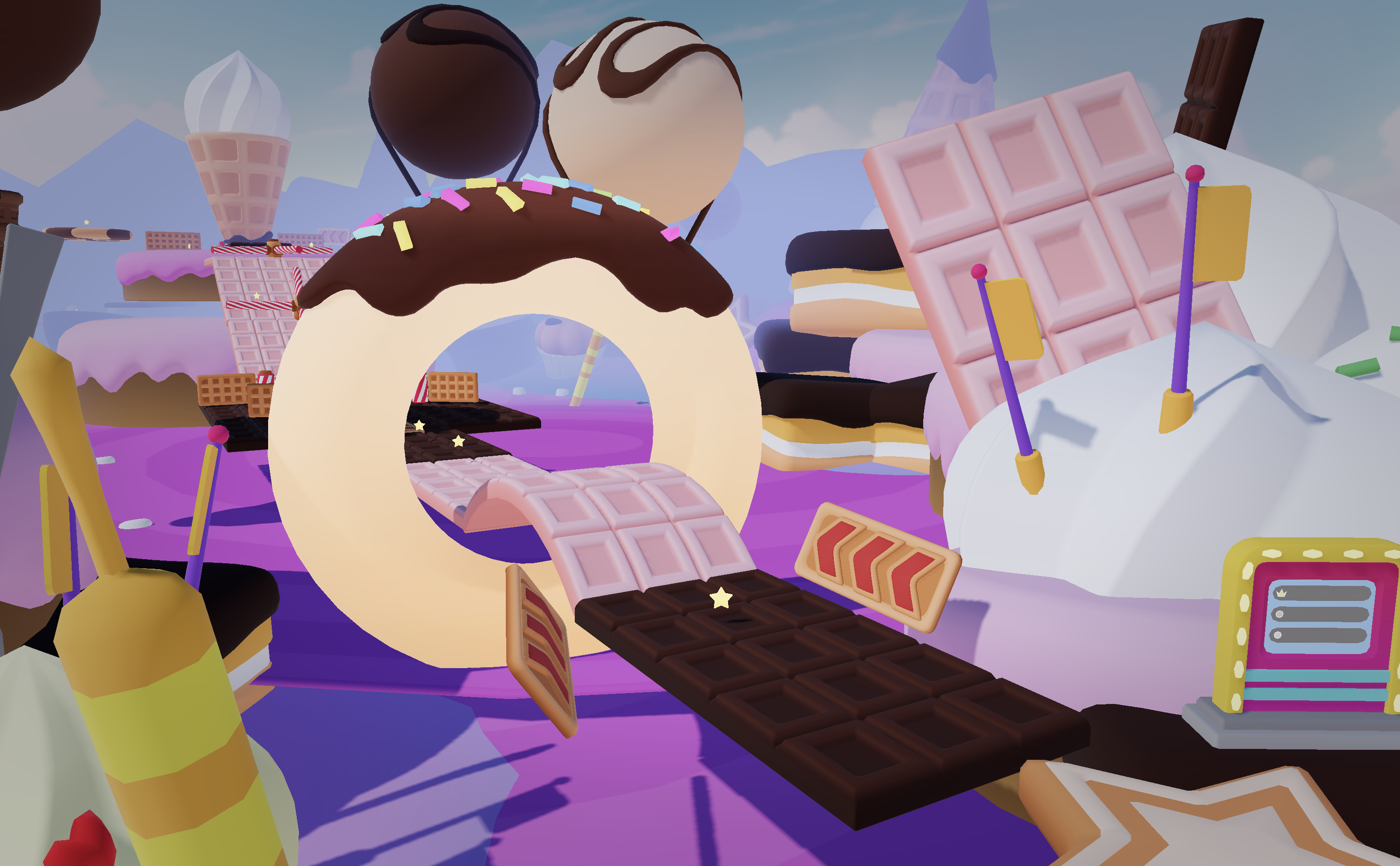
You can judge vibe coding tools by whether the generated code works, stays readable, and handles real-world complexity. For game logic, you want tools where changes appear instantly in the 3D world, not only in a code preview.
World Building, Performance, Collaboration, and Export
Assets and logic are only part of the creation process. Building a full playable world also means assembling scenes, keeping performance smooth, working with friends, and exporting cleanly to your target platform.
World building in AI-assisted tools usually mixes procedural generation with manual placement. Strong tools give you a radial menu for quick object creation, an inspector panel for detailed properties, and real-time physics so everything feels interactive without extra wiring.
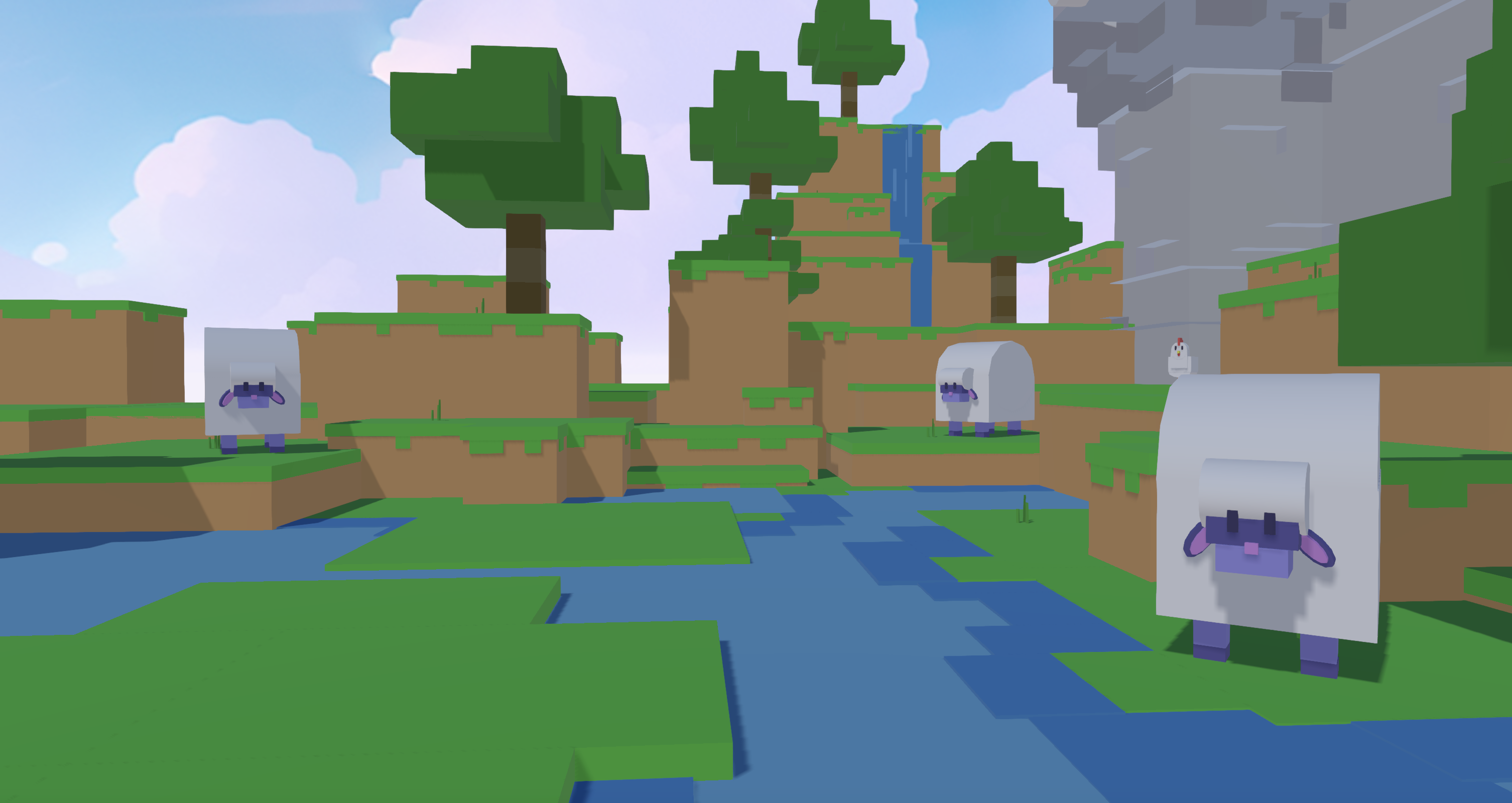
Optimization matters a lot if you care about Roblox performance or low-end devices. High polygon counts, laggy unions, and low FPS can ruin a good idea. A real-time LOD system that adjusts polygon counts based on camera distance removes much of this stress. Without it, you end up checking triangle counts on every asset before export.
Collaboration in browser-based tools usually works through shared links. You send a URL and friends can join your world and build with you in real time on desktop or mobile. This feels similar to how Figma changed 2D design, now applied to 3D game creation.
Export compatibility decides where your work can go next. GLB is a common choice for web and many engines because it bundles geometry and PBR materials, while FBX is often used for animation and DCC-to-engine handoff. Look for tools that support several standard formats and clearly state compatibility with Roblox, Unity, and Blender.
How to Choose the Right AI Vibe Code Maker
When you compare online AI vibe code makers for 3D browser worlds, focus on how each tool affects your experience from first click to finished world. Onboarding speed shapes whether you even start. Output quality shapes how much time you spend fixing assets. Export and performance shape where your worlds can live and how they feel to play.
Start with onboarding speed. If you cannot reach a playable world in under 10 minutes without installs or hardware setup, friction will slow you down. Once you are building, check output quality by testing the kinds of assets you actually use, such as props, characters, and environments. Then look at export compatibility and performance limits so you know your work can move to Roblox or other engines and still run smoothly. Finally, consider collaboration and learning value, because building with friends and picking up real game dev concepts will keep you growing over time.
| Tool | Best For | Key Strengths | Considerations |
|---|---|---|---|
| Nilo | Roblox builders, aspiring builders, collaborative teams | Real-time retopology, Roblox-focused export, vibe coding editor, real-time multiplayer, browser-based, sketch-to-3D, one-click rig and animate, model-agnostic AI layer | Full game publishing pipeline is still in development, with current focus on asset creation and world building |
| Rosebud AI | First-time creators who want quick prototypes | Beginner-friendly, creates playable prototypes from descriptions, browser-based | Does not offer a full game engine or deep 3D tools, limited hands-on building, no multiplayer creation |
| Sloyd | Builders who need predictable game-ready geometry | Uses parametric templates and sliders to deliver clean topology and controllable variations with little post-processing | Focuses on model creation only, without rigging, animation, or full game building in one flow |
| Replit | Builders who want to learn coding with AI support | Established vibe coding platform, strong code generation, broad language support | Targets general software development, not 3D games, and does not include a 3D asset pipeline or game engine |
If you are creating your first playable world, look for zero-install access, natural language prompts, and real-time feedback in 3D. Nilo’s browser engine and vibe coding editor support exactly this flow, so you describe what you want and watch it appear in your world.
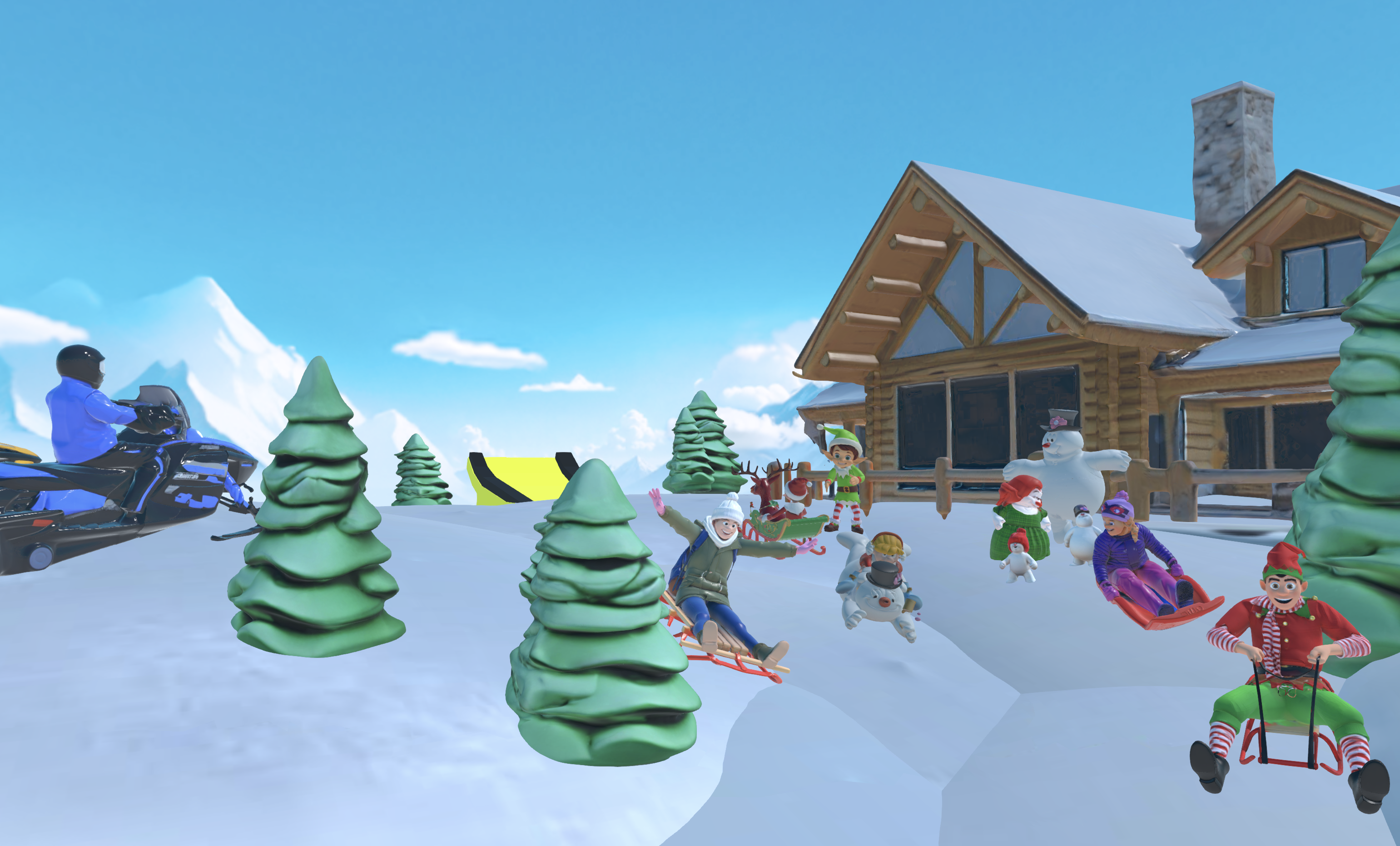
If you focus on Roblox, prioritize exports with clean topology and polygon counts that pass Roblox performance checks. Nilo stands out here with its real-time LOD system and Roblox-focused export pipeline. Tools like Sloyd create clean geometry but stop at the model and do not cover rigging, animation, and world building in one place.
If you are building with a team, real-time multiplayer creation becomes essential. Nilo lets you share a link and build together on desktop or mobile, while many other tools in this category keep creation as a single-player experience.
Frequently Asked Questions
What is vibe coding and do I need any skills to use it?
Vibe coding means building software, and here games, by describing what you want in plain language instead of writing code. You type, speak, or send an image to the AI, and it generates working logic that appears in your world in real time. You do not need scripting or programming knowledge to begin. The strongest vibe coding tools for 3D games also show you the underlying variables, so you learn ideas like speed, gravity, and collision while you build.
How is an AI-assisted browser-based 3D creation tool different from Roblox Studio?
Roblox Studio requires installation, specific hardware, and Lua scripting before anything becomes interactive. Browser-based AI tools run from a link and accept plain-language prompts instead of code, which creates the accessibility differences covered earlier. If you want to publish on Roblox, tools like Nilo export directly to Roblox Studio with automatic polygon optimization, so you keep the easy start and still ship to Roblox.
What are the real limitations of AI-generated 3D assets?
AI-generated 3D assets work best for props, weapons, furniture, and simple environment pieces with clear shapes. Complex characters and creatures remain harder, because geometry that looks fine in a still image can break when you rig or animate it. Many tools also output dense, high-polygon meshes that need cleanup before they run well in Roblox or other engines. You should check whether a tool handles retopology and polygon optimization for you or expects you to fix everything in Blender. Nilo’s real-time LOD system handles this automatically, using the same automation that lets builders finish modeling tasks in seconds instead of hours.
Can I export what I build to Roblox, Unity, or other platforms?
You can export if the tool supports standard 3D formats. Look for FBX, OBJ, GLB, and STL, which work with Roblox Studio, Unity, Unreal Engine, Blender, and VRChat. Nilo exports to all of these formats and does not lock you in. You can use it as an asset pipeline for Roblox or build and publish full worlds directly in Nilo. Rigging in Nilo supports bipedal humanoid characters in a T-pose, with clothing rigged as part of the full character model. You set up 3D layered Roblox clothing inside Roblox Studio after export.
Is browser-based 3D creation powerful enough for real game development?
Browser technology has advanced a lot. WebAssembly lets C++ physics engines run at near-native speed in the browser, and WebGPU brings GPU-accelerated graphics to web apps. Nilo uses this stack with a custom C++ physics engine compiled to WebAssembly, WebGPU rendering, and a custom networking layer. That combination delivers real-time multiplayer, physics simulation, and high-quality 3D rendering without installation. The gap between browser-based and desktop-native performance keeps shrinking, and for most worlds you want to build, browser-based tools are already strong enough.
Moving Forward: Pick Tools That Match Your Goals
The scripting wall and the modeling wall have blocked real projects for years. AI-assisted browser-based 3D creation tools exist to remove those walls, so you can go from idea to playable world without learning Lua, opening Blender, or spending weeks on a project that never ships.
The right tool depends on what you are building, how you like to work, and where you plan to publish. If you are a Roblox builder tired of messy AI assets and manual retopology, Nilo’s end-to-end workflow, from generation and optimization to rigging, animation, vibe coding, and Roblox-ready export, fits that situation well. In the February 2026 Nilo survey, 93% of builders said they would recommend Nilo to a friend, and 82% rated their experience as “Awesome” or “Good.”
If you are just starting and want creation to feel like play, the open beta gives you a fast way to try it. One builder said, “There are no limits on what you can create, just type, draw or add in an image and you can generate, rig, customise and place a fully 3D model within minutes.”
Your ideas deserve tools that keep up with you. Creation should feel as fun as playing the game itself.
Start building in Nilo’s open beta today and see how fast your worlds come to life.