
Written by: Nuno Leiria, Founder & CEO @ Nilo
Key Takeaways
- Meshy and Rosebud AI sit at different stages of game creation. Meshy generates standalone 3D assets. Rosebud AI produces playable browser games from prompts.
- Pick Meshy when your main slowdown is creating export-ready 3D models with PBR textures and formats for Unity, Unreal, or Roblox Studio.
- Pick Rosebud AI when you want a quick playable browser game prototype without deep 3D modeling or export work.
- If you build for Roblox, you need strong optimization and native export formats. Meshy and Rosebud both leave Roblox-specific steps for you to handle.
- Try Nilo’s browser-based workflow to get asset generation, real-time optimization, and Roblox-native export in one place.
The Problem: Two Tools, Two Different Jobs
Meshy focuses on generating 3D assets. You type a text prompt or upload a reference image, and it produces a textured 3D model with full PBR maps: color, roughness, metallic, and normal, ready to export. Meshy supports eight export formats: FBX, OBJ, USDZ, GLB, STL, BLEND, 3MF, and DMF, and it connects directly to Blender, Unity, Unreal Engine, Godot, and Roblox Studio through native plugins. That export focus defines the tool. You get auto-rigging, 600+ animation presets on paid plans, and a Remesh tool that reduces polygon counts before you send models to an engine. Meshy builds the pieces that go into games, not the games themselves.
Rosebud AI works at a different layer of your workflow. It generates JavaScript, Three.js, and React code from plain-English prompts, then turns that code into a playable browser game you can share with a link. You can bring in outside assets. The Assets tab accepts .glb/.gltf, .obj, .fbx, and .blend files. The platform still centers on code generation and game logic instead of detailed 3D modeling. Assets inside Rosebud behave as parts of its generated game world instead of high-poly models you export and reuse in other tools.
The two tools sit at different stages of the same pipeline. Meshy handles asset creation. Rosebud AI handles game assembly.
Head-To-Head On The Dimensions That Matter
The table below compares Meshy and Rosebud AI on the key choices you face: what each tool outputs, how assets move in and out, how much control you have, and how hard each one is to learn.
| Dimension | Meshy | Rosebud AI |
|---|---|---|
| Primary Output | Textured 3D model with PBR maps (color, roughness, metallic, normal) | Playable browser game (Three.js / React) |
| Export Formats | FBX, OBJ, GLB, USDZ, STL, BLEND, 3MF, DMF | Accepts GLB, OBJ, FBX, BLEND as imports; outputs shareable browser game URL |
| Asset Control | Control topology, polycount via Remesh, rigging, and texturing before export | Assets live inside Rosebud’s game environment with limited standalone control |
| Game Workflow | Generates assets only, not playable games | Generates and hosts playable browser games with one-click publishing |
| Learning Curve | Low for generation, moderate for optimization and rigging settings | Low for simple games, then steeper as projects approach the roughly 2,500-line code ceiling |
The Combined Pipeline: Meshy Asset To Engine To Playable World
You can chain Meshy and Rosebud AI together. You generate an asset in Meshy, then bring it into Rosebud or another engine. Each step in that chain needs a quick check so you do not lose hours to tiny mistakes.
- Generate in Meshy. Meshy can create a fully textured model in under 60 seconds from a text prompt or image. Before exporting, run the Remesh tool to hit your target polycount. Raw AI output often lands at 100k–500k triangles for a prop that should ship at 1k–8k, and a cleaner mesh makes import smoother.
- Choose the right export format. Rosebud recommends GLB as the default import format because it bundles mesh, textures, and animations into a single file. Meshy’s FBX and OBJ exports ship textures as separate files. If you move or rename the texture folder, material links break and the model shows up grey.
- Watch for the “melted” look. AI generators often output triangle-soup meshes with no edge flow. That can work for static props. It breaks once you try to rig or deform the mesh. Check the wireframe before you commit to cleanup or animation.
- Check scale and orientation. Rosebud uses a Y-up coordinate system while Blender uses Z-up. A model exported from Blender without a rotation fix will import on its side. Verify scale and axis before you bring assets into any engine.
- Validate textures on arrival. AI-generated assets often ship with a single baked diffuse texture instead of separate PBR maps for albedo, normal, roughness, and metallic. A fused texture can look fine in preview but becomes painful when you need to tweak one channel or match an engine’s lighting model.
The honest summary: the handoff between Meshy and any game engine is where hours leak. Each handoff between export, import, topology fixes, re-bakes, and re-imports is a fresh chance for something to go wrong. A scale error, a flipped normal, or a dropped material slot can all sneak in.
The Roblox Constraint: Why Optimization Decides It
That handoff friction gets worse on Roblox, where the platform enforces hard limits. If you are building for Roblox, optimization is the deciding factor when you choose tools. Polygons are the flat shapes that form a 3D model’s surface, and Roblox caps models at 10K–20K polygons and textures at 1,024 × 1,024 pixels. When a model goes over that limit, import fails with an error instead of loading a lighter version.
AI-generated image-to-3D output usually arrives dense, so you hit Roblox’s polygon limits constantly if you skip an optimization pass. Meshy suggests 1,000–3,000 triangles for Roblox props and 5,000–10,000 for characters, and its Remesh tool can reduce polygon counts automatically. Rosebud AI focuses on browser games and does not export standalone Roblox-ready assets, so it does not close this gap.
Nilo steps in here for Roblox builders like you. Nilo optimizes polycount so models work directly in Roblox Studio and other platforms without extra cleanup. Its real-time LOD system adjusts polygon counts on the fly while you build, so you do not have to count triangles by hand. Nilo exports in RBXMX, Roblox’s native format, which packs textures and attachments into a single file for Roblox Studio with no subscription required. It also exports FBX, OBJ, STL, and glTF, and it can send creations straight into your Roblox experience through an API key instead of manual file transfers.
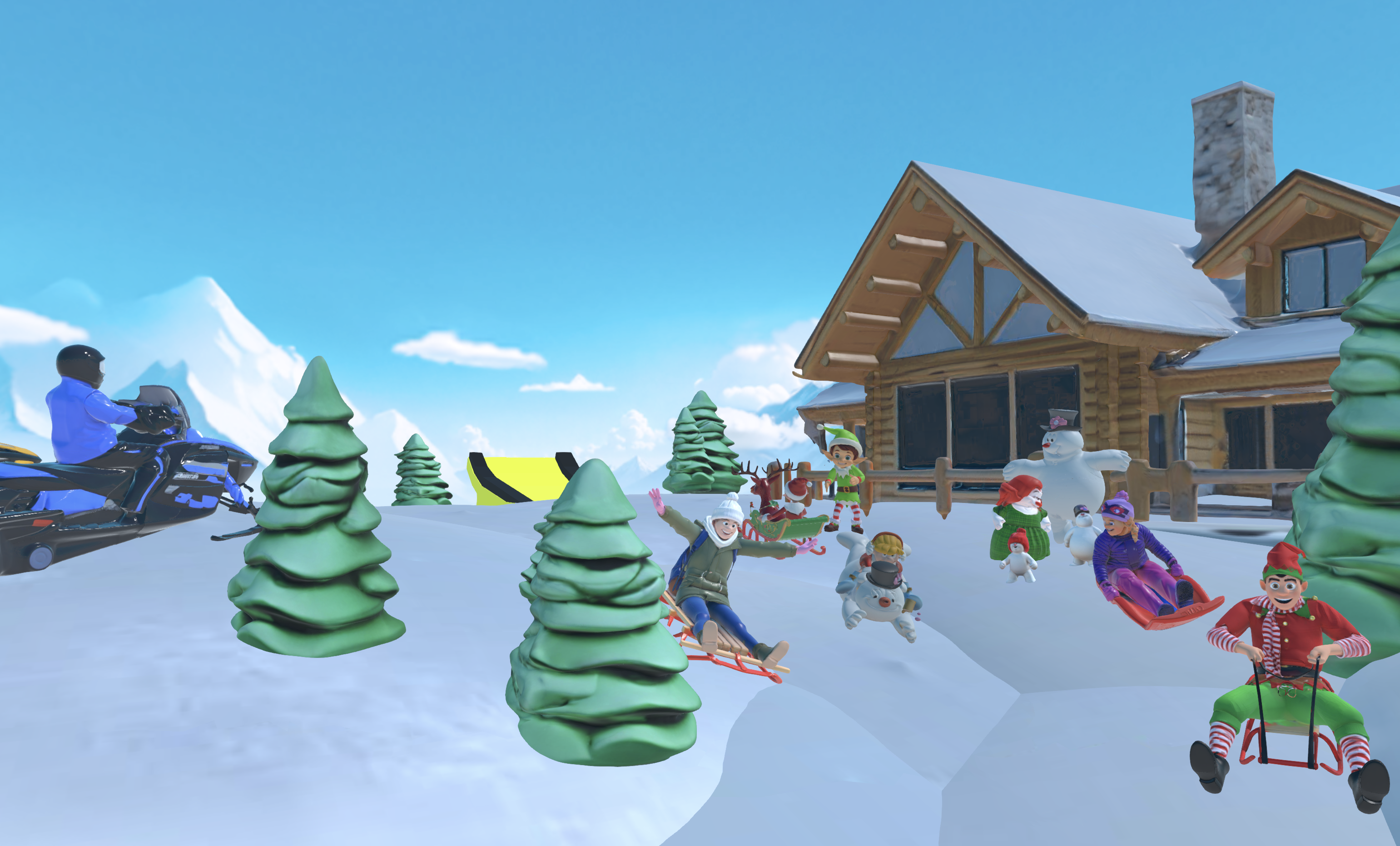
As one builder said in Nilo’s February 2026 survey: “I do not have to spend hours on 3D modeling the simplest things, now I can use Nilo and do it in 15 seconds.”
Start building in Nilo’s open beta and see how the Roblox pipeline feels when optimization happens in real time.

Pricing And Ownership: What You Actually Get
Meshy gives you a free plan with 100 monthly credits and 10 downloads for Meshy 6 Lite models. Paid plans start at $20/month for Pro with 1,000 credits. Premium costs $40/month for 3,000 credits, and Ultra costs $100/month for 8,000 credits. On the free plan, models use a CC BY 4.0 license, so you can use them commercially if you credit Meshy. Paid subscribers own their assets privately and can sell them without attribution. Free users can still sell models, but Meshy asks for credit in your store listing.
Rosebud AI uses a freemium model. The free plan is limited to personal, non-commercial use. The Pro Creator plan costs $19.99/month and includes commercial rights, access to the JavaScript code, and 100% profit retention. Rosebud’s terms say the company owns materials generated through the service and licenses paid users to commercialize their content, so you work under a service license instead of full asset ownership.
Nilo is free to use and gives you 1,000 Nilo Bits per month for AI generation, export, and creation. Anything you create in Nilo belongs to you, so you can publish and monetize it on the Roblox Marketplace or anywhere else.
Decision Table By Use Case
Use this table to match your current bottleneck with the tool that fits it best.
| Use Case | Recommended Tool | Why |
|---|---|---|
| Standalone 3D asset generation | Meshy | Supports eight export formats and PBR texturing, with auto-rigging and 600+ animation presets |
| Game props for Unity / Unreal | Meshy | Connects to Unity, Unreal Engine, and Godot through native plugins for one-click asset transfer |
| 3D printing | Meshy | Exports in STL and 3MF formats used by printers |
| Playable browser game prototyping | Rosebud AI | Generates and hosts playable Three.js games from prompts with one-click publishing |
| Roblox UGC and optimized asset export | Nilo | Exports in RBXMX, Roblox’s native format, and uses a real-time LOD system to adjust polygon counts automatically |
| Asset generation plus hands-on 3D creation in one browser tool | Nilo | Combines multimodal generation, rigging, animation, and world building in a single browser-based platform with no downloads |
See how Nilo handles Rosebud-style browser game creation while still giving you control over assets and Roblox export.
Conclusion: Match Your Bottleneck To The Right Tool
Meshy and Rosebud AI tackle different problems. Meshy fits when your slowdown is generating clean, export-ready 3D assets. Rosebud AI fits when your slowdown is getting a playable browser game live quickly. You can combine them by generating in Meshy and importing into Rosebud, but that pipeline adds friction around topology, scale, and textures that you need to plan for.
If you build for Roblox, neither Meshy nor Rosebud closes the full loop alone. Meshy gives you a textured model and leaves optimization and Roblox export as manual work. Rosebud focuses on browser games and does not produce Roblox-ready files. Nilo stands out when you want asset generation, real-time optimization, and Roblox-native export in one place, without switching tools or opening Blender.
Start building in Nilo’s open beta and feel how a single AI-native pipeline changes your build time.