Written by: Nuno Leiria, Founder & CEO @ Nilo
Key Takeaways for Aspiring 3D Builders
- HypeHype started as a mobile-first, no-code platform for simple 2D-leaning games and now works as a Supercell subsidiary focused on AI-native tools, not deep 3D creation.
- Modern 3D creators like you need real engine features such as scene trees, physics, LOD optimization, and export pipelines that lightweight mobile tools cannot deliver.
- Browser-based, AI-assisted 3D platforms close this gap by combining generative AI, natural language scripting, and automatic optimization without downloads or steep learning curves.
- When you compare tools, focus on browser access, hands-on 3D building, real-time collaboration, automatic performance handling, and one-click export to Roblox, Unity, and other engines.
- If you feel ready to move beyond mobile limits, join Nilo’s open beta and start building for free.
The Problem: Why Moving from Playing 3D Games to Creating Them Still Feels Broken
You have spent years in Roblox, Minecraft, and Fortnite. You know how 3D worlds feel and what makes a game fun. Now you want to build your own. The moment you try, the tools start fighting you.
Mobile-first no-code platforms like HypeHype were built for quick, casual creation on a phone screen. That is a real achievement, but it solves a different problem than building a 3D world with custom assets, working physics, and export-ready models. Browser-only or lightweight no-code tools hit a ceiling on core 3D needs such as a scene tree, physics system, export pipeline, and debugger access. That ceiling comes from the platform itself, not just the editor interface.
The friction shows up fast. You cannot generate a custom 3D prop. You cannot export a rigged character. You cannot hit Roblox’s strict polygon limits without manual cleanup in Blender. You deserve tools that match your ambition, not tools that stop you at the first real creative challenge.
Try building your first 3D world in Nilo’s free open beta.
Why This Problem Matters for Your Momentum and Future
Builders burn out when tools slow them down. Every hour you spend fighting a workflow is an hour you do not spend designing, iterating, or shipping. In 2026, no-code game development splits into three clear categories: visual editors for 2D games, browser AI generators for quick prototypes, and engine-backed AI systems for 3D and multiplayer. Each category comes with different capabilities, ceilings, and costs. Choosing the wrong one does not just slow you down. It can end your project completely.
This is not only about creative frustration. It is also about economic opportunity. Roblox pays out over $1 billion annually to creators, growing more than 30 percent year over year. Builders who learn to create real 3D experiences today are the ones who will earn from them tomorrow. Tools that cap out at simple mobile games do not prepare you for that path.
Three shifts now make this problem solvable. Generative AI collapses the skill barrier. Browser technology such as WebAssembly and WebGPU delivers real game-engine performance without downloads. A generation of creators like you already has the spatial literacy and motivation to build.
AI-Assisted, Browser-Based 3D Creation Tools Explained
AI-assisted, browser-based 3D creation tools combine a real game engine with AI-powered asset generation, natural language logic, and direct export inside a single browser tab. You open a link and start building, with no installation required.
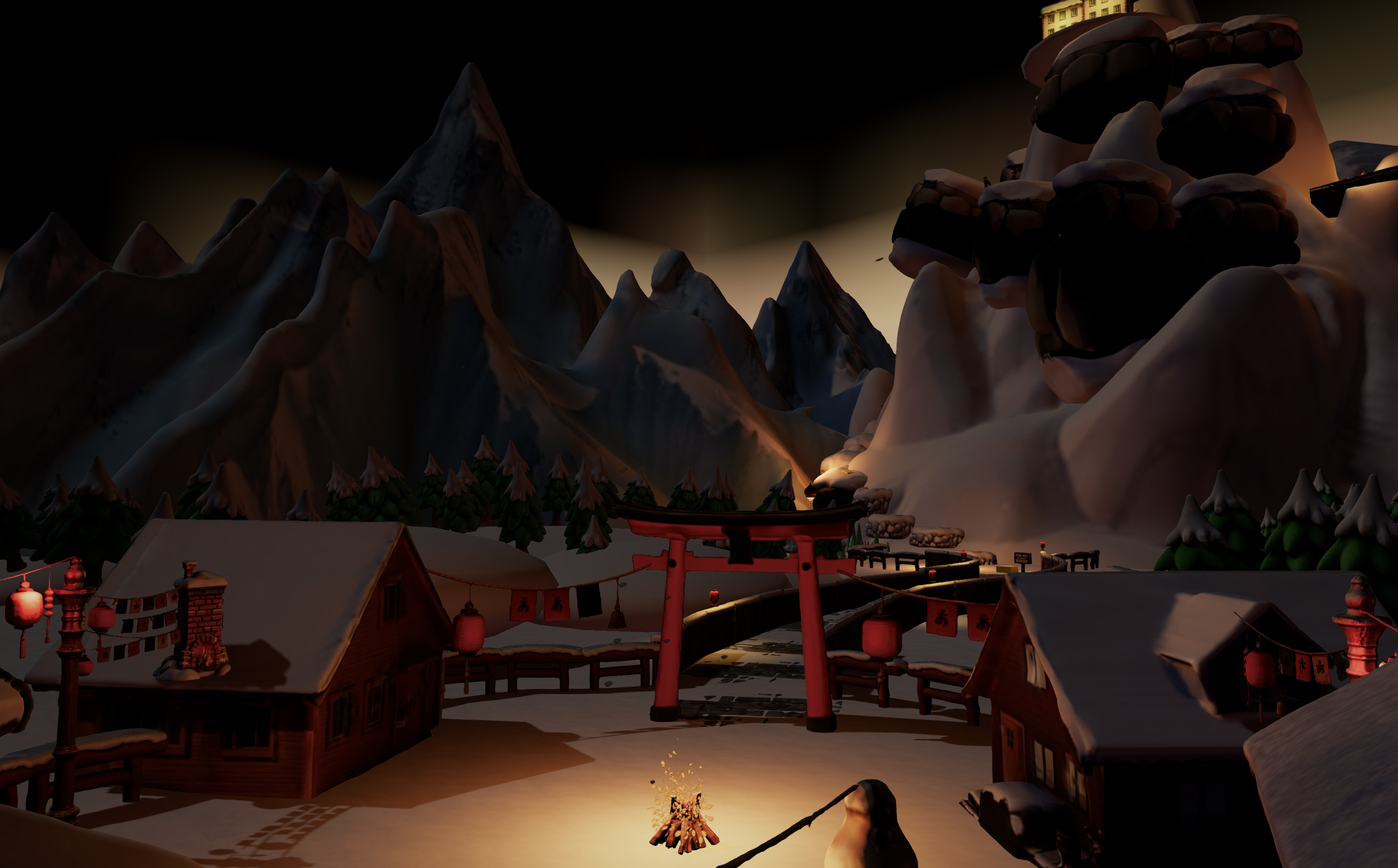
This approach differs from desktop engines like Roblox Studio, Unity, or Blender, which require installation, steep learning curves, and separate tools for modeling, rigging, coding, and publishing. It also differs from prompt-to-game tools like Rosebud AI, which generate a game from a text prompt but give you limited control to tweak, build hands-on, or export to other platforms.
When you compare tools in this category, focus on a few core dimensions that shape your day-to-day building experience.
- Accessibility: It should run in a browser on any device, with no downloads.
- Creation flow: You should build hands-on inside a 3D world, not just type prompts and wait.
- Collaboration: You should invite friends to build together by sharing a link.
- Performance: The engine should handle real physics, LOD (level of detail), and optimization automatically.
- Portability: You should export to Roblox, Unity, or other platforms in standard formats.
3D Asset Generation and Refinement for Roblox-Ready Models
Generating a 3D asset that actually works in Roblox is harder than it sounds. Many AI tools produce models with messy topology, meaning the mesh structure of the model needs 30 or more minutes of manual cleanup in Blender before it meets Roblox’s 10K to 20K polygon cap. Production 3D assets need validation and iterative optimization inside real-time engines, not one-click generation alone. Material count, mesh separation, UV layout, and baked maps all affect performance once you import the asset.

The table below shows how these technical needs turn into practical differences between HypeHype and Nilo. You can see which tool gives you the asset pipeline, AI integration, and export formats you need to ship Roblox-ready models without manual cleanup.
| Tool | 3D Capability | AI Integration | Browser Access | Roblox Export |
|---|---|---|---|---|
| Nilo | Full 3D asset generation, rigging, animation, world building, LOD optimization, and real-time physics, all in one engine | Model-agnostic AI layer (Meshy, Tripo, Cartwheel, Nano Banana, Uthana); text, sketch, and image inputs; natural language code editor | Fully browser-based, no download or installation, works on desktop and mobile | One-click export in FBX, OBJ, STL, and glTF; LOD system auto-optimizes to Roblox’s polygon caps |
| HypeHype | Mobile-first with limited 3D depth and no custom asset pipeline or export to external platforms | No AI-powered asset generation or natural language logic tools | Mobile app; active as a Supercell subsidiary developing AI-native game tools in 2026 | No Roblox export and no standard 3D format output |
One builder in Nilo’s February 2026 survey described the difference clearly: “Picture yourself, frustrated because you spent the last 5 hours 3D modeling a shipping container. All I have to do is open Nilo and do it in 20 seconds.”
Start generating Roblox-ready assets in Nilo’s free beta.
Natural Language Logic Creation with Vibe Coding
Scripting is the biggest barrier to game creation for many builders. You have the game idea and the building skills. The moment you need something to move, react, or behave, you end up waiting for a scripter or drowning in Lua documentation.
This is exactly the barrier that vibe coding removes. Instead of writing code, you describe what you want in plain language, and the AI generates working logic instantly. Engine-backed AI tools let users describe games in plain language while the AI operates a full game engine, writing real scripts, wiring physics, and enabling 3D scenes, multiplayer, and desktop exports without the user writing code.
Nilo’s built-in code editor accepts text, voice, or image inputs in any language and shows changes in real time inside your 3D world. You can also open the actual code and tweak variables directly. Change “speed = 2” to “speed = 20” and watch it update instantly. It feels like right-clicking “View Source” on a webpage, but for your game, and you do not need a dedicated scripter.
World Building, Scene Assembly, and Automatic Optimization
Building a world that runs well is a technical challenge that most no-code tools leave entirely to you. Roblox caps assets at 10K to 20K polygons and 1024 by 1024 textures. When you exceed those limits, your game lags, fails performance checks, or gets rejected.
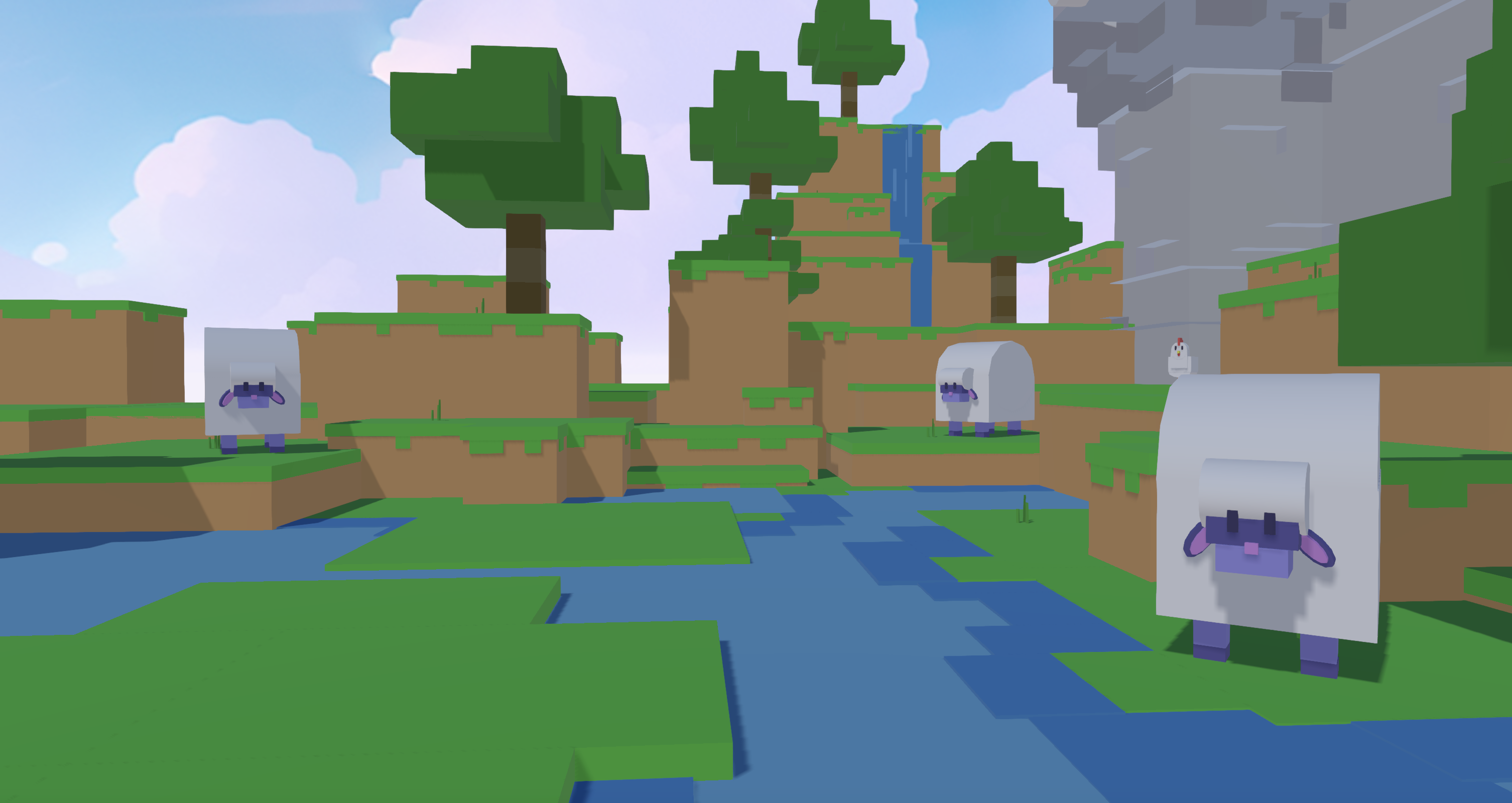
Nilo’s LOD system handles this automatically. It adjusts polygon counts on the fly as you build, so you can focus on designing your world instead of counting triangles. A radial menu lets you drop in primitives or AI-generated objects instantly. An inspector panel gives you detailed control over every property. Physics and collisions work in real time by default, so objects move, bump, and react without manual wiring.
Collaboration, Sharing, Export, and Interoperability Across Tools
When you evaluate any 3D creation tool, ask whether it removes friction at every stage of your workflow, from the moment you open it to the moment you ship. These questions help you check that.
- Onboarding: Can you start creating in under five minutes, with no installation?
- Output quality: Are generated assets clean enough to use without manual cleanup, or do they force a Blender detour?
- Export compatibility: Does it output standard formats such as FBX, OBJ, STL, and glTF that work in Roblox, Unity, and Blender?
- Performance limits: Does the tool handle optimization automatically, or does it leave polygon management to you?
- Collaboration: Can you build with friends in real time by sharing a link?
- Learning value: Does the tool teach real concepts like rigging, mesh topology, and physics through the way you use it?
Nilo exports to FBX, OBJ, STL, and glTF, which work with Roblox, Unity, Unreal Engine, Blender, and VRChat. It does not lock you into a walled garden. You can use Nilo purely as an asset pipeline for Roblox Studio or build and publish entire worlds directly inside Nilo. Real-time multiplayer collaboration lets you and your friends build together just by sharing a link.
How Different Builders Evaluate Tools in 2026
The right tool depends on where you are in your builder journey and what you want to make.
First-time creator: You have never built anything before and want something playable fast. Your top priority is zero friction, with no installation, no Blender, and no scripting. A browser-based tool with AI asset generation and natural language logic lets you go from idea to playable world in a single session. Nilo stands out here because the interface feels like a game, not a dashboard, and you can invite friends to play what you have built right away.
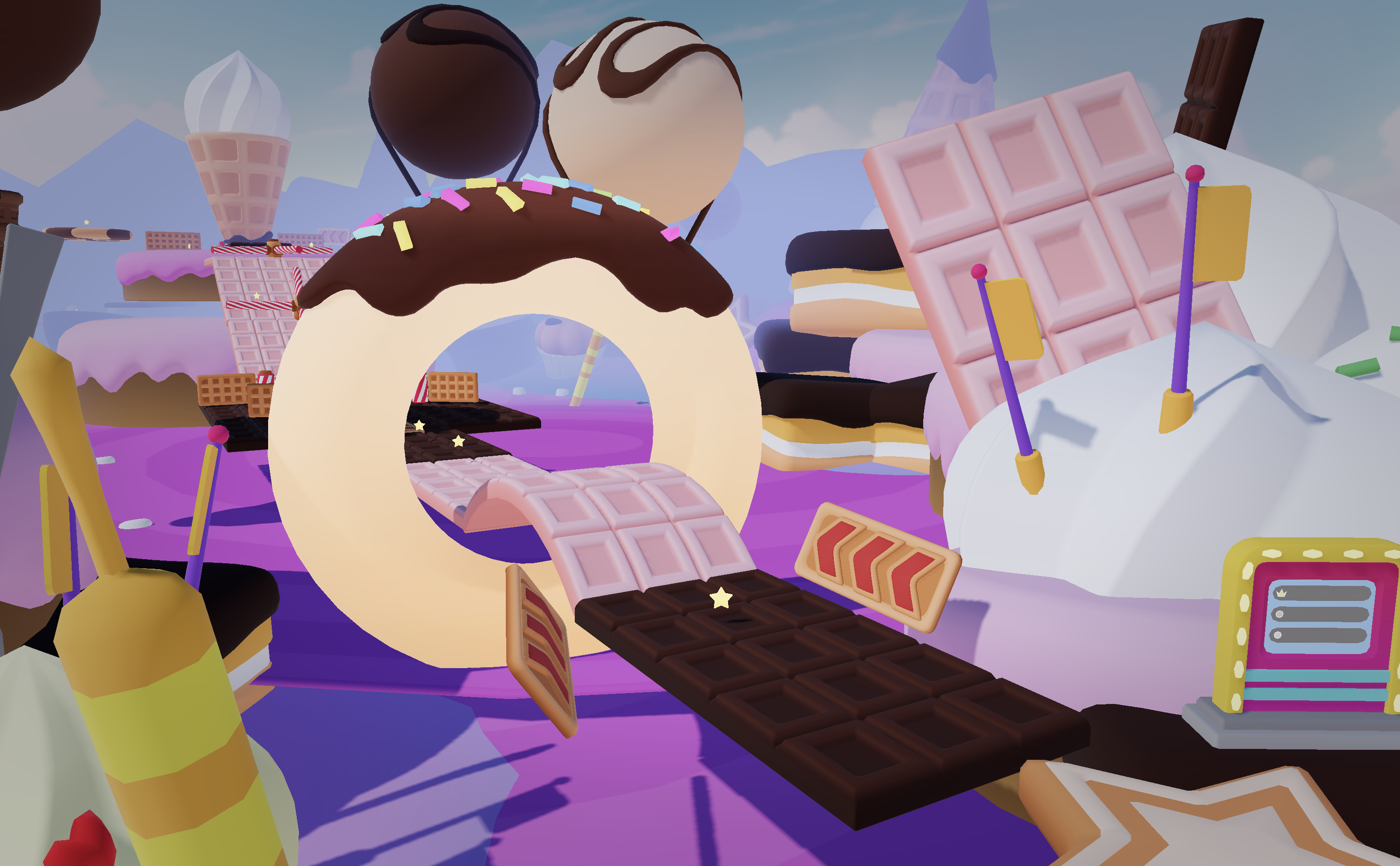
Roblox-focused builder: You already build in Roblox Studio but spend too much time on manual retopology and tool-switching between Meshy, Blender, and Roblox Studio. Your priority is Roblox-ready output with clean topology and automatic LOD optimization. Nilo’s Roblox Exporter supports this workflow by letting you generate, optimize, rig, and export without leaving your creative flow.
Quick prototyper: You want to test a game concept fast before you commit to a full build. Your priority is speed of iteration. Browser-based tools with AI generation and one-click publishing let you prototype, share, and get feedback in hours instead of weeks. Nilo’s clone-and-remix feature lets you spin up variations of a world instantly.
Try vibe coding and fast prototyping in Nilo’s open beta.
What Happened to HypeHype
HypeHype launched as a mobile-first no-code game creation platform that aimed to let anyone build and share games from their phone. In 2026, HypeHype operates as a Supercell subsidiary actively developing AI-native game tools and a live-gaming platform in early access. Builders searching for HypeHype on Android or iOS now see information about ongoing development and new features. For creators who want to move beyond simple mobile games into real 3D workflows, HypeHype’s original architecture does not support that transition.
Is HypeHype Free to Use?
HypeHype launched as a free platform for both playing and creating games. Free access in no-code game tools often comes with limits on asset quality, export options, and the depth of 3D capability. In 2026, a more useful question for aspiring builders like you is whether a tool lets you create at the level you actually need without extra costs or extra software. Nilo is currently in open beta and free to use, with 1,000 Nilo Bits, or credits for AI generation, included every month at no cost.
Can You Make Money on HypeHype?
HypeHype offered creators 100 percent of net revenue from their user-generated content, with top creators earning thousands of dollars per month. That revenue-sharing program existed, but it did not match the scale of Roblox’s creator economy, which we mentioned earlier pays out over $1 billion annually. That scale turns platform choice into an economic decision, not just a creative one. If you want to earn from what you make, the platform matters as much as the tool.
Nilo exports directly to Roblox, where you can publish and monetize assets, UGC items, and games on the Roblox Marketplace. Any model, skin, or item you create in Nilo belongs to you to use, publish, and sell.
Frequently Asked Questions
Is HypeHype available on Android and iOS in 2026?
HypeHype launched as a mobile app available on both Android and iOS. In 2026, HypeHype operates as a Supercell subsidiary actively developing AI-native game tools and a live-gaming platform in early access. Builders who want a maintained, actively developed alternative should look at browser-based tools that work on both desktop and mobile without an app download.
What is the best no-code game maker in 2026 for Roblox builders?
The right tool depends on your workflow. If you want to generate, optimize, rig, and export Roblox-ready 3D assets without touching Blender, you should look for a platform with automatic LOD optimization, standard format export such as FBX, OBJ, and glTF, and AI-powered generation. Nilo stands out for Roblox-focused builders because it handles the full asset pipeline, from text or sketch input to Roblox-ready export, in a single browser-based workflow with no manual retopology.
What is vibe coding in game creation?
Vibe coding means describing what you want your game to do in plain language by typing, talking, or even sending an image to the AI and having it generate working game logic instantly. Instead of writing Lua or JavaScript from scratch, you tell the AI “make this object spin when a player touches it” and it just works. You can also open the generated code and tweak variables directly, which helps you learn real programming concepts as you build.
Do I need Blender to create Roblox assets in 2026?
You do not always need Blender. Blender remains a powerful tool for advanced 3D modeling, but the manual retopology workflow, where you generate an asset in an AI tool, clean it up in Blender, then import it to Roblox Studio, is time-consuming and technically demanding. AI-native platforms like Nilo handle retopology and LOD optimization automatically, so assets are Roblox-ready on export without a Blender detour. Builders in Nilo’s February 2026 survey reported going from hours of modeling work to 15 to 20 seconds per asset.
Can I collaborate with friends on 3D game creation in a browser?
Yes. Browser-based platforms with real-time multiplayer creation let you and your friends build together by sharing a link, with no installation required for anyone. Nilo supports real-time collaborative building across desktop and mobile, with Discord and Telegram integration. You can share a world link and start building together instantly, similar to how you share a Roblox game link to play together.
Conclusion: Match Your Tools to Your 3D Goals
The gap between playing 3D games and creating them is real, but it is closing fast. Older mobile-first platforms like HypeHype solved a simpler problem, which is casual creation on a phone. They were not built for the 3D asset workflows, export pipelines, and engine-level performance that modern builders need.
AI-assisted, browser-based 3D creation tools now fill that gap. These tools combine a real game engine with AI-powered generation, natural language logic, automatic optimization, and direct export, all inside your browser. For 3D game development, missing deeper engine-level control in browser-only tools becomes a hard stop once projects need richer runtime testing, iteration, and shipping workflows. The right tool gives you that engine-level control without forcing a professional-grade learning curve.
Nilo currently focuses on one thing done extremely well: helping you generate, optimize, rig, and export game-ready 3D assets for Roblox without leaving your creative flow. Full game creation and publishing is where Nilo is headed. The foundation is being built now, backed by Supercell, with more than 9,000 builders on Discord and 93 percent of surveyed builders saying they would recommend it to a friend.
Creation should feel like play. Join Nilo’s open beta and start building today.