Written by: Nuno Leiria, Founder & CEO @ Nilo
Key Takeaways For Roblox Builders
- ForgeGUI is a legitimate AI platform with three tools: a 2D thumbnail and icon generator, a GUI mockup generator, and a 3D model generator. Each tool fits a different part of your workflow.
- The 2D tools work well for Roblox thumbnails, icons, and UI mockups. The 3D generator produces textured GLB files that still need cleanup for things like polygon count and rigging before you use them in Roblox.
- Billing complaints have a real basis. Payments are non-refundable once the billing period starts or credits are used, and there is no general money-back guarantee.
- Builders who want Roblox-ready 3D assets without cleanup should look at alternatives. ForgeGUI’s 3D output still needs work before it feels production-ready.
- Nilo stands out for Roblox builders who want game-ready 3D assets with automatic preparation for Roblox and no manual cleanup.
What ForgeGUI Actually Is For You As A Roblox Builder
ForgeGUI is an AI design platform built for Roblox developers. It launched in April 2026 and markets itself as a single product. In practice, you get three bundled tools: a 2D thumbnail and game icon generator, a GUI mockup generator for screens and menus, and a 3D model generator that exports a textured GLB file.
Each tool lands at a different quality level and fits a different step in your pipeline. Confusion usually happens when you expect one tool’s behavior from another. Many mixed reviews come from builders who expected Roblox-ready 3D assets and instead got a 2D-focused platform with an experimental 3D add-on.
Try Building And Playing In Nilo’s Open Beta
Is ForgeGUI Legit Or A Scam?
ForgeGUI is a real, functioning product operated by AIMarvex Labs LLC, and payments are processed securely by Stripe. The platform works and accepts payments. The real issues show up in output quality and billing rules.
The first issue is output quality. Phrases like “AI slop” appear in DevForum and Reddit threads, and they match what you see when you focus on ForgeGUI’s 3D generator. ForgeGUI’s own documentation states that a textured GLB from its 3D generator still requires inspection for polygon count, topology, scale, pivots, collision, textures, and rigging before it can be considered production-ready. The tool itself confirms that you carry a cleanup burden.
The second issue is billing. Phrases like “deletes credits” and “locks accounts” show up in threads, and some of that frustration comes from the refund rules. ForgeGUI’s refund policy states that payments are non-refundable after the relevant billing period has begun or after credits or paid features have been provided or used. Unused credits alone do not make a past payment refundable. These rules are written policy, not rumors.
The plagiarism accusation on the Roblox Developer Forum involved a programmer claiming a ForgeGUI example image matched an existing game thumbnail. ForgeGUI’s developer replied that logs showed the image came from ForgeGUI and that the game likely belonged to the accuser. That thread reached 36,700+ views before being closed as a duplicate. The dispute remains unresolved in public, so you should simply be aware it exists.
See A Roblox-Ready Asset Workflow In Nilo
ForgeGUI Pricing, Credits, And Refund Rules
ForgeGUI’s pricing and credit rules affect how safely you can test the platform. Here is what the site says about free use, paid tiers, and what happens when you cancel.
Is ForgeGUI Free?
ForgeGUI’s pricing page lists a Free plan that includes multiple generations, and new users receive starter credits when they sign up. You can also earn extra credits through referrals. The free tier lets you test 2D features, but the 3D generator requires an active paid plan and costs 60 credits per task, which equals six standard image generations at 10 credits each.
ForgeGUI Pricing Tiers (From Forgegui.Com/Plans, Accessed September 2026)
- Free: Multiple generations included
- Starter: $15.99/month for 160 credits
- Pro: $50.00/month for 500 credits
- Studio: $200.00/month for 2,000 credits
Tax is not included in listed prices. A yearly billing toggle is available and lowers the effective monthly rate.
What Happens To Your Credits And Account If You Cancel?
You should understand how cancellation works before you enter a card. Based on ForgeGUI’s refund policy:
- Cancellation stops future renewals, and paid access continues until the end of the current billing period.
- Unused credits alone do not make a past payment refundable.
- ForgeGUI does not offer a general 14-day money-back guarantee, although mandatory consumer rights still apply separately (EEA and UK consumers have statutory withdrawal rights).
- If a generation fails because of the service before a usable result is delivered, ForgeGUI will normally restore the credits charged. Credit restoration does not mean a cash refund.
- Credits are not restored because you dislike a valid result.
- Sending a refund request does not by itself cancel renewal. You must request cancellation separately if you want both.
- If a refund is issued, related unused credits or plan benefits may be removed from your account.
One more mechanic matters if you care about privacy. Eligible generations made with free credits or during a free trial may be added to ForgeGUI’s public Asset Catalog after you accept the catalog notice. You can stop future publication via My Account → Publish free generations, but turning that toggle off does not remove assets already published. To remove existing catalog entries, go to My Account → Published assets → Remove all.
Try Nilo Free — No Subscription
How Well ForgeGUI’s 3D Generator Fits Roblox
ForgeGUI’s 3D workflow turns a text description into a clean single-subject reference image, sends that image into reconstruction, and returns a textured GLB for browser preview and download. The exported asset still needs work before it feels like a finished Roblox mesh.
Roblox’s general specifications state that individual meshes cannot exceed 20,000 triangles. AI-generated 3D models from image-to-3D pipelines usually arrive over-dense, so they often exceed this cap and need decimation before import. Many builders call this the “Blender cleanup tax”: the extra retopology and optimization work that AI-generated assets need before they match Roblox’s limits.
ForgeGUI advises keeping 3D requests focused on a single subject such as a mascot, robot, chest, tool, or creature. Complex scenes with overlapping subjects hide geometry that reconstruction systems need. Static background props may need little work after 3D generation, while hero characters usually need much more cleanup. The current 3D flow does not promise automatic rigging or animation in the same workflow.
Before you treat any ForgeGUI 3D output as production-ready, walk through this quick checklist yourself:
- Polygon count: Check that the mesh stays under Roblox’s triangle cap so uploads succeed.
- Symmetry: Spin the model and confirm it looks correct from every angle, including the back.
- Texture quality: Look for stretched or muddy materials that might need repainting or reassignment.
- Retopology: Decide whether the mesh needs rebuilding into cleaner geometry for performance and deformation.
- Scale and pivots: Confirm that the mesh imports at a usable size and rotates around sensible pivot points in Roblox Studio.
Generate Roblox-Ready Assets With Nilo
Where ForgeGUI’s 2D UI And Thumbnail Tools Shine
ForgeGUI’s strongest area is its 2D output. The thumbnail generator uses a focused 16:9 pipeline instead of a generic image request, and it supports full 1920×1080 game thumbnails and 1080×1080 square game icons, with two style modes: a cinematic Blender GFX look and a cartoony high-CTR style. You get full commercial rights to use generated assets in Roblox games, ads, monetization, and YouTube content.
The follow-up editing flow helps you move fast. You can keep a strong composition and tweak one element at a time, like a bigger monster, a cleaner background, or a clearer expression, without restarting the whole image. Roblox YouTuber RoBuilder, in his August 27, 2026 sponsored review, described ForgeGUI’s updated GUI generator as faster than manually importing individual assets and placing them by hand, although he also noted that imported UI still needed manual Z-index fixes and better organization.
The trade-off is clear. The GUI generator produces visual mockups only. It does not export a working ScreenGui, responsive constraints, controller focus, loading states, localization, or Luau behavior. You still rebuild the interface in Roblox Studio, so you should treat the images as design specs instead of finished UI.
ForgeGUI Compared To A Blender-To-Roblox-Studio Workflow
A single high-quality 3D weapon model can take 4–8 hours to build in Blender, plus another 2–3 hours for UV unwrapping, texturing, and importing. ForgeGUI’s 3D generator returns a textured GLB in minutes. You trade time for control, then spend some of that time again on cleanup.
Blender gives you full control over topology, scale, pivots, and materials, but you pay with a long learning curve. ForgeGUI gives you fast first drafts with limited control and inconsistent topology. You still finish the asset and the experience inside Roblox Studio, which remains the place where you script, test, and publish.
In practice, ForgeGUI lowers the cost of the first draft. For meshes that must hit strict polygon budgets or characters that need reliable rigs, you still face the Blender cleanup tax. It just moves later in the pipeline instead of disappearing.
ForgeGUI Alternatives For Roblox Builders
The tools below solve different parts of your Roblox workflow. The table highlights what each one focuses on and how it handles exports.
| Tool | Best For | Export Formats | Manual Cleanup Before Roblox Import? |
|---|---|---|---|
| ForgeGUI | Fast 2D thumbnails, icons, UI mockups | PNG (2D), GLB (3D) | Yes (polygon density, topology, and rigging checks) |
| Nilo | Roblox-ready 3D assets without cleanup | FBX, OBJ, STL, glTF, RBXMX | No for typical Roblox use cases |
| Blender | Total art direction control | FBX, OBJ, glTF | Yes (manual retopology and export setup) |
| Meshy | Fast AI generation with PBR texturing | FBX, GLB, OBJ, STL, 3MF, USDZ, BLEND | Sometimes (rigging and topology may need tweaks) |
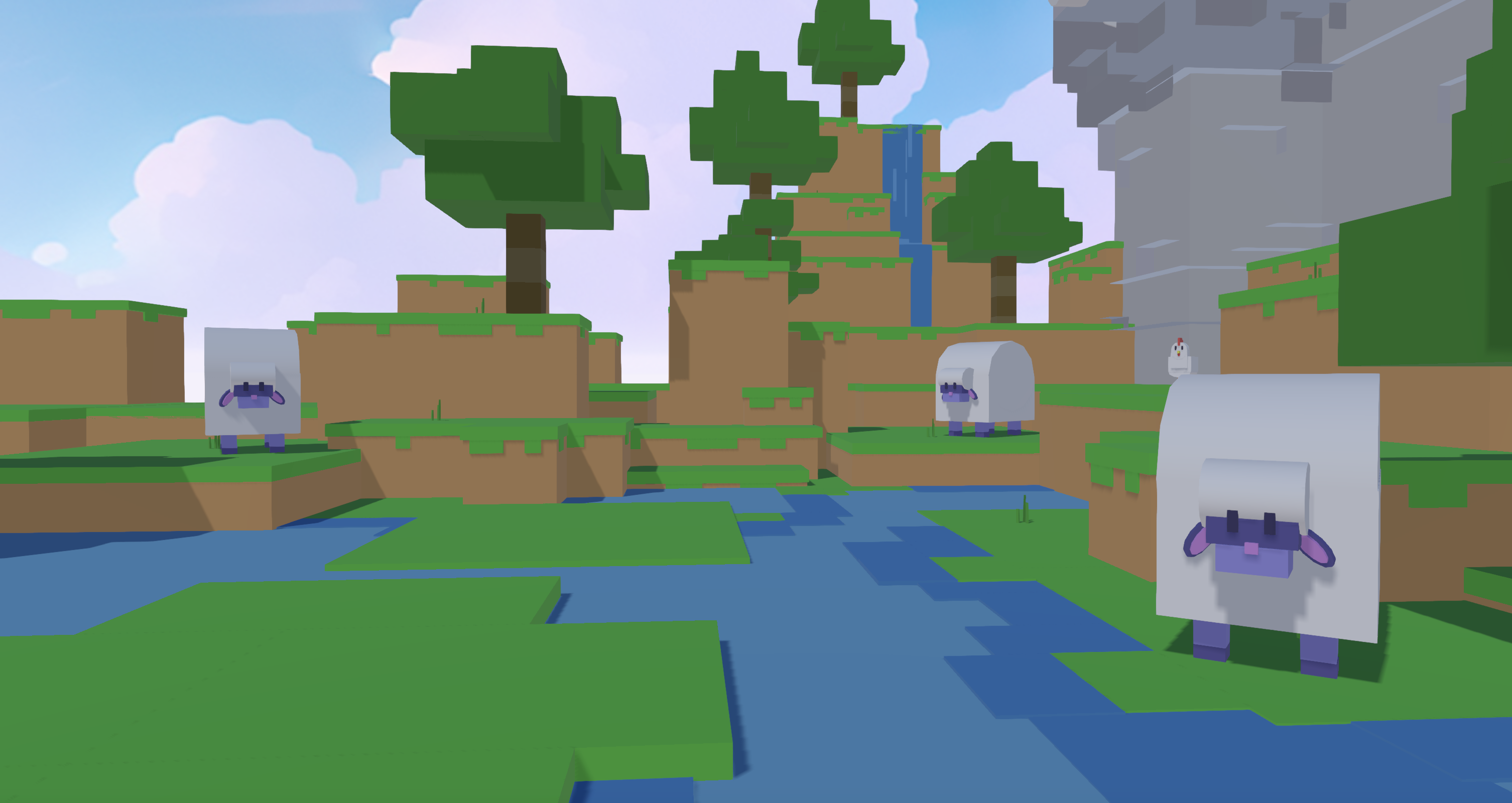
Nilo stands out when you want Roblox-ready topology without the cleanup tax. It is a standalone, browser-based AI creation platform. It generates, prepares, rigs, and exports game-ready 3D assets. Its LOD (level of detail) system adjusts polygon counts in real time to match Roblox’s caps. The manifesto puts those caps at 10K–20K polygons. Nilo exports in FBX, OBJ, STL, glTF, and RBXMX, Roblox’s native format that packs textures and attachments into one file. You can connect your Roblox account and send assets straight into your experience with an API key. Nilo is in open beta and free to use with 1,000 Nilo Bits per month. From Nilo’s February 2026 survey: “I do not have to spend hours on 3D modeling the simplest things, now I can use Nilo and do it in 15 seconds.”
Blender fits when you want full control over topology, scale, and materials. You should expect a long learning curve before you feel fast and confident.
Roblox Studio stays as your final proving ground. You build responsive Frames, constraints, states, accessibility, and Luau logic there. No external tool replaces Roblox Studio for publishing.
Meshy combines generation, PBR texturing, auto-rigging, and engine export in one browser-based platform. Built-in auto-rigging produces animation-ready characters in under 30 seconds, and it exports to Unity, Unreal, Godot, and Roblox.
Sloyd combines generative AI with parametric modeling and produces clean optimized mesh topology with automatic UV-unwrapping and LOD generation. It includes AI auto-rigging and text-to-motion animation.
Lemonade.gg is an AI assistant that plugs into Roblox Studio to help you create assets. It stays inside the Roblox ecosystem and depends on Roblox Studio as the main creation environment.
Compare Nilo’s Roblox-Ready Exports Yourself
Who Should Buy ForgeGUI And Who Should Skip It
Buy ForgeGUI if:
- You need fast 2D thumbnails and icons. ForgeGUI’s 2D tools are genuinely strong. When you want game icons, thumbnails, or UI mockups quickly, ForgeGUI can deliver.
- You want to test multiple thumbnail directions quickly. The follow-up editing workflow lets you keep a strong layout while you change one element at a time.
- You treat GUI images as design references. If you already plan to rebuild the UI in Roblox Studio, ForgeGUI’s GUI generator works well as a visual spec tool.
Skip ForgeGUI if:
- You need Roblox-ready 3D assets without cleanup. The 3D generator returns a textured GLB that still needs the cleanup steps described earlier.
- You rely on dependable rigging and animation. The current 3D flow does not promise automatic rigging or animation in one pass.
- You track a strict polygon budget for every mesh. ForgeGUI’s 3D output often needs retopology and optimization before it feels safe for large experiences.
- You want to spend your weekend building experiences. If you prefer creating over cleaning meshes, look for a tool that targets Roblox-ready topology from the start.
Build Roblox-Ready Assets In Nilo’s Open Beta
Frequently Asked Questions
Is ForgeGUI Legit?
ForgeGUI is a real, functioning product operated by AIMarvex Labs LLC. Complaints about 3D output quality and billing rules are grounded in how the tools and refund policy work. Weak 3D output is a quality issue with one tool. Billing complaints come from a policy that does not include a general money-back guarantee. These issues matter, but they do not mean the product is fake.
Is ForgeGUI Safe?
ForgeGUI is a real product, and Stripe processes payments securely. The main risk you face is billing, not payment security. Payments are non-refundable after the billing period starts or after credits or paid features are used. Read the refund policy carefully before you subscribe, and remember that canceling a subscription does not automatically refund past charges.
Is ForgeGUI Free?
ForgeGUI offers a Free plan with multiple generations, and new users receive starter credits when they sign up. You can earn more credits through referrals. The 3D generator still sits behind a paid plan and costs 60 credits per task. Free-tier generations may also be added to ForgeGUI’s public Asset Catalog after you accept the catalog notice, and you can remove them later through your account settings.
Does ForgeGUI Work For Roblox?
ForgeGUI’s 2D tools work well for Roblox thumbnails, icons, and UI mockups. Its 3D generator returns a textured GLB that still needs the cleanup steps described earlier before it feels production-ready for Roblox. The GUI generator outputs visual mockups only and does not export a working Roblox Studio interface. You still build Frames, constraints, states, accessibility, and Luau logic yourself.
What Are The Best ForgeGUI Alternatives For Roblox Builders?
Nilo stands out when you want Roblox-ready topology without the cleanup tax. It generates, prepares, rigs, and exports game-ready 3D assets, and its LOD system handles the polygon-cap problem described earlier. It exports in RBXMX, Roblox’s native format, with no subscription required during open beta. Other options include Blender for full art direction control, Roblox Studio as your core building and publishing tool, Meshy for fast AI generation with PBR texturing and auto-rigging, Sloyd for clean topology out of the box, and Lemonade.gg for an AI assistant inside Roblox Studio.
Conclusion: How To Decide If ForgeGUI Fits Your Roblox Workflow
ForgeGUI gives you strong 2D tools and an experimental 3D generator that often sends you back into cleanup work. Your decision should match how you actually build.
- ForgeGUI fits when you want fast 2D thumbnails, icons, and UI mockups and you already plan to rebuild interfaces in Roblox Studio.
- ForgeGUI falls short when you expect Roblox-ready 3D assets, dependable rigs, or strict control over polygon budgets without extra work.
- Nilo fits when you want Roblox-ready topology without the cleanup tax. Its LOD system and Roblox-focused exports handle the heavy lifting so you can stay focused on designing and scripting your experience.
Start Building Roblox-Ready Assets Free