Written by: Nuno Leiria, Founder & CEO @ Nilo
Key Takeaways for Roblox Builders
- Traditional 3D workflows for Roblox demand hours of post-processing and strict polygon limits that pure prompt tools often fail to meet.
- Browser-based AI tools combine generation with real-time refinement, automatic LOD, and platform-specific optimization to deliver production-ready assets.
- Hands-on editors let you iterate on models, logic, and scenes inside a live 3D environment instead of waiting for full regenerations.
- Built-in collaboration, standard export formats, and Roblox-ready constraints remove the friction of moving assets between multiple desktop apps.
- Skip the Blender detour and ship faster, start building and playing in Nilo’s open beta for free.
Why Roblox Builders Feel Stuck in Blender
Traditional 3D pipelines slow you down long before you open Roblox Studio. Creating 3D game assets traditionally can take solo developers many hours per character, and small projects with multiple characters can stretch into hundreds of hours. Even with AI tools, most AI-generated 3D assets still require post-processing such as retopology, UV cleanup, or topology refinement before they are truly production-ready. Retopology means manually rebuilding the geometry of a mesh so it is clean, efficient, and usable in a game engine. It is one of the most tedious tasks in 3D creation.
For Roblox specifically, individual meshes are capped at around 20,000 triangles for 3D Import. When you exceed those limits, your asset will not import. Every AI-generated model you create needs to be checked, decimated, and cleaned before it ever reaches Roblox Studio.
AI-assisted browser-based 3D creation tools aim to close this gap. Desktop modeling suites like Blender have menus everywhere, shortcuts that do not make sense yet, and features hidden where you do not expect them. Browser-based tools run inside your browser with no installation and keep the interface focused on what you actually use. Pure prompt-to-game tools skip control and drop you straight into a finished result. Browser tools instead give you hands-on control over generation, refinement, and export so you can hit Roblox’s performance requirements without spending your afternoon in a desktop app.
Skip the Blender grind and try building Roblox-ready assets in your browser.
Fixing Messy AI Models: 3D Asset Generation and Refinement
Most AI 3D generators give you a cool-looking model that breaks once you try to use it. Pure prompt-to-3D outputs from automated tools typically exhibit messy topology, inconsistent edge flow, non-planar quads, poor UV mapping, and uneven polygon distribution. These issues limit production value and create frustration after your first attempts.
Tools like Bitmagic generate assets from prompts, and the output is what you get. When it is wrong, you regenerate and hope for a better roll. Automated AI 3D workflows are non-deterministic: requesting a specific edit often regenerates an entirely new model, requiring you to repeat unwrapping, retexturing, and adjustments from scratch. You end up in an “AI lottery” where you keep rolling until something usable appears.
AI-assisted browser-based tools take a more hands-on path. They combine multiple AI model providers behind one interface, let you refine outputs in real time, and apply optimization automatically. Sloyd, for example, combines generative AI with a parametric modeling system that lets users refine models in real time using sliders, templates, and structured parameters, producing clean topology and automatic UV-unwrapping out of the box.
Nilo stands out by abstracting multiple AI providers, including Meshy and Tripo, behind one interface, so you can switch between models based on quality, style, or speed without leaving the platform. You can generate from a text prompt, a sketch, or a reference image and then tweak the result instead of starting over. As one builder put it in Nilo’s February 2026 survey: “You can work 20 times faster than you usually work on models.”
Try generating and refining a Roblox prop in Nilo’s browser editor.
Natural-Language Logic Creation with Vibe Coding
Vibe coding lets you create working game logic by talking to an AI instead of writing code line by line. You type, talk, or send images to describe what you want, and the AI writes the logic for you. You avoid a long Lua learning curve in Roblox Studio and skip wrestling with documentation while still getting interactive behavior.
Pure prompt-to-game tools like Bitmagic apply this idea to the entire game. You describe the experience, and the tool generates everything from a single input. The trade-off is control. Once the game is generated, tweaking one element often breaks another, and you end up waiting for another full regeneration.
Browser-based tools with built-in vibe coding editors keep you inside a live 3D environment. You describe a behavior, see it applied in real time, and then test it immediately. You can also inspect and edit the actual code variables, such as changing “speed = 2” to “speed = 20”. This approach teaches real programming concepts while still letting you build without starting from raw code. As one Nilo Creator noted: “You made me enjoy vibe-coding. The code assistance works almost flawlessly, other experiences have just been frustrating at best.”
The key trade-off to evaluate is simple. Pure prompt tools feel faster at the start but are harder to control later. Vibe coding editors inside a game engine ask for a bit more interaction but give you real creative direction over the final game.
World Building and Scene Assembly in Your Browser
World building is where the gap between prompt tools and hands-on browser engines becomes obvious. You place objects, set environments, adjust lighting, and test physics. You feel whether your game works or not.
With a pure prompt tool, world building stays mostly on the text side. You describe the scene and the tool generates it. What you see is what you get, and iteration means re-prompting. You never really stand inside the world while you build it.
Browser-based engines with hands-on world building let you drag assets into a 3D space, adjust properties in real time, and playtest instantly. Physics simulation runs live, so objects move, bump, and react without extra wiring. This matters for Roblox builders because it mirrors the feeling of actually playing the game, which makes it easier to see what works and what does not.
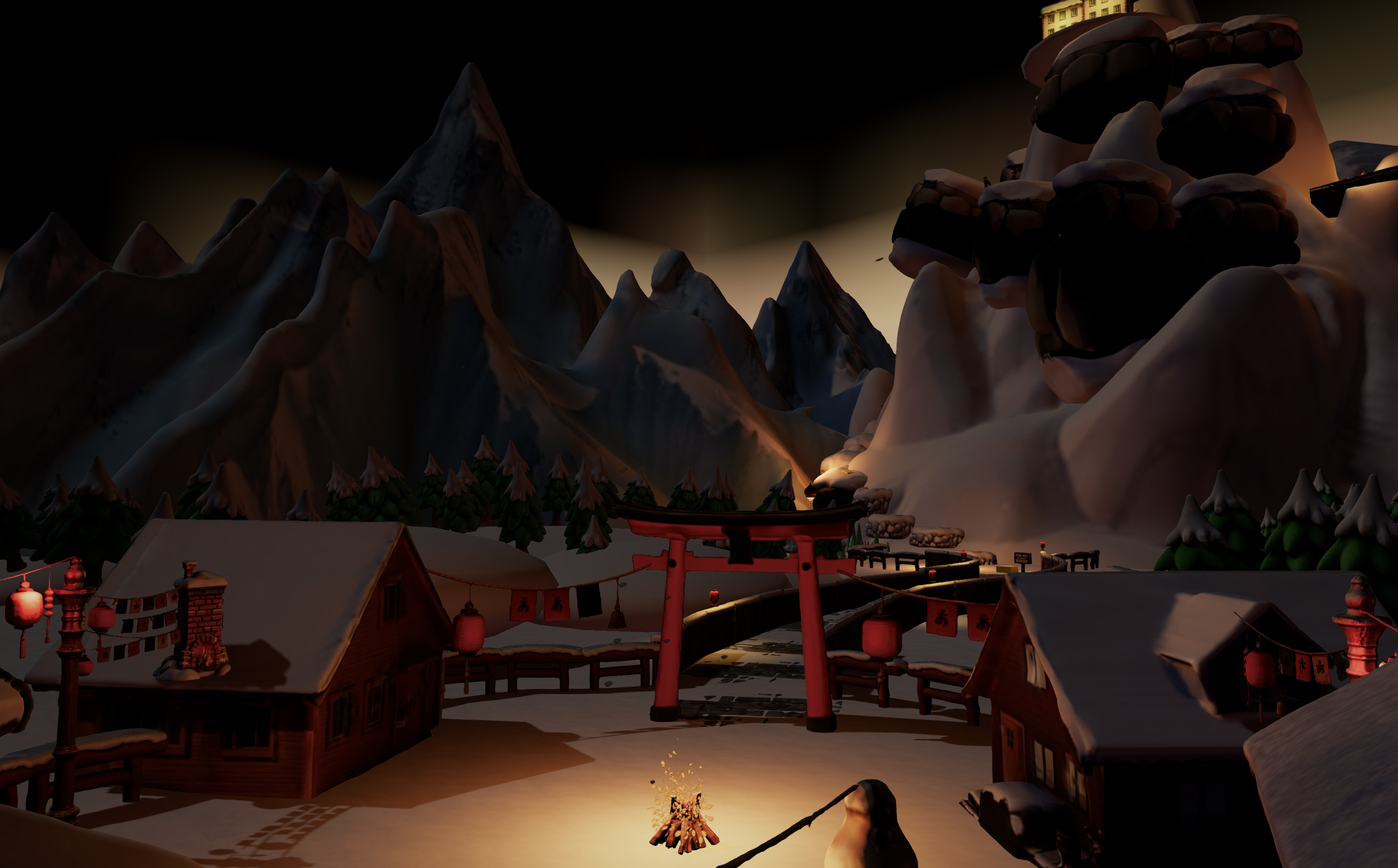
As one builder shared in Nilo’s February 2026 survey: “It helps me physically visualize any images I may have drawn and helps make my ideas actually come to life.” That tight loop of building and playing in the same environment is something pure prompt tools do not offer.
Keeping Roblox Games Smooth: Optimization and Performance
Level of Detail, or LOD, keeps your game running smoothly by changing how detailed a model is based on distance from the camera. A model uses fewer polygons when it is far away and more when it is close. This keeps frame rates stable without sacrificing visual quality. For Roblox, LOD and polycount management are not optional. Humanoid character models should stay within recommended triangle limits, and textures must be PNG, JPG, TGA, or BMP with a maximum resolution of 4096×4096 pixels.
Pure prompt tools generate assets without awareness of your target platform’s constraints, which means you only discover whether a model fits after it is already generated. When it does not meet the requirements, your only options are to regenerate with a new prompt or manually fix it in Blender.
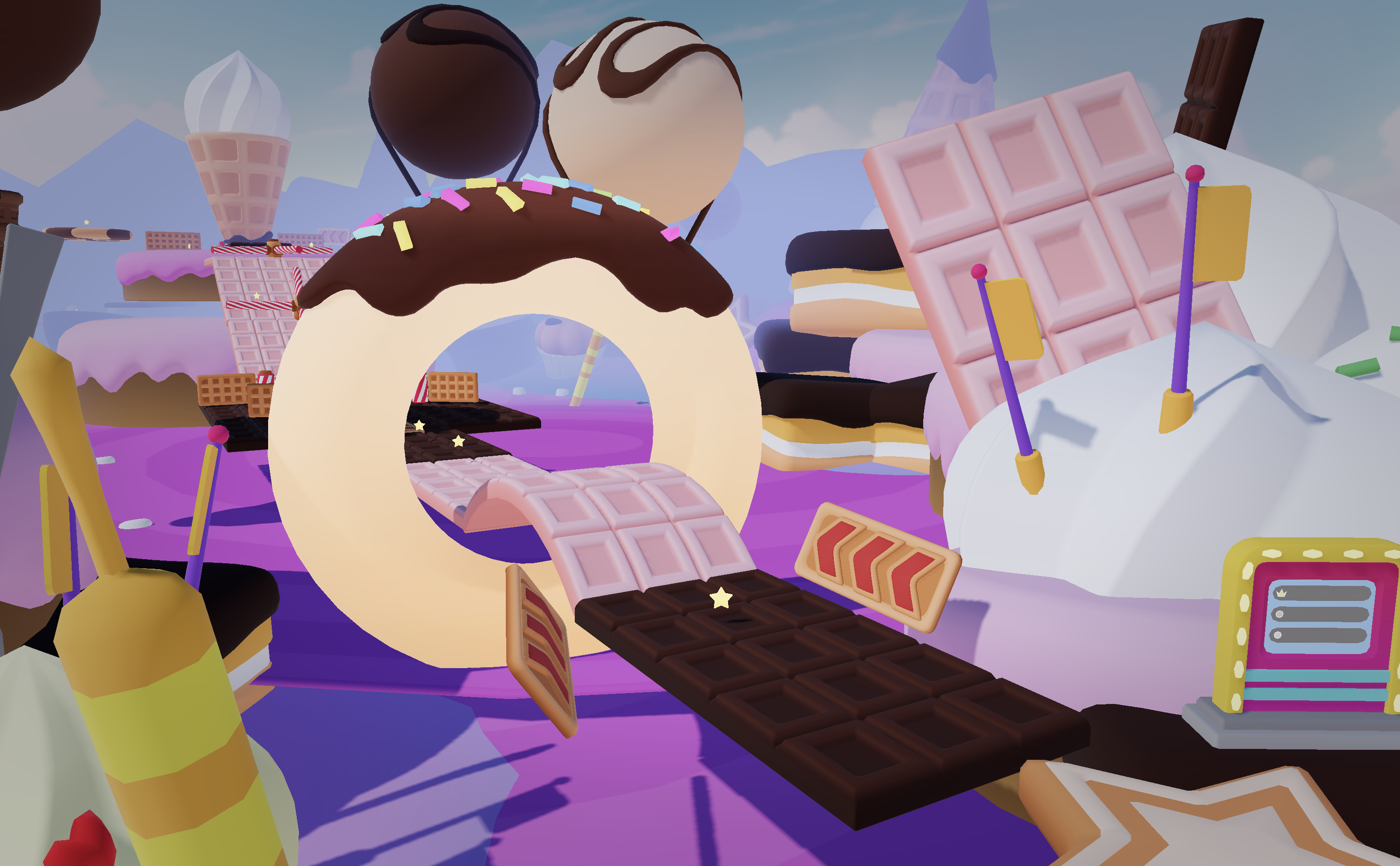
AI-assisted browser tools with built-in LOD systems handle this for you. Nilo’s real-time LOD system adjusts polygon counts on the fly to meet these platform limits. You move a slider, the mesh simplifies, and the export is ready for Roblox. No Blender detour required. As one builder described in Nilo’s February 2026 survey: “I do not have to spend hours on 3D modeling the simplest things. Now I can use Nilo and do it in 15 seconds.”
Building Together and Moving Assets Between Tools
Fragmented workflows cost you time every time you move an asset between tools. Export friction is a significant pain point in traditional 3D modeling tools, where scale, material, and export settings often require constant cleanup after importing assets into game engines. The Meshy → Blender → Roblox Studio pipeline is a clear example. Each handoff introduces new problems.
When you evaluate collaboration and export features, look at a few basics.
- Can you build with friends in real time, or is creation a solo activity?
- Does the tool export to standard formats (FBX, OBJ, glTF, STL) that work with Roblox Studio, Unity, and Unreal Engine?
- Are exported assets already optimized, or do they need cleanup after export?
- Can you share a world or asset via a link without asking your friend to install anything?
Nilo stands out by supporting real-time multiplayer creation, where you share a link and a friend can join and build with you instantly on desktop or mobile. Exports go out as FBX, OBJ, STL, or glTF, compatible with Roblox, Unity, Unreal Engine, Blender, and VRChat. Nilo is not a walled garden. You can treat it as an asset creation pipeline and continue your work in any other tool.
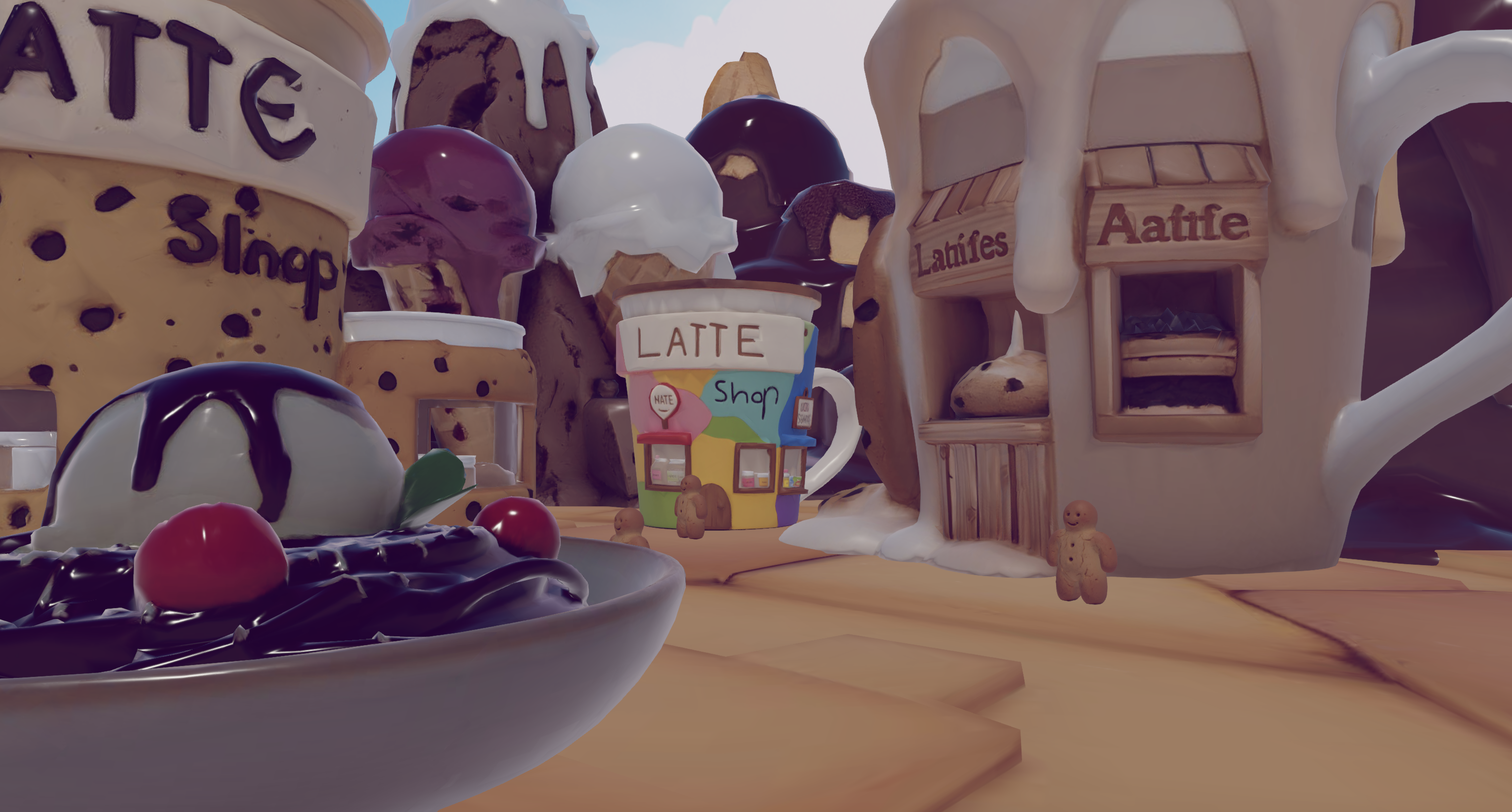
Invite a friend and try real-time world building in your browser.
Checklist for Choosing a Browser 3D Tool
Several factors decide whether any AI-assisted browser-based 3D creation tool will actually work for you. Use this checklist before you commit to a workflow.
- Onboarding: Can you generate your first asset in under five minutes without a tutorial, and is there in-app guidance or a community to ask for help?
- Output quality: Does the generated mesh have clean topology, or does it require manual retopology before use, and can you inspect the mesh from all sides before exporting?
- Export compatibility: Does the tool export to the formats your target platform requires, and are textures embedded or separate?
- Performance limits: Does the tool automatically check or enforce polygon and texture limits for your target platform, such as Roblox’s triangle caps?
- Learning value: Does using the tool teach you real concepts like rigging, LOD, and mesh topology, or does it hide everything with no visibility into what is happening?
| Capability | Hands-On Browser Engine (e.g., Nilo) | Pure Prompt-to-Game Tool (e.g., Bitmagic) |
|---|---|---|
| Asset generation | Multi-model AI with real-time refinement and sketch, image, or text input | Single-pass prompt generation with limited iteration control |
| Retopology / optimization | Automatic LOD and polycount management built in | Output as-is, with manual cleanup typically required |
| Roblox export readiness | Exports tuned for Roblox polygon and texture limits | Varies by tool and may exceed platform limits without warning |
| Vibe coding / game logic | Built-in natural language code editor with real-time 3D feedback | Prompt-generated logic with limited hands-on editing |
| Collaboration | Real-time multiplayer creation via shared link | Typically solo with no live co-creation |
| Export formats | FBX, OBJ, STL, glTF, compatible with Roblox, Unity, Unreal, Blender | Varies by tool and may be platform-locked |
| Learning curve | Teaches real concepts such as rigging, LOD, and topology through the UI | Low initial friction with limited skill development |
| Hardware requirement | Browser-based with no installation or high-end GPU needed | Browser-based with no installation needed |
Three Ways You Might Use These Tools
Scenario 1, first-time creator: You have never made a 3D asset before and want a custom prop for a Roblox game without touching Blender. A hands-on browser engine with text-to-3D generation, automatic optimization, and one-click export gives you a fast path from idea to Roblox Studio. Pure prompt tools can work for a first attempt, but when the output needs fixing, you will hit a wall without refinement tools.
Scenario 2, Roblox-focused builder: You already build in Roblox Studio but spend 30 or more minutes per asset on retopology and polycount cleanup. An AI-assisted browser tool with a built-in LOD slider and Roblox-aware export removes that step. You generate, adjust the detail level, export, and import. As one builder put it in Nilo’s February 2026 survey: “Picture yourself, frustrated because you spent the last 5 hours 3D modeling a shipping container. All I have to do is open Nilo and do it in 20 seconds.”
Scenario 3, collaborative team: You and a friend want to build a world together. Pure prompt tools are single-player by design. A browser engine with real-time multiplayer creation lets you share a link, both join, and both build, which matches how you already play games. You can split tasks, playtest together, and ship faster without juggling file transfers or version conflicts.
Test these scenarios yourself in Nilo’s open beta.
Frequently Asked Questions
Does “no Blender needed” actually mean you will never need Blender?
For most Roblox asset workflows such as generating props, characters, and environments, managing polygon counts, rigging, animating, and exporting, a browser-based AI tool with built-in LOD and retopology can replace Blender. Advanced workflows involving custom UV mapping, sculpting, or very specific topology control may still benefit from Blender. For the majority of what Roblox builders need day to day, no Blender is required when you use a tool like Nilo.
What is the difference between Bitmagic and a tool like Nilo?
Bitmagic works as a pure prompt-to-game tool where you describe what you want and it generates a result. The experience feels fast at the start but offers limited control later. Nilo behaves like a game engine first. You stand inside a 3D environment, generate assets with AI, refine them in real time, adjust polygon counts with a slider, rig with one click, and export directly to Roblox Studio. The main difference is creative control. With Nilo, you co-create with AI instead of waiting for AI to do everything for you.
How does Nilo handle Roblox’s polygon limits?
Nilo includes a real-time LOD system that adjusts how many polygons a model uses based on a slider you control. Roblox caps individual meshes at around 10,000 to 21,000 triangles depending on import method. Nilo’s LOD system lets you reduce polygon counts to meet these limits before export, so your assets import into Roblox Studio without errors or extra cleanup.
Can you use Nilo just for asset creation and still work in Roblox Studio?
Yes. Nilo exports to FBX, OBJ, STL, and glTF, all formats compatible with Roblox Studio. You can use Nilo purely as an asset creation pipeline. Generate, optimize, rig, animate, export, then import into Roblox Studio and keep building there. Nilo is not a walled garden, and your assets remain yours to use anywhere.
Is vibe coding in Nilo actually useful for Roblox builders?
Vibe coding, or using natural language to generate working game logic without writing code manually, is genuinely useful when you want interactive elements without learning Lua scripting. In Nilo, you type or speak what you want a behavior to do, and the code editor generates it with real-time feedback in your 3D world. You can also inspect and edit the actual code variables directly, which means you learn real programming concepts while you build. Builders in the same survey rated the code assistance as working “almost flawlessly” compared to other tools they had tried.
Conclusion: Picking the Right Workflow for You
Your goals and your need for control decide which tools make sense. Pure prompt-to-game tools like Bitmagic lower the barrier to entry and feel fast for first attempts, but when the output is not right, your options are limited.
AI-assisted browser-based 3D creation tools give you generation speed plus hands-on refinement, built-in optimization for platforms like Roblox, and export compatibility with tools you already use. They ask for a bit more interaction, but they produce assets you can actually ship without a Blender detour and without relying on the AI lottery.
If you want to go from idea to Roblox-ready asset in minutes, with real creative control and no heavy desktop software, this category is worth exploring. Nilo stands out as a purpose-built option for Roblox builders who want generation, optimization, rigging, animation, and export in one browser-based environment.
Start your first Roblox-ready asset in Nilo’s open beta today.