Written by: Nuno Leiria, Founder & CEO @ Nilo | Last updated: July 29, 2026
What You Will Get From This Guide
- Vibe coding lets you describe game ideas in plain text, sketches, or images and quickly generate playable 3D scenes without scripting or modeling.
- Traditional tools like Roblox Studio, Unity, and Blender require installation, technical skills, and manual cleanup that slow down aspiring builders like you.
- Nilo combines a real-time 3D engine with natural-language creation in your browser and a Roblox export pipeline that handles polygon limits for you.
- The five-step workflow (open browser world, describe scene, refine with prompts, playtest with friends, export FBX or glTF) takes minutes instead of hours.
- Start building your first vibe-coded world today at Nilo.
How Vibe Coding Changes 3D Game Creation for You
Traditional game creation asks you to learn four separate tools: a modeling app, a code editor, a game engine, and game design basics. Vibe coding collapses that stack into one place. You stay inside a live 3D environment and describe what you want to happen, and the engine translates your ideas into a working scene.
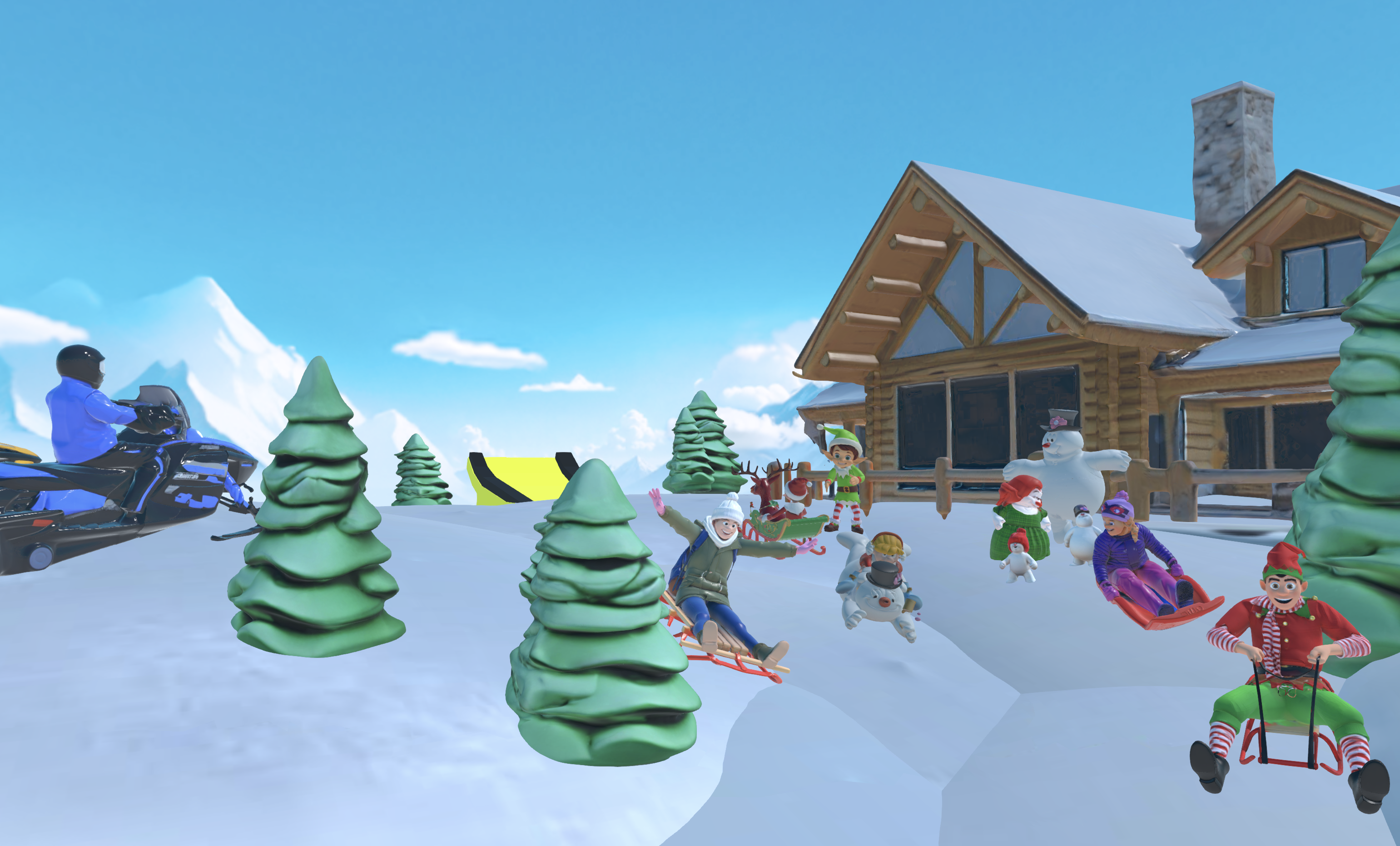
This shift helps most when you have strong ideas but limited technical skills. A Google Cloud/Harris Poll survey of 615 game developers across five countries found that 90% already use AI in their workflows and 97% believe generative AI is reshaping the industry. AI-assisted creation is becoming standard for professionals, and for aspiring builders like you it removes barriers that used to take years to clear.
Not all AI-assisted approaches work the same way. Prompt-only tools, where you type a description and a game appears, feel fast but give you little control. If something breaks, you re-prompt and hope for a better result. A game-engine-first approach keeps you inside the world, building hands-on, with AI as your co-pilot instead of your replacement.
This approach gives you speed while you keep creative control. If you want to tweak, iterate, and actually understand what you are building, you need a real-time 3D environment, not just a generator that spits out a finished scene.
Explore vibe coding in a live browser world
How Popular Platforms Handle Vibe-Coded 3D Worlds
You should look at four things when you compare tools for AI vibe coding in 3D. Check 3D engine depth, browser playability, iteration speed, and Roblox export quality. Ask whether the engine runs real physics and real-time rendering. Confirm that you can create and share in the browser without installing anything. Measure how fast you can move from prompt to something playable. Finally, see whether the export meets Roblox polygon and texture limits without extra cleanup.
| Platform | 3D Engine Depth | Browser Playability | Iteration Speed | Roblox Export Quality |
|---|---|---|---|---|
| Nilo | Custom C++ engine compiled to WebAssembly, WebGPU rendering, real-time physics and collisions | Fully browser-based, no install, desktop and mobile, share via link | Text, sketch, or image prompt to rigged, animated asset in minutes, natural language code editor with real-time feedback | Real-time LOD system adjusts to Roblox polygon caps, exports FBX and glTF directly |
| Roblox Studio | Full game engine with Lua scripting, physics, and lighting, professional-grade | Desktop install required, not browser-based | Manual scripting required for interactivity, Roblox Assistant (Cube 3D) generates untextured geometry from prompts inside Studio, and you texture it afterward | Native platform, assets must stay within Roblox triangle limits |
| Unity | Industry-standard engine, Unity AI arrived in beta with Unity 6.2 in August 2025, and its open beta with AI Gateway launched in May 2026 | New browser-based editor available, core product still a desktop install | AI helps with assets and code but you still wire things manually, not a natural-language-first workflow | Exports standard formats, no Roblox-specific LOD optimization built in |
| Blender | 3D modeling and rendering tool, not a game engine, no built-in physics for games | Desktop install required, no browser version | Manual modeling workflow, AI plugins exist but are not native, steep learning curve | Can export FBX and glTF, most AI-generated assets still need topology, UV, and performance cleanup before use in a game engine |
| PlayCanvas | Browser-based WebGL game engine, professional-grade and positioned between professional and consumer audiences | Browser-based, projects need technical setup | No native natural-language prompt workflow, code-first approach | Standard format export, no Roblox-specific optimization pipeline |
| Rosebud AI | Generates playable browser prototypes from a single prompt and supports chat-based iteration, but no full game engine underneath | Browser-based, no install needed | Fast for first generation, limited control over individual elements after generation | No Roblox-specific export or LOD optimization |
The pattern stays consistent across these tools. Roblox Studio, Unity, and Blender offer deep engines but expect installation and technical skill. Prompt-only tools like Rosebud AI feel fast but stay shallow, and you cannot easily step inside the world and change details. Nilo stands out by combining a real-time 3D engine with natural-language creation in your browser and a Roblox-focused export pipeline that manages polygon limits for you.
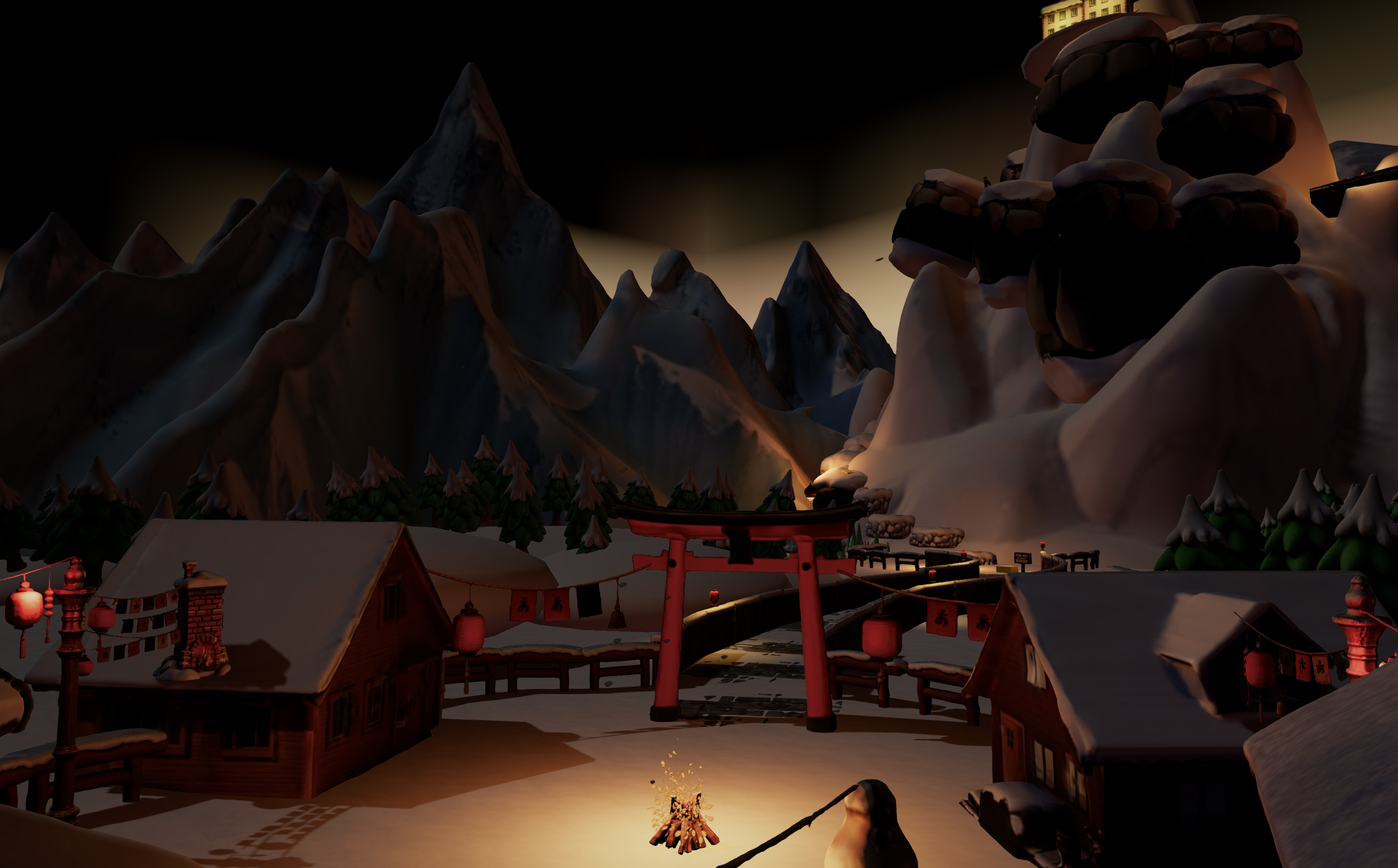
See how Nilo mixes engine depth with browser access
The 5-Step Vibe-Coding Workflow Inside Nilo
This workflow takes you from a blank browser tab to a Roblox-ready world. Each step has a clear decision point so you know when to move forward and when to tweak your scene.
- Open a browser world. Go to play.nilo.io and start a new world. You skip downloads, account setup friction, and strict hardware requirements. You stand inside a real-time 3D environment in seconds. At this point you choose a starting environment that matches your game’s mood, such as open terrain or an interior space, which reduces prompt work later. Time: under 1 minute.
- Describe the scene with text, sketch, or image. Use Nilo’s radial menu to generate objects. Type what you want, upload a reference image, or sketch in 2D and let the AI convert it to 3D. Nilo’s model-agnostic AI layer, which pulls from providers like Meshy, Tripo, Nano Banana, and Cartwheel, picks a model that fits your request. If the first result misses your vision, you switch providers or refine the prompt before placing the asset. Time: 15 seconds to 2 minutes per asset.
- Refine with natural language prompts. Select any object and describe changes in plain language, such as “make it darker,” “add more detail to the roof,” or “scale it down by half.” Use the natural language code editor to add interactivity by saying what you want the game to do, and Nilo writes working code. You can also open the code and adjust variables directly, which helps you learn real programming concepts while you build. More specific prompts give more predictable results, while vague prompts feel faster but often need extra passes. Time: 1 to 5 minutes per mechanic.
- Playtest in real time with friends via share link. Hit play and run around your world to feel how it plays. Share the link with friends so you can build or test together, since Nilo supports real-time multiplayer creation across desktop and mobile. This step helps you catch problems before export. If physics feel off or a mechanic breaks, fix it here instead of debugging later in Roblox Studio. Time: as long as you want.
- Export optimized FBX or glTF assets. When your assets feel ready, Nilo’s LOD system adjusts polygon counts on the fly so your models stay within Roblox triangle limits, often under 10,000 triangles for props and 20,000 for characters. Export FBX for rigged models or glTF for bundled textures, then import into Roblox Studio. FBX keeps rig and animation data, while glTF keeps textures in one file for simpler imports. Time: under 2 minutes.
One builder in Nilo’s February 2026 survey put it simply: “I do not have to spend hours on 3D modeling the simplest things. Now I can use Nilo and do it in 15 seconds.”
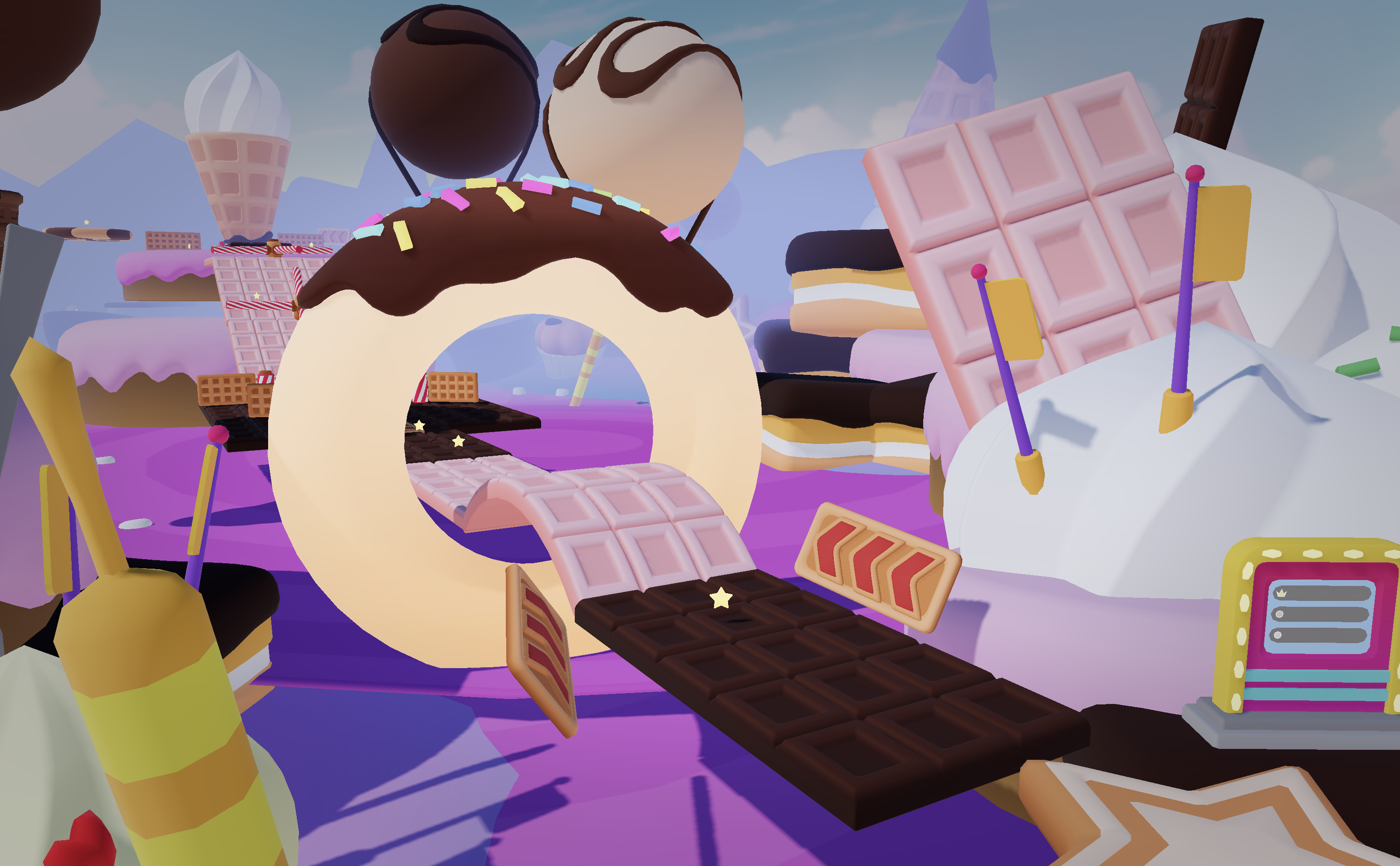
Start your first world and test this 5-step flow
Fixing Common Vibe-Coding Problems
AI handles most of the heavy lifting, but a few issues still show up often. You can spot them early and fix them quickly so they do not slow you down.
Polygon count spikes. Early warning signs include a world that starts running slowly or Roblox Studio throwing an import error. This usually happens when a generated asset has far more triangles than the platform allows and exceeds the limits mentioned in the workflow section. Because those limits protect performance, you need to lower complexity before export. The fix is simple: use Nilo’s LOD slider to bring the polygon count back into a safe range.
Animation retargeting errors. Early warning signs include a rigged character that moves strangely in Roblox Studio or body parts that deform in odd ways. This usually means the rig’s bone structure does not match Roblox humanoid requirements. Re-rig the model using Nilo’s one-click rig and then re-export as FBX, which keeps the corrected skeleton.
Prompt ambiguity. Early warning signs include assets that look nothing like what you described or constant re-rolls of the same prompt. Vague prompts create unpredictable results because the AI has to guess your style and scale. You fix this by being specific about style, size, and materials. Instead of “a tree,” you might say “a low-poly cartoon oak tree, about 3 meters tall, with a round green canopy and a brown trunk.” Structured prompts that separate type, style, and constraints often outperform broad ones in game-like tasks. If the result still feels off, switch AI providers inside Nilo because different models handle different looks better.
Texture issues on export. Early warning signs include a model that appears as a blank gray shape after import into Roblox Studio. Texture files must travel with the mesh in the same folder, or imported MeshParts appear without materials. You can avoid this by using the glTF export format, which bundles textures into a single file. Roblox accepts PNG, JPG, TGA, or BMP textures at a maximum resolution of 4096×4096.
Practice these fixes in a live Nilo project
Frequently Asked Questions
How long does it take to go from idea to a Roblox-ready asset in Nilo?
A single prop or character usually takes 5 to 15 minutes from opening the browser to having an export-ready file. More complex scenes with several assets and interactive mechanics take longer, often 30 minutes to a few hours depending on scope. The biggest time savings come from skipping manual retopology and Blender cleanup, which often added 30 minutes or more per asset in older workflows.
Do you need coding or 3D modeling skills to use Nilo?
You do not need prior coding or modeling experience. Nilo’s natural language code editor lets you describe what you want a mechanic to do in plain language, in any language, and then generates working code. For 3D modeling, you describe the asset with text, a sketch, or an image, and Nilo generates it for you. You can still open the code and edit variables directly, which helps you pick up real programming concepts as you build.
What file formats does Nilo export, and which should you use for Roblox?
Nilo exports FBX, OBJ, STL, and glTF. For Roblox, you should use FBX when your model is rigged or animated because it preserves bone structure and animation data. Use glTF, also written as GLB, when you want textures bundled into a single file, which prevents the blank gray mesh problem on import. Roblox Studio’s 3D Importer accepts both formats.
Can you use Nilo if you still want to work in Roblox Studio?
You can absolutely keep using Roblox Studio. Nilo does not replace it, and instead gives you a faster way to create the assets that go into your game. You generate, optimize, rig, and animate in Nilo, then export directly to Roblox Studio. Nilo’s LOD system pulls polygon counts within Roblox limits before export, so you skip manual cleanup. You can also treat Nilo purely as an asset pipeline and continue building gameplay in Roblox Studio as usual.
Is Nilo free to use?
Nilo is currently in open beta and free to use, with 1,000 Nilo Bits per month. These credits cover AI generation, rigging, animation, and export. Many core building features do not use Bits at all. You can also earn more Bits through Nilo Rewards by inviting friends and building with the community.
Start Building Your First Vibe-Coded World Today
The core workflow stays simple. You open a browser world, describe your scene, refine it with prompts, playtest with friends, and export Roblox-ready assets. You do all of this without leaving your browser or touching Blender.
This approach feels different from prompt-only tools because you stay inside a real-time 3D environment the whole time. You are not waiting for a full game to appear and hoping it matches your idea. You build hands-on while AI handles retopology, rigging, polygon limits, and code generation, so you can stay in creative flow.
Nilo stands out as a game-engine-first, model-agnostic platform. As AI models improve across providers, Nilo improves with them. Because Nilo exports to standard formats that work with Roblox, Unity, Unreal Engine, Blender, and VRChat, you keep the freedom to move your creations wherever you want.
One builder in Nilo’s February 2026 survey said, “I like how it feels like a good game engine rather than a vibe coding tool, with easy building and a good focus on being able to export and import content.”
Nilo is currently in open beta. Join Nilo’s open beta and start building and playing for free.